

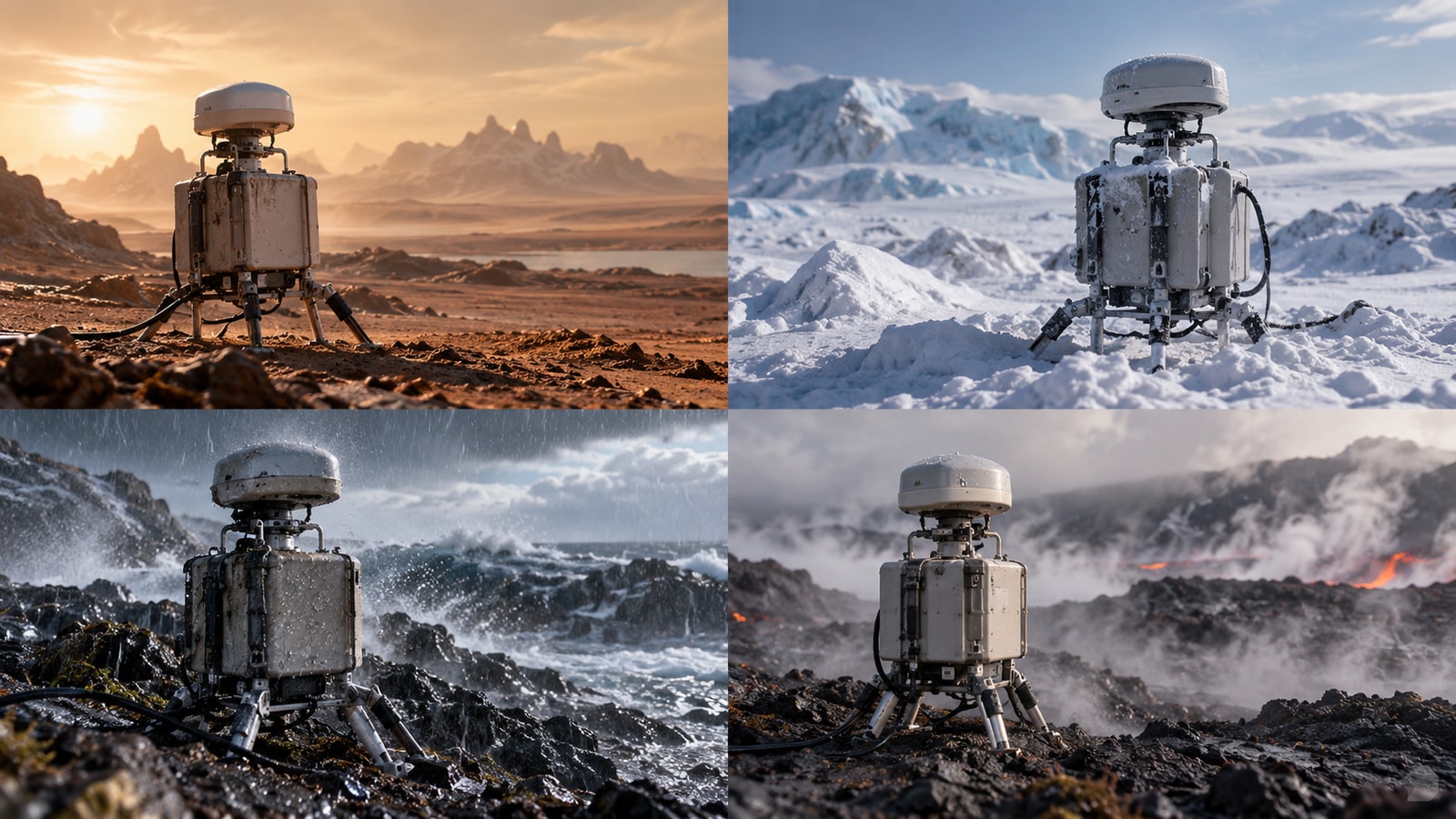
Domain Generalization in Machine Learning Explainer
Domain generalization aims to build a model that performs well in a new environment not available during training. Unlike domain adaptation, the learner normally does not receive examples from the eventual target domain before deployment.
Approaches include training across diverse source domains, data augmentation, invariant-feature objectives, robust optimization, ensembles, and meta-learning. The hope is to capture stable relationships rather than details specific to one source environment.
The setting matters when future cameras, locations, users, or operating conditions cannot be enumerated. It also provides a framework for testing whether a system truly transfers beyond familiar distributions instead of relying on narrow shortcuts.
Unseen domains are difficult to define, and model selection can accidentally use target knowledge. Research comparisons have shown that strong ordinary baselines are hard to beat consistently. Honest splits and multiple realistic targets are important.
Domain generalization trains on one or more source environments with the goal of performing well in unseen environments.
Key terms include domain generalization, unseen domain, source environment, invariant feature, robust optimization, augmentation, model selection and baseline.
Training uses variation across source environments to seek patterns that might remain stable elsewhere.
The final target distribution is withheld, distinguishing the setting from domain adaptation.
Choosing models with target-domain results undermines the claim of unseen-domain generalization.
Transparent validation rules and strong simple baselines make comparisons more credible.
Explore more "Explainers"
Discover additional explainers across politics, science, business, technology, and other fields. Each explainer breaks down a complex idea into clear, everyday language—helping you better understand how major concepts, systems, and debates shape the world around us.