

Normalizing Flow Explainer
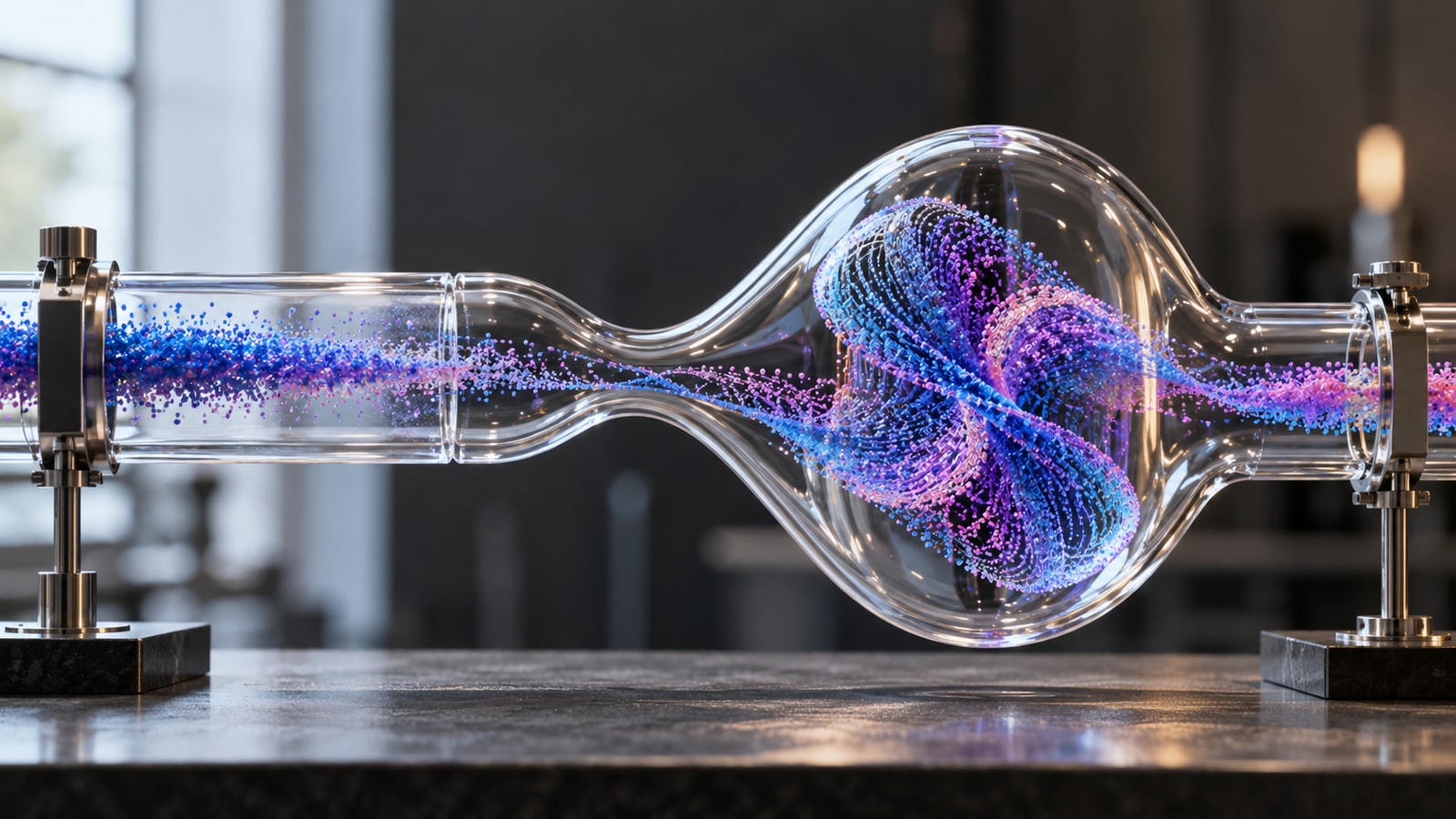
A normalizing flow creates a complex probability distribution by transforming samples from a simpler base distribution through a sequence of invertible functions. The inverse path maps observed data back to the base space.
Because each transformation is bijective and has a tractable Jacobian determinant, the change-of-variables formula can calculate an exact likelihood. The same model can often both evaluate densities and generate samples by running the transformations forward.
Flows are used for generative modeling, density estimation, approximate inference, uncertainty modeling, and simulation. Different architectures trade expressive transformations against the computational cost of inversion and determinant calculations.
Invertibility constrains network design, and high likelihood does not necessarily correspond to perceptual quality or reliable anomaly detection. Model capacity, numerical stability, base distribution, and evaluation criteria must match the intended use.
A normalizing flow builds a flexible probability distribution by applying a sequence of invertible transformations to a simple distribution.
Key terms include normalizing flow, base distribution, invertible transformation, bijection, Jacobian determinant, likelihood, sampling and density.
A chain of invertible mappings bends a tractable base density into a richer one.
The inverse and Jacobian determinant make exact density evaluation possible for many flow designs.
The architecture must remain reversible and keep determinant calculations manageable.
Likelihood, sample usefulness, robustness, and computational cost should be evaluated separately.
Explore more "Explainers"
Discover additional explainers across politics, science, business, technology, and other fields. Each explainer breaks down a complex idea into clear, everyday language—helping you better understand how major concepts, systems, and debates shape the world around us.