

Human Pose Estimation Explainer
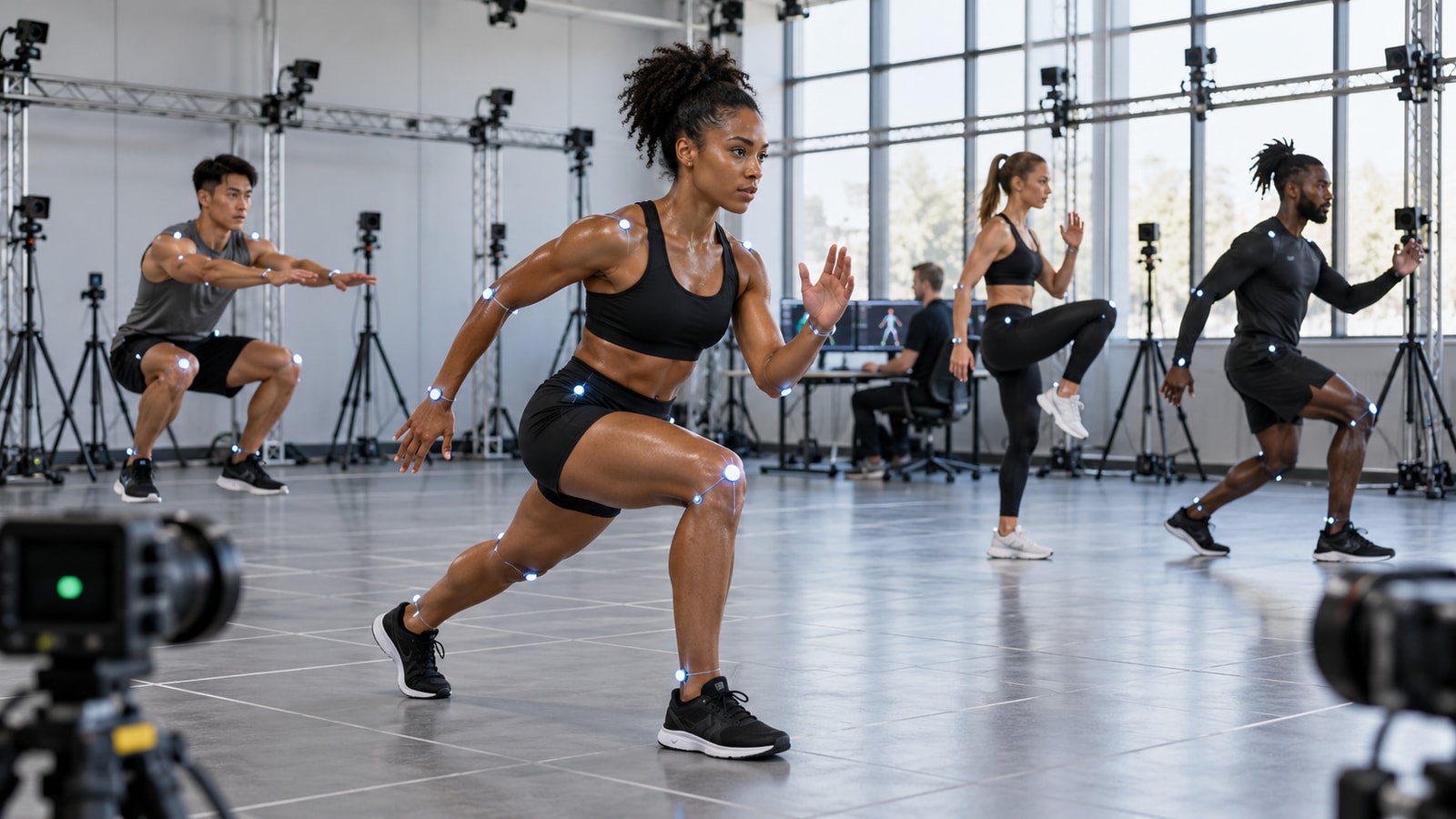
Human pose estimation predicts anatomical keypoints such as shoulders, elbows, wrists, hips, knees, and ankles. A 2D system locates them in the image plane, while a 3D system estimates their positions in depth as well.
Top-down methods detect each person first and then estimate that person’s joints. Bottom-up methods find keypoints across the image and group them into individuals. Video models can use motion and temporal consistency to stabilize predictions.
Pose estimates support sports analysis, animation, ergonomics, rehabilitation, gesture interfaces, and human-robot interaction. They describe a body configuration without necessarily identifying the person.
Loose clothing, unusual viewpoints, overlapping people, missing limbs, and poor lighting can confuse the model. Training datasets may underrepresent some bodies, movements, or mobility aids. Responsible use also requires consent, privacy safeguards, and limits on high-stakes inference.
Human pose estimation predicts the positions of body joints in images or video to describe how one or more people are arranged.
Key terms include keypoint, skeleton, joint, 2D pose, 3D pose, top-down method, bottom-up method, occlusion and temporal consistency.
The model locates joints and connects them according to an anatomical structure.
Multi-person systems must also decide which keypoints belong to each individual.
Keypoints describe estimated geometry, not identity, intent, health, or emotion.
Occlusion, dataset coverage, consent, and downstream use all affect reliability and risk.
Explore more "Explainers"
Discover additional explainers across politics, science, business, technology, and other fields. Each explainer breaks down a complex idea into clear, everyday language—helping you better understand how major concepts, systems, and debates shape the world around us.