

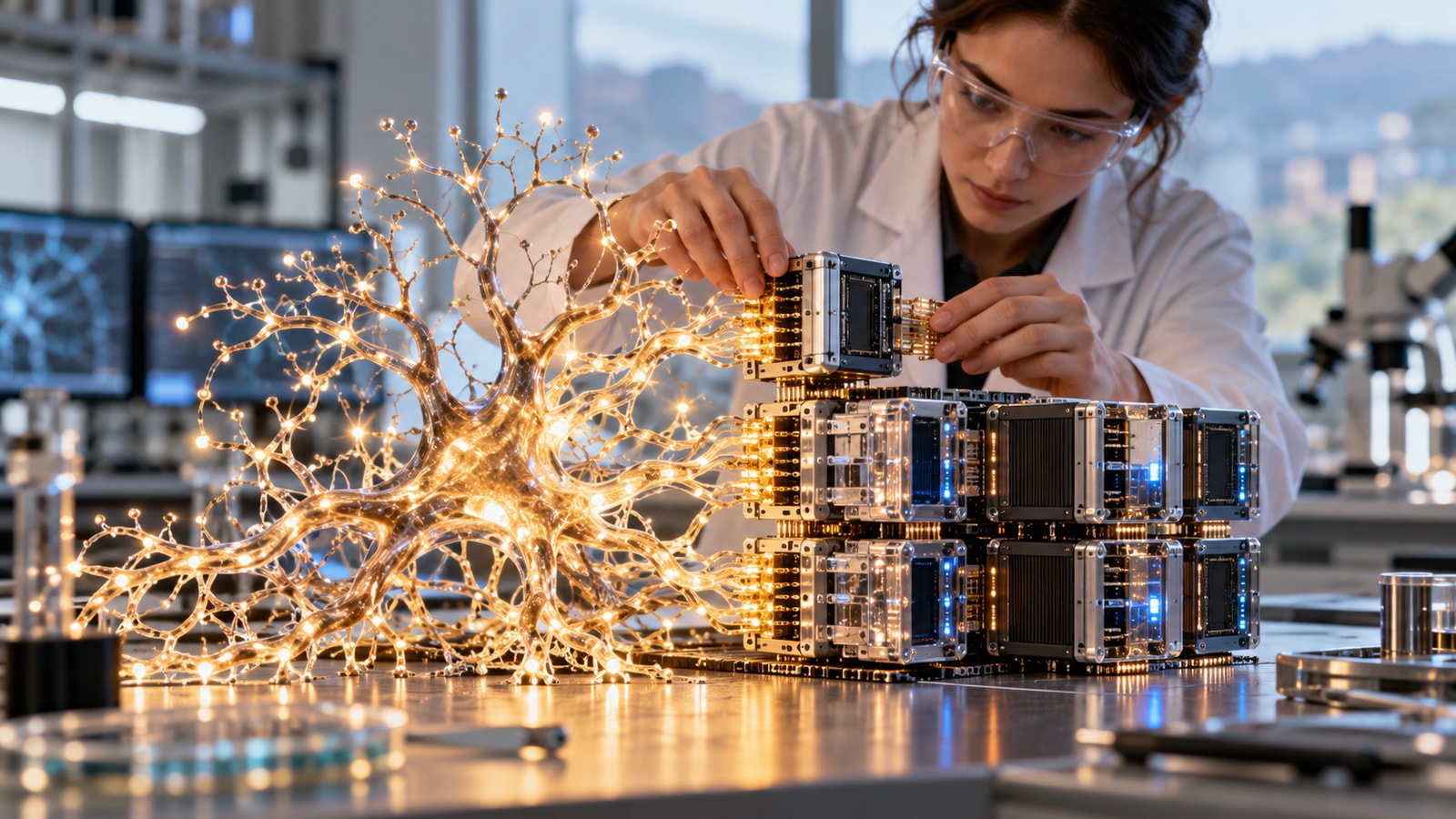
Neural-Symbolic AI Explainer
Neural-symbolic AI combines neural learning with symbolic representations such as facts, rules, programs, or logical constraints. The broad goal is to unite flexible pattern recognition with structured reasoning and knowledge that people can inspect or edit.
A system might use a neural network to interpret raw images or language, then reason over extracted symbols. Other designs make logical rules differentiable, use symbolic constraints during training, or let a program call learned components.
The approach is studied for scientific discovery, robotics, knowledge graphs, planning, question answering, and domains where rules or prior knowledge matter. It can improve data efficiency or consistency when the symbolic knowledge is accurate and relevant.
Connecting continuous predictions with discrete symbols is difficult, especially when perception is uncertain. Handwritten rules can be incomplete or wrong, and differentiable reasoning may only approximate formal logic. Evaluation should test learning, reasoning, robustness, explanation faithfulness, and scalability together.
Neural-symbolic AI combines learned neural representations with explicit symbols, rules, programs, or logical reasoning.
Key terms include neural-symbolic AI, neural network, symbol, logical rule, differentiable reasoning, knowledge base, constraint, grounding and program.
Neural components recognize patterns in noisy data while symbolic components express structured relationships.
The interface may pass discrete symbols, probabilities, constraints, or calls to executable programs.
A mistaken perception can become a confident symbol that corrupts later reasoning.
Rules, uncertainty, scalability, and explanation quality all need joint testing.
Explore more "Explainers"
Discover additional explainers across politics, science, business, technology, and other fields. Each explainer breaks down a complex idea into clear, everyday language—helping you better understand how major concepts, systems, and debates shape the world around us.