

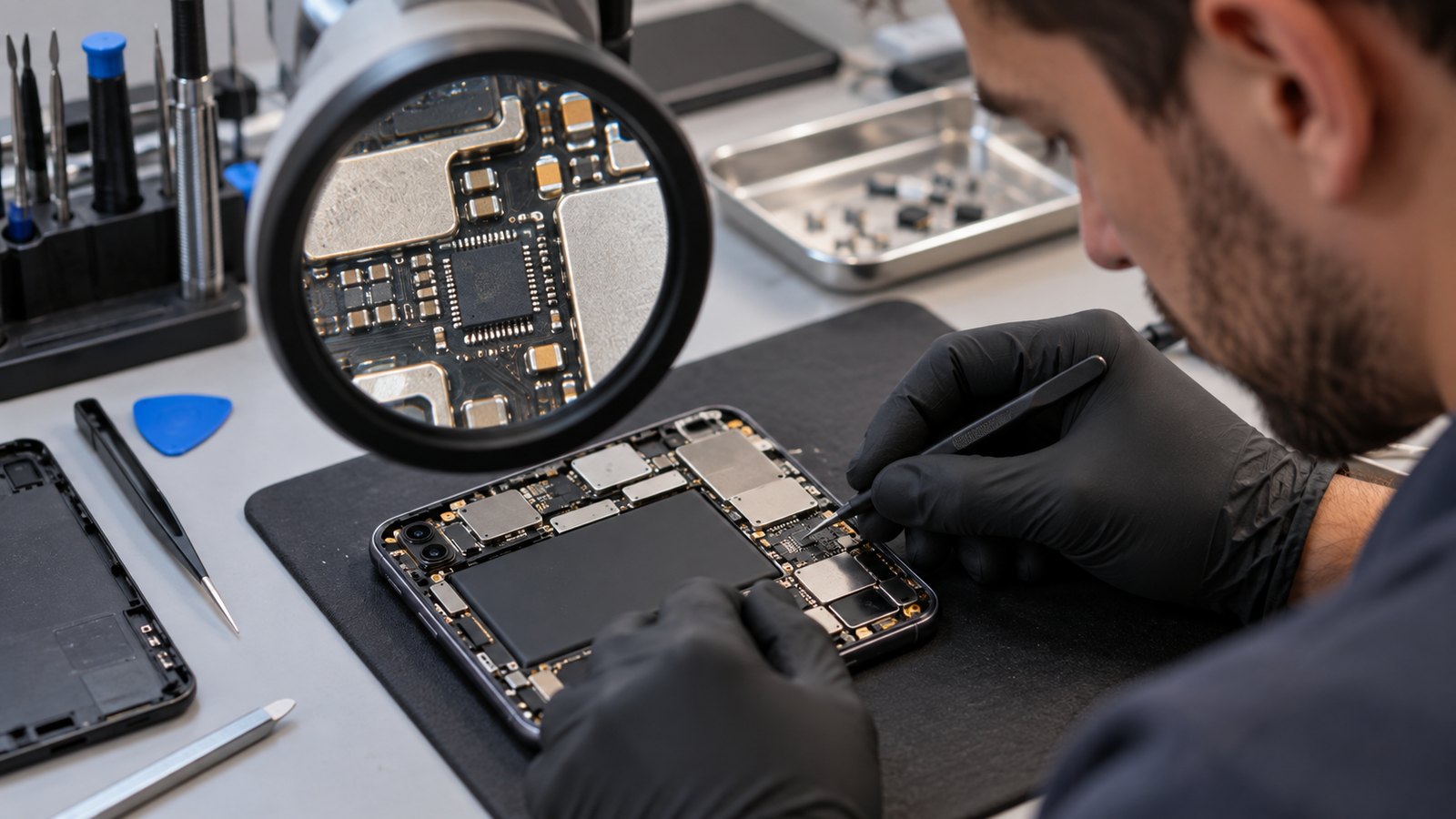
An eSIM uses an embedded secure chip and downloadable carrier profile instead of requiring every mobile subscription to arrive on a removable plastic card. The technology addresses a practical coordination problem that appears whenever many devices or programs must agree about identity, location, state, or resources. Its name can sound more mysterious than its purpose. The useful starting point is to separate the job it performs from the products that implement it. Different vendors may expose different settings, but compatible systems follow the same basic ideas so information can move between independently built components. Understanding that boundary also prevents the feature from being credited with protections it was never designed to provide.
The main mechanism is straightforward once its parts are identified. The embedded Universal Integrated Circuit Card stores protected operator credentials and applications. A remote provisioning system delivers an encrypted profile authorized by the carrier. Those parts operate under rules that define the format of messages or stored information and the conditions under which a result is accepted. Implementations also keep local state, because a later step often depends on what happened earlier. Good designs make that state visible through logs, counters, or diagnostic tools. That evidence helps an operator distinguish a normal negotiation from a configuration mistake, an overloaded component, or an active attack. It also makes failures easier to reproduce instead of treating the system as a black box.
A typical operation unfolds in a sequence rather than in one indivisible action. The user scans a code or accepts a carrier activation, the device contacts a provisioning service, downloads the profile, verifies it, and enables it for network authentication. Each stage can validate what it received before committing to the next stage. This ordering matters because partial information may be stale, ambiguous, or supplied by an untrusted party. Timeouts and retries handle ordinary loss, while explicit error results stop a bad state from silently spreading. The exact messages differ among implementations and versions, yet the sequence preserves the central contract: participants exchange enough evidence to reach the same conclusion, and they fail in a defined way when that evidence is missing or inconsistent.
The most visible advantage is operational rather than merely theoretical. Profiles can be activated without shipping a card, several subscriptions can be stored, and device makers can save physical space or improve environmental sealing. At scale, that improvement can reduce delay, manual work, downtime, or exposure across thousands of requests and devices. The benefit is strongest when every surrounding component respects the same assumptions. Monitoring still matters, because averages can hide a failed region, an unusual client, or a small group of requests taking a much slower path. Engineers therefore compare success rates, latency, capacity, and error causes before deciding that the feature is working as intended. A standard creates the opportunity for reliable behavior; measurement confirms whether a particular deployment delivers it.
The limits are equally important. Carrier support and transfer procedures vary. A locked, damaged, or reset device may require help from the operator, and eSIM does not remove identity-verification risks during account changes. Security claims should be read narrowly: protecting one step does not automatically secure the endpoint, the user, every stored copy, or the recovery process. Compatibility can also require gradual deployment, so old and new behavior may coexist for years. That mixed environment creates downgrade, fallback, and configuration risks if teams do not know which path a request actually used. Updates remain necessary because specifications evolve, implementation defects are discovered, and assumptions that were reasonable for an earlier scale can stop being safe. Defense in depth treats this mechanism as one layer rather than the entire system.
In practice, successful use depends on careful operation. Users protect carrier accounts, preserve recovery information, and confirm transfer steps before erasing an old device. Enterprises can provision connected fleets through managed workflows. Documentation should record ownership, expected behavior, failure modes, and a tested recovery route. Changes are safest when introduced gradually with metrics and a way to reverse them. For an everyday user, the feature often works quietly in the background; the visible signs appear only during setup, a warning, or a failure. For a technical team, the right question is not simply whether the technology is enabled. It is whether the surrounding keys, policies, versions, capacity, and human procedures make its promise true. That distinction turns a checkbox into a dependable part of the system.
No. The downloadable profile is stored and processed in a dedicated secure element built into the device.
Many devices can store multiple profiles, although the number active at once depends on hardware and carrier support.
Not by itself. Strong carrier account verification is still needed before a profile is issued or transferred.
Explore more "Explainers"
Discover additional explainers across politics, science, business, technology, and other fields. Each explainer breaks down a complex idea into clear, everyday language—helping you better understand how major concepts, systems, and debates shape the world around us.