

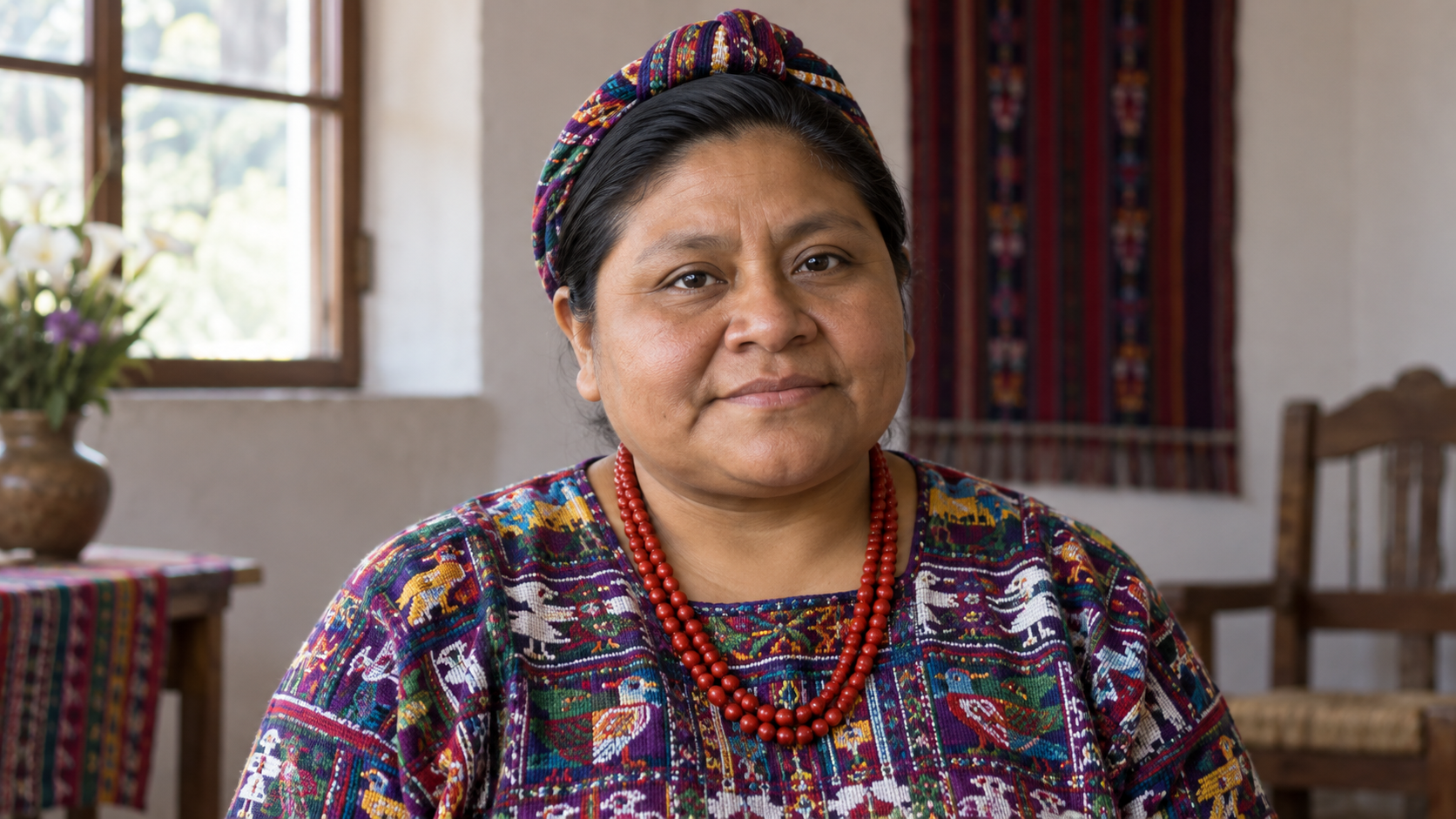
“We the indigenous are willing to combine tradition with modernism, but not at any cost.”
Rigoberta Menchú Tum spoke these words in her 1992 Nobel acceptance address as part of an argument about Indigenous rights, dignity, and participation. The K'iche' Maya activist from Guatemala did not present tradition and modern life as irreconcilable opposites. Instead, she challenged the conditions under which Indigenous communities were expected to enter economic and political change. The quotation, in the published English translation, leaves room for adaptation while refusing an unlimited price. Development cannot be judged only by its promised benefits when the people affected are denied an effective voice in deciding what they must surrender to obtain them.
The phrase about cost directs attention to who gets to make that calculation. A government or company might describe a project through jobs, revenue, or infrastructure. Residents may also consider land, language, family relationships, and the ability to govern their community. Those concerns are not obstacles that can simply be counted as resistance to progress. They identify forms of value a narrow balance sheet may miss. Menchú's formulation makes political consent central: people should have a meaningful role in evaluating the changes that reshape their lives. Choosing a new technology or institution need not require abandoning the authority to decide what matters.
The argument resists a second simplification as well: treating Indigenous cultures as fixed objects that should remain untouched for everyone else's admiration. Traditions are carried by living people who disagree, innovate, and respond to circumstances. Protecting their rights therefore means respecting their capacity to change on their own terms, not insisting that they conform to an outsider's image of authenticity. At the same time, a claim to represent tradition should not silence debate within a community. Genuine participation requires space for different experiences and priorities. The quotation offers a framework for negotiation, but the people involved must still work through its difficult practical questions.
For politics today, the line invites readers to examine development proposals from the position of those expected to bear their consequences. Were they involved before the essential decisions were made? Can they refuse, suggest alternatives, or obtain a remedy if promises fail? These questions apply beyond one project or country, while the specific history and rights of Indigenous peoples remain important. Menchú's insight is that change gains legitimacy through participation, not merely through an official declaration that it is beneficial. A society can pursue improvements without assuming that the strongest institution has the sole right to define their price. Modernization becomes a negotiation among people with rights rather than a timetable imposed on them.
The line comes from Menchú's 1992 Nobel acceptance address and is presented here in its published English translation. The speech connects Indigenous rights with participation in society's future.
Her position allows cultural adaptation while insisting that communities should not lose control of essential interests simply because change is called development.
The central issue is who defines the cost of progress. Material gains and losses do not capture every consequence for land, identity, and collective decision-making.
Respect for tradition also requires respect for living people. Communities must have room for internal disagreement and voluntary change rather than being treated as museum pieces.
The quotation supplies useful questions for public projects: who was consulted, what alternatives were considered, and what power did affected people actually have?
It remains a challenge to political decisions that describe participation as a formality after the important choices have already been settled.
Explore more "Quotes of The Day"
Discover more notable quotes from influential voices across politics, science, business, technology, sports, and culture. Each quote offers insight into how ideas, beliefs, and decisions shape the world around us.