

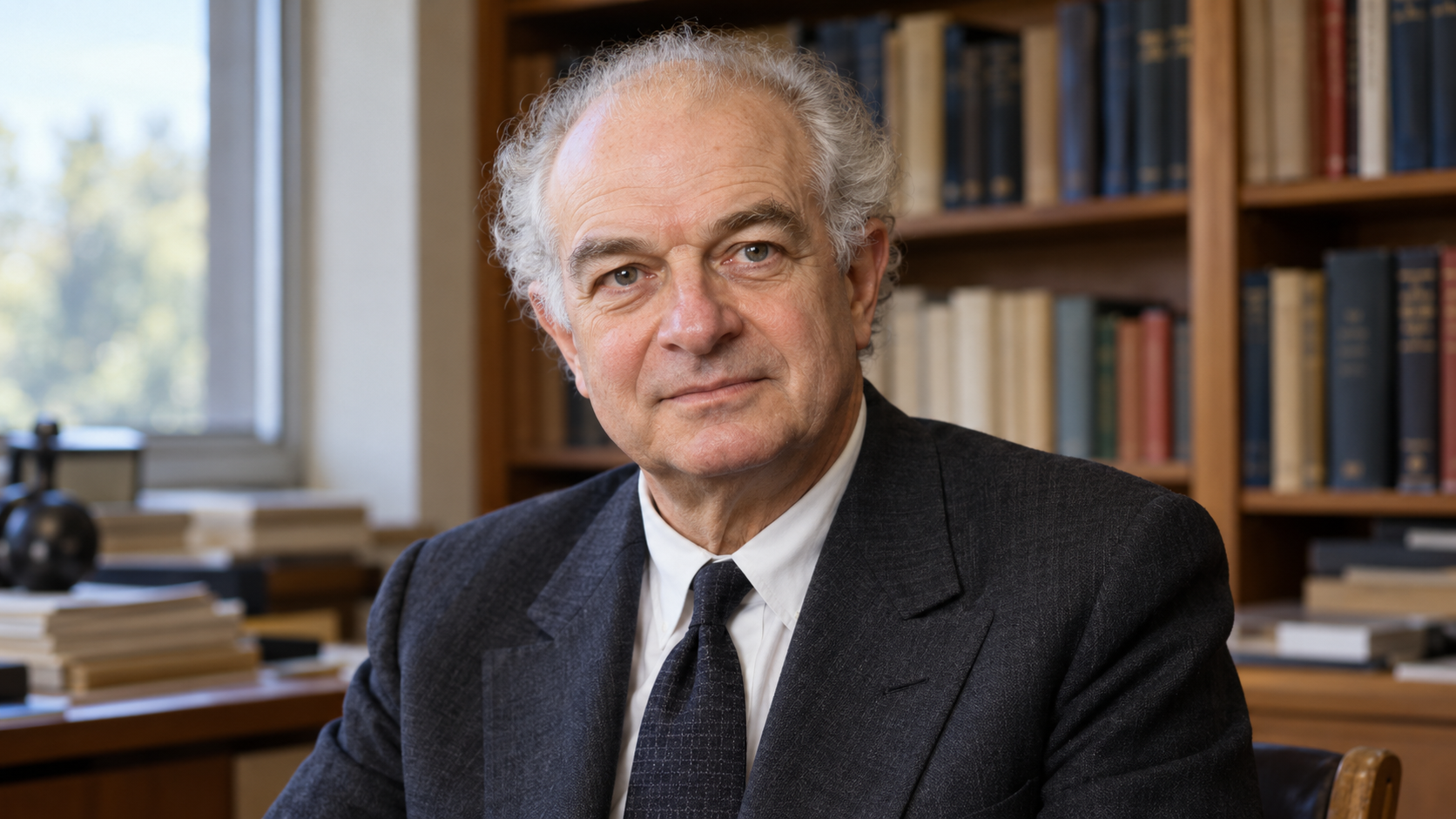
“No dispute between nations can justify nuclear war.”
Linus Pauling delivered his Nobel lecture on December 11, 1963, after receiving the peace prize awarded for 1962. In that speech, the scientist and campaigner against nuclear weapons drew a sharp moral boundary around conflict between states. Whatever the dispute, nuclear war could not be an acceptable instrument for settling it. The distinction between the award year and the lecture year matters because the speech came during a period of debate about nuclear testing and arms control. Pauling treated the partial test ban of 1963 as an opening for further action, while his quotation expressed a principle much broader than a particular agreement.
The argument begins by refusing a familiar political comparison. Governments often weigh the seriousness of a grievance against the force they believe necessary to answer it. Pauling's sentence says that nuclear war breaks the legitimacy of that calculation. The means would carry consequences so vast that a national objective could not make them proportionate. This is a moral judgment informed by scientific concern, rather than a technical formula that produces the correct foreign policy. It asks leaders to recognize a limit before the pressures of confrontation make every available weapon seem like another ordinary option in a negotiation.
A difficult issue remains: how should a country protect its people when it believes an adversary may ignore that limit? Pauling's statement does not, by itself, answer every question about deterrence, verification, or conventional defense. Those practical disputes should not be hidden behind the clarity of the quotation. Yet they should also not erase its demand. Political planning needs to consider the risks created by its own threats, including mistakes, escalation, and the assumption that the other side will interpret intentions correctly. A policy can claim to prevent war while increasing the danger of a catastrophe through fragile procedures or exaggerated confidence in control.
The quotation's value today is a firm starting point for examining those choices. Readers can ask whether leaders describe nuclear danger honestly, maintain channels for communication, and support arrangements that can be checked rather than merely announced. Pauling's hopes for a peaceful future were ambitions, not proof that international conflict had already been overcome. The continuing challenge is to translate a moral boundary into institutions and practices that keep it from being crossed. His sentence makes the burden of justification unusually clear: the existence of a grave dispute does not make every method of pursuing it legitimate. Some instruments threaten the very people and political purposes that governments claim to defend.
Pauling received the Nobel Peace Prize for 1962 and delivered this lecture in 1963. The date in the post refers to the speech containing the quotation.
The lecture discussed science, peace, and the opportunity created by the partial nuclear test ban. That agreement was a step rather than the abolition of nuclear weapons.
The quotation sets a moral limit on the means states may use to settle disagreements. It does not depend on deciding which side has the stronger grievance.
Questions about deterrence and defense remain difficult. The line asks that those questions be addressed without treating catastrophic destruction as an ordinary policy tool.
The statement encourages scrutiny of escalation risks, communication failures, and claims that dangerous systems can always be controlled.
Its relevance lies in connecting moral judgment with practical prevention: a declared principle needs reliable procedures and verifiable commitments to make it effective.
Explore more "Quotes of The Day"
Discover more notable quotes from influential voices across politics, science, business, technology, sports, and culture. Each quote offers insight into how ideas, beliefs, and decisions shape the world around us.