

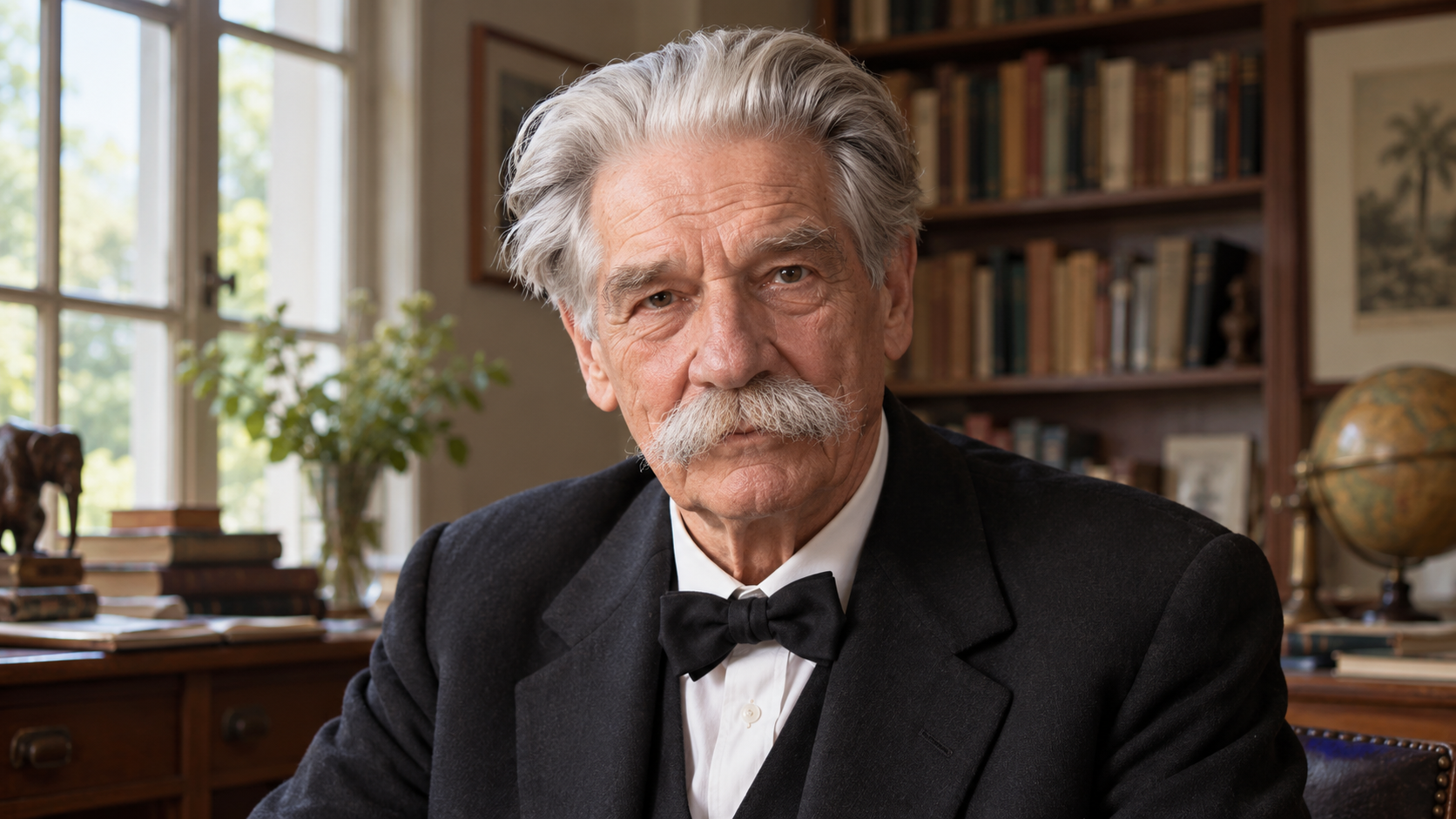
“For any enterprise, confidence is the capital without which no effective work can be carried on.”
Albert Schweitzer delivered his Nobel lecture in Oslo in 1954 after receiving the peace prize awarded for 1952. In its published English translation, he described confidence as the essential capital of a shared undertaking. The surrounding argument concerned the rebuilding of relations damaged by war and injustice, including the treatment of prisoners and displaced people. Confidence was not simply a reassuring emotion. It was something political actors could strengthen or destroy through their conduct. Schweitzer's comparison to capital made that point concrete: a cooperative enterprise cannot keep drawing on trust when the people responsible refuse to repair the actions that have depleted it.
The metaphor explains why declarations of good intentions often fail to produce results. Each party must decide whether another person's promise is credible enough to support a risky next step. If previous commitments were broken or injuries ignored, a new appeal to cooperation may sound like a request for further exposure. Building confidence therefore requires observable behavior. Keeping an agreement, acknowledging a wrong, or addressing an unresolved claim can matter more than a generous statement. The resource is created through repeated evidence that a relationship has become more dependable. Its practical value appears when people can act together without anticipating betrayal at every stage.
There is also a limit to the metaphor. Trust should not become a demand that victims abandon scrutiny or accept unequal conditions for the sake of moving forward. A system that calls every question disloyal can manufacture the appearance of confidence while leaving fear intact. Responsible cooperation allows inspection, disagreement, and a means of correcting mistakes. It distinguishes confidence from blind faith. Schweitzer's larger concern with redress helps support that reading: unresolved injustice cannot simply be wished away by urging people to be more hopeful. The parties need reasons for confidence, and those reasons must be connected to the situation that made trust difficult.
The line remains useful far beyond a formal peace negotiation. Citizens deciding whether to believe a public institution, communities assessing an agreement, and political rivals attempting a common project all face the same practical question: what makes cooperation credible? An institution spends confidence whenever it asks people to accept uncertainty on the strength of its word. It replenishes that confidence by acting consistently and admitting when it has fallen short. Schweitzer's quotation invites readers to judge trust through those actions. It neither promises harmony nor requires the disappearance of disagreement. It explains why effective work becomes harder when political relationships are treated as resources that can be exhausted without consequence.
Schweitzer's lecture was delivered in 1954 although his Nobel Peace Prize was awarded for 1952. The English quotation comes from the published translation.
The passage belongs to an argument about rebuilding relations after war and addressing unresolved wrongs. Confidence has a political and practical meaning in that setting.
Calling confidence capital emphasizes that cooperation needs a foundation accumulated through conduct. Promises draw on that foundation but cannot replace it.
Trust should remain compatible with verification and redress. Asking people to forget an injury without addressing it is a poor way to restore a damaged relationship.
The metaphor can help readers evaluate institutions: consistent action and honest correction strengthen confidence, while unacknowledged failures consume it.
Its lasting lesson is that shared work depends on credible relationships. Political opponents need not agree about everything to give one another reliable reasons to cooperate.
Explore more "Quotes of The Day"
Discover more notable quotes from influential voices across politics, science, business, technology, sports, and culture. Each quote offers insight into how ideas, beliefs, and decisions shape the world around us.