

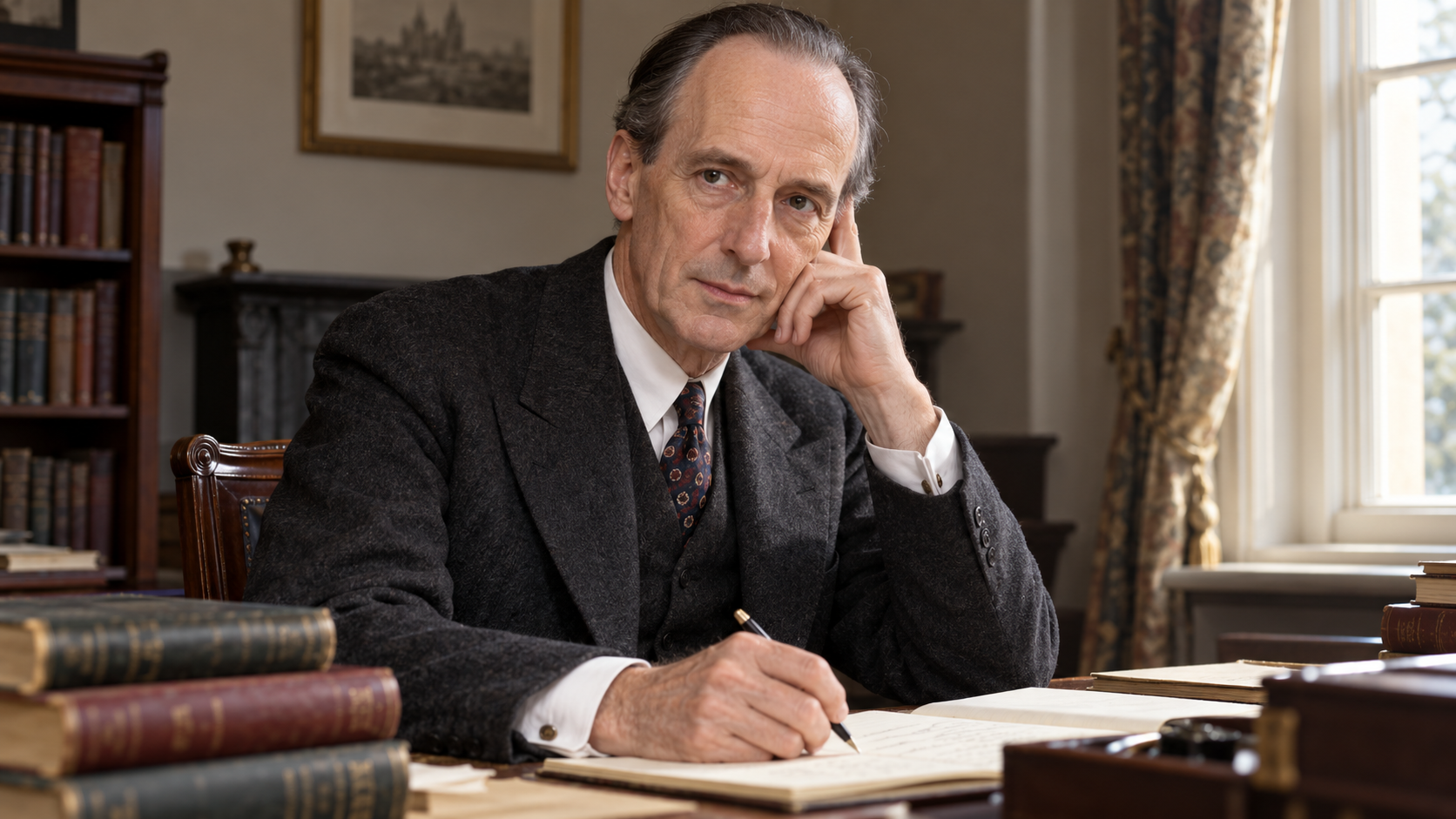
“The obstacles to peace are in the minds and hearts of men.”
Norman Angell delivered this sentence in his Nobel lecture, Peace and the Public Mind, on June 12, 1935, at the University of Oslo. Although his Peace Prize was designated for 1933, the lecture belongs to 1935. Angell argued that understanding how society works was essential to preventing conflict. He challenged the idea that cooperation required human beings first to become naturally peaceful, pointing out that ordinary political institutions already managed disagreements among imperfect people. Near the conclusion, he contrasted advances in handling physical obstacles with the harder task of dealing honestly with loyalties, desires, and fears. The featured sentence summarizes that second difficulty.
An obstacle located in thought is still an obstacle with practical effects. A false assumption about another group can shape a budget, justify a threat, or close a negotiation before its terms have been heard. Emotional attachment can also make a familiar policy feel necessary even when its consequences undermine the security it promises. This interpretation avoids treating conflict as an illusion that disappears if everyone becomes more cheerful. It asks how claims become convincing, what evidence might challenge them, and whether a public discussion allows a person to revise an opinion without appearing to abandon the people they care about most.
The reference to minds and hearts connects reasoning with the emotional conditions under which reasoning takes place. Facts can be available yet difficult to accept when they threaten status or belonging. An appeal to fairness can fail if people expect any concession to be exploited. A peace process therefore needs more than correct information: it needs credible procedures through which people can test claims and make commitments without assuming every uncertainty is a trap. This is an original application of Angell’s argument, not a claim that his lecture supplies a complete explanation for every war or that material interests have no importance.
The sentence encourages readers to examine their own standards as carefully as an opponent’s motives. What would count as evidence that a preferred strategy was failing? Would the same conduct receive the same judgment if a different group performed it? Can a dispute be referred to a procedure that protects people regardless of which side wins a particular point? Such questions connect intellectual honesty with institutional design. Angell’s warning remains challenging because it offers no comfortable division between rational observers and irrational enemies. Those seeking peace must also consider the assumptions and attachments through which they interpret their own political choices.
Angell’s Nobel lecture was delivered on June 12, 1935. The prize’s designated year, 1933, should not be mistaken for the speech’s date. The lecture examines public reasoning and the organization of cooperation.
He argued that institutions can manage disagreements among imperfect people. His closing contrast concerns progress in overcoming physical obstacles and the harder work of thinking honestly about desires, loyalties, and fears.
The sentence asks how beliefs and emotional commitments shape decisions. A mistaken view can have concrete consequences when it becomes the basis for a public policy or a refusal to consider an agreement.
It should not be read as denying resources, coercion, or institutions a role in conflict. The more useful question is whether people can examine those realities without allowing a desired conclusion to determine what evidence they will accept.
Readers can test a political argument by considering what evidence would change it and whether its standards apply consistently across groups. This connects the pursuit of peace with an ability to revise one’s own judgment.
Fair procedures can make that revision less threatening. When people have reliable ways to present a claim and contest an error, cooperation need not depend entirely on trusting an adversary’s intentions.
Explore more "Quotes of The Day"
Discover more notable quotes from influential voices across politics, science, business, technology, sports, and culture. Each quote offers insight into how ideas, beliefs, and decisions shape the world around us.