

On This Day in Politics: May 17, 1954
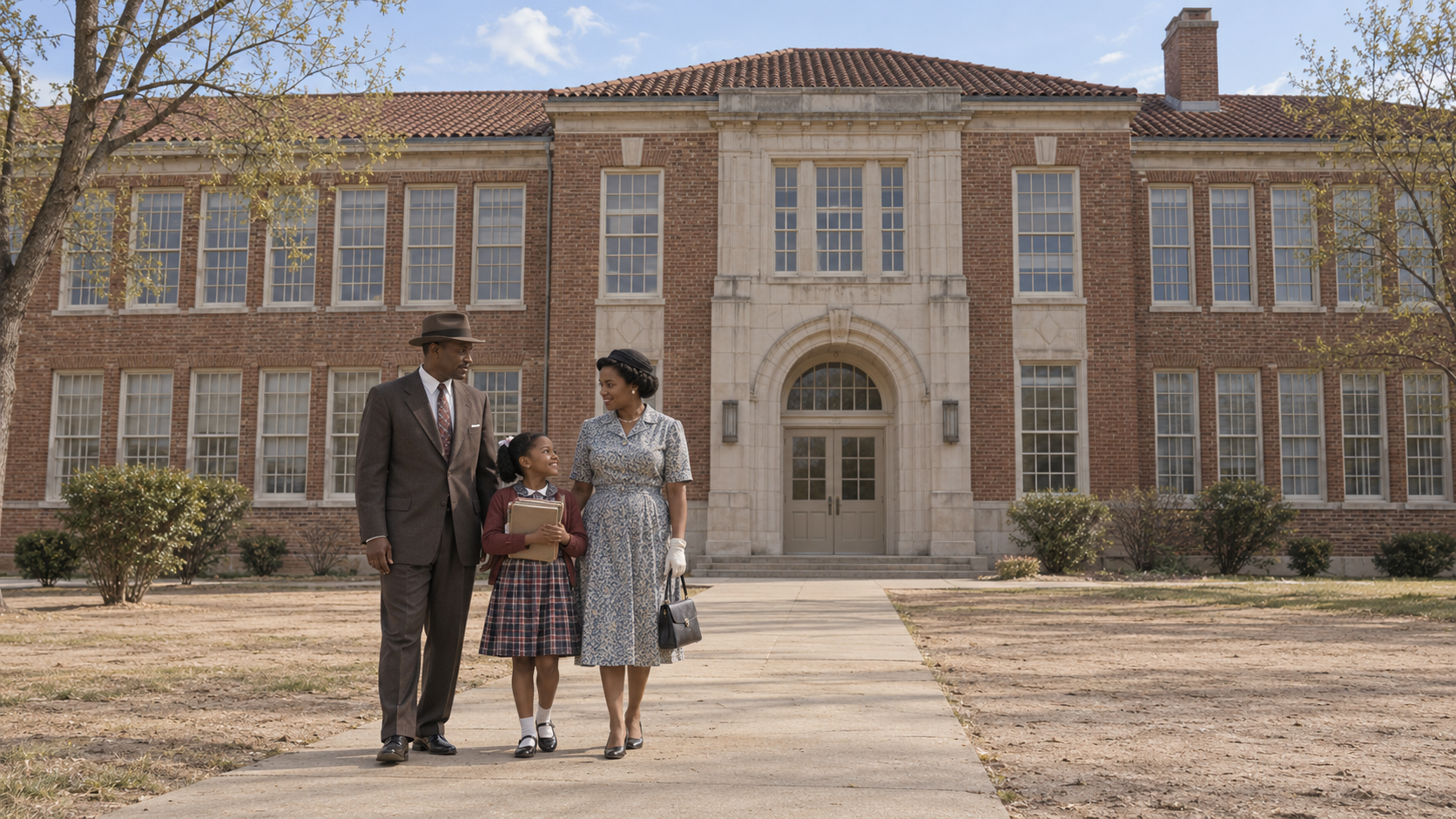
On May 17, 1954, the United States Supreme Court unanimously ruled that racial segregation in public schools violated the Constitution. Chief Justice Earl Warren delivered the opinion in Brown v. Board of Education, rejecting the idea that separate educational systems could satisfy the Fourteenth Amendment’s guarantee of equal protection. The ruling addressed more than differences in buildings, books, or equipment. It held that separating children by race denied equal educational opportunity even if tangible facilities were comparable. Brown became a decisive legal victory against state-sponsored segregation, although the announcement itself did not immediately change where every child attended school or overcome the officials who resisted integration.
The decision grew out of local struggles by parents, children, and lawyers rather than a single lawsuit acting alone. In Topeka, Kansas, the NAACP recruited thirteen families to seek admission to white elementary schools. Their children were refused, and the families brought suit in 1951. Other challenges arose in South Carolina, Virginia, and Delaware, with a related case concerning Washington, D.C., considered separately under the Fifth Amendment. In Virginia, Barbara Johns helped organize a student strike against poor school conditions. These efforts connected everyday experiences of unequal treatment with a coordinated legal campaign. Thurgood Marshall and other NAACP attorneys argued that segregation itself, not merely unequal resources, was unconstitutional.
The litigation required persistence. The Topeka case first went before a federal district court, which ruled against the plaintiffs under the prevailing doctrine while acknowledging evidence of segregation’s harmful effects. The Supreme Court heard arguments in 1952 and again in 1953 before reaching its decision. In Topeka, the result prompted a celebration at Monroe Elementary School on May 18, organized by local NAACP president McKinley Burnett. The gathering included speeches and music, reflecting the community work behind the courtroom victory. Plaintiff Lucinda Todd welcomed the ruling while recognizing that actually abolishing segregation would take further effort. That combination of celebration and caution captured the significance of the moment.
The question of implementation remained unresolved in the initial opinion. In May 1955, the Court issued a further decision, commonly called Brown II, directing desegregation to proceed with all deliberate speed. Resistance nevertheless continued, and later confrontations showed that court orders required enforcement as well as legal authority. The struggle involved students entering hostile schools, families accepting personal risks, local organizing, and action by federal officials. Brown’s legacy lies both in its clear rejection of legally segregated public education and in the work needed to turn that principle into practice. May 17 marks a constitutional turning point whose promise depended on sustained efforts outside the Supreme Court.
The Supreme Court issued its unanimous Brown decision on May 17, 1954.
The ruling applied the Fourteenth Amendment’s equal protection guarantee to state school segregation.
The cases grew from the efforts of families, students, local organizers, and NAACP lawyers.
The first decision did not provide a complete timetable for implementation.
Brown II addressed remedies in May 1955, while resistance continued.
The legal victory became a foundation for further civil rights organizing and enforcement.
Explore more of "On This Day ..."
Discover more events from the same date across news, politics, technology, sports, and other fields. Each link highlights significant moments that shaped history on different fronts.