

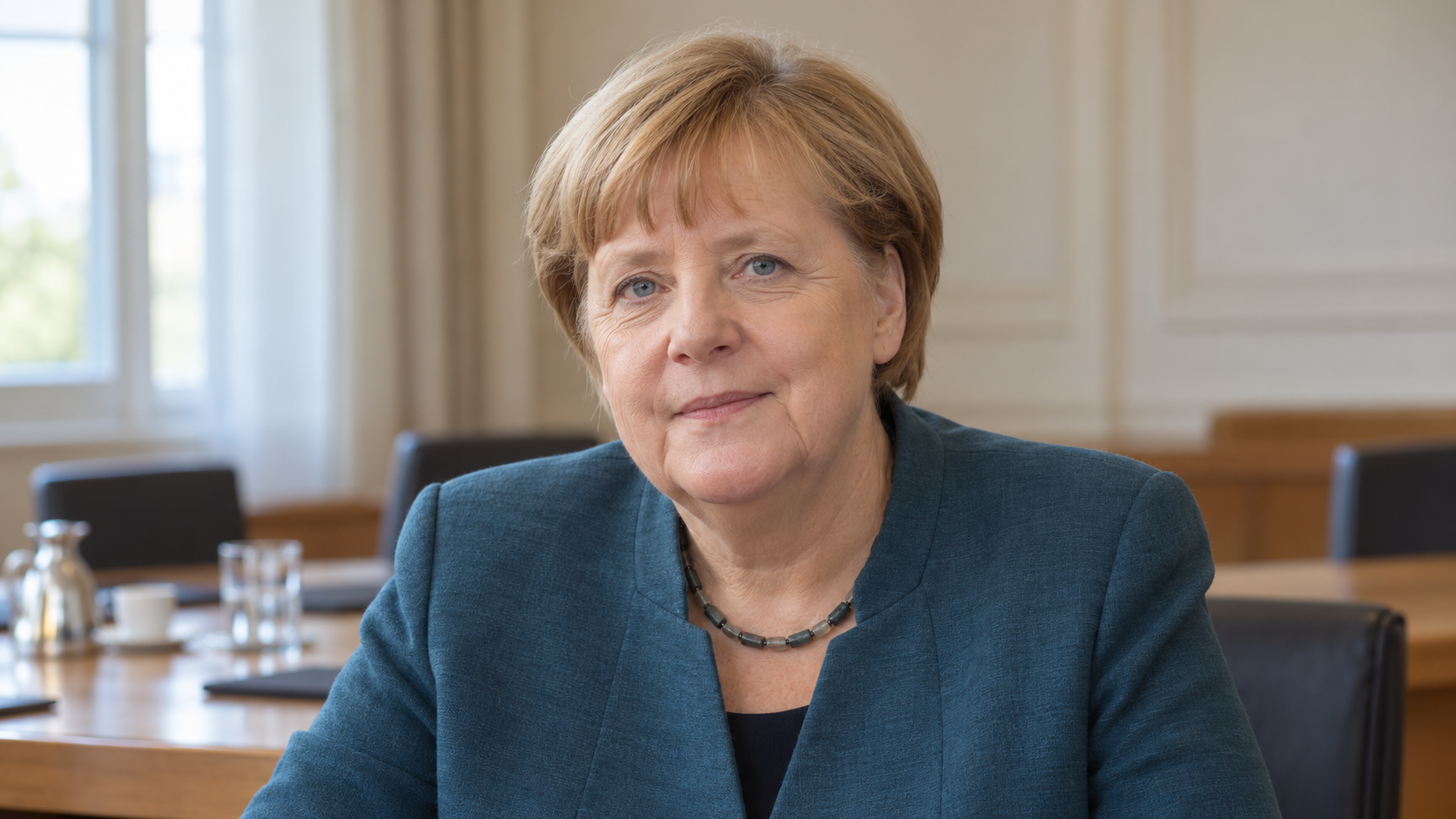
“We can do this!”
Angela Merkel made her widely remembered statement at a summer press conference on August 31, 2015, while discussing Germany’s response to people seeking refuge. The quotation here follows an English rendering used in an official publication about the German chancellery. Its original German wording became closely associated with her leadership, although similar language had already been used by others. In the surrounding remarks, Merkel presented the situation as a substantial national task involving different levels of government. The short sentence communicated confidence, but it did not provide a complete operational plan. That distinction is central to understanding both its appeal and the debates that followed.
Collective confidence can help a public face a difficult undertaking without assuming failure in advance. It can encourage officials to coordinate, volunteers to participate, and institutions to identify obstacles that can be removed. Yet the word we also needs practical definition. A central government, a municipality, a school, and a household do not have the same powers or resources. Their responsibilities must be explained rather than blended into a single reassuring voice. A promise becomes more credible when people know what contribution is expected, what support will be available, and how the burden will be shared among those who experience the task differently.
There is room for both humanitarian commitment and scrutiny of administrative capacity. Asking about housing, staffing, processing times, or access to education does not inherently deny anyone’s dignity. Conversely, recognizing people’s need for protection does not make every proposed policy effective. A useful debate distinguishes criticism of a measure from hostility toward the people affected by it. It also examines evidence without treating confidence as proof of success or difficulty as proof that cooperation was pointless. Decisions need revision when circumstances change. Leaders can maintain an underlying commitment while acknowledging mistakes in implementation and explaining why a different practical approach is necessary.
The sentence offers a broader lesson about the relationship between encouragement and accountability. Political language can establish a direction, but institutions must turn that direction into dependable work. Citizens should be able to ask for clear objectives, credible resources, and reports that describe setbacks as well as achievements. They should also be able to disagree without being assigned to a simple division between compassion and indifference. Merkel’s words remain historically significant because they condensed a large public challenge into a statement of shared capability. Their continuing relevance lies in the questions they leave open: who must act, what support is needed, and how a society will judge whether its commitments have been carried out fairly.
The original statement was made at the August31,2015 summer press conference. The displayed quotation is an English translation used by the German government.
The phrase preceded later events that became closely associated with the refugee debate. It should not be treated as a detailed description of every subsequent policy decision.
Supporters heard encouragement and a commitment to collective effort. Critics questioned the clarity of the task and the capacity of public institutions.
The surrounding discussion concerned several levels of government. Evaluating the statement requires attention to the different responsibilities and resources behind a shared promise.
Public confidence is most useful when paired with defined objectives, adequate support, and honest reporting of difficulties.
A democratic discussion can defend human dignity while testing how institutions operate. Correcting implementation does not require abandoning an underlying moral commitment.
Explore more "Quotes of The Day"
Discover more notable quotes from influential voices across politics, science, business, technology, sports, and culture. Each quote offers insight into how ideas, beliefs, and decisions shape the world around us.