

On This Day in Politics: May 31, 1910
On May 31, 1910, the Union of South Africa came into existence, bringing the Cape, Natal, Transvaal, and Orange Free State together under one national government. Louis Botha became its first prime minister. The date fell eight years after the peace agreement that ended the South African War between Britain and the Boer republics. Union represented a political reconciliation among influential white leaders who had recently been enemies. It also established a state whose institutions excluded most of the population from meaningful political power. Understanding the event requires keeping both developments in view: the consolidation of government and the unequal terms on which that consolidation was achieved.
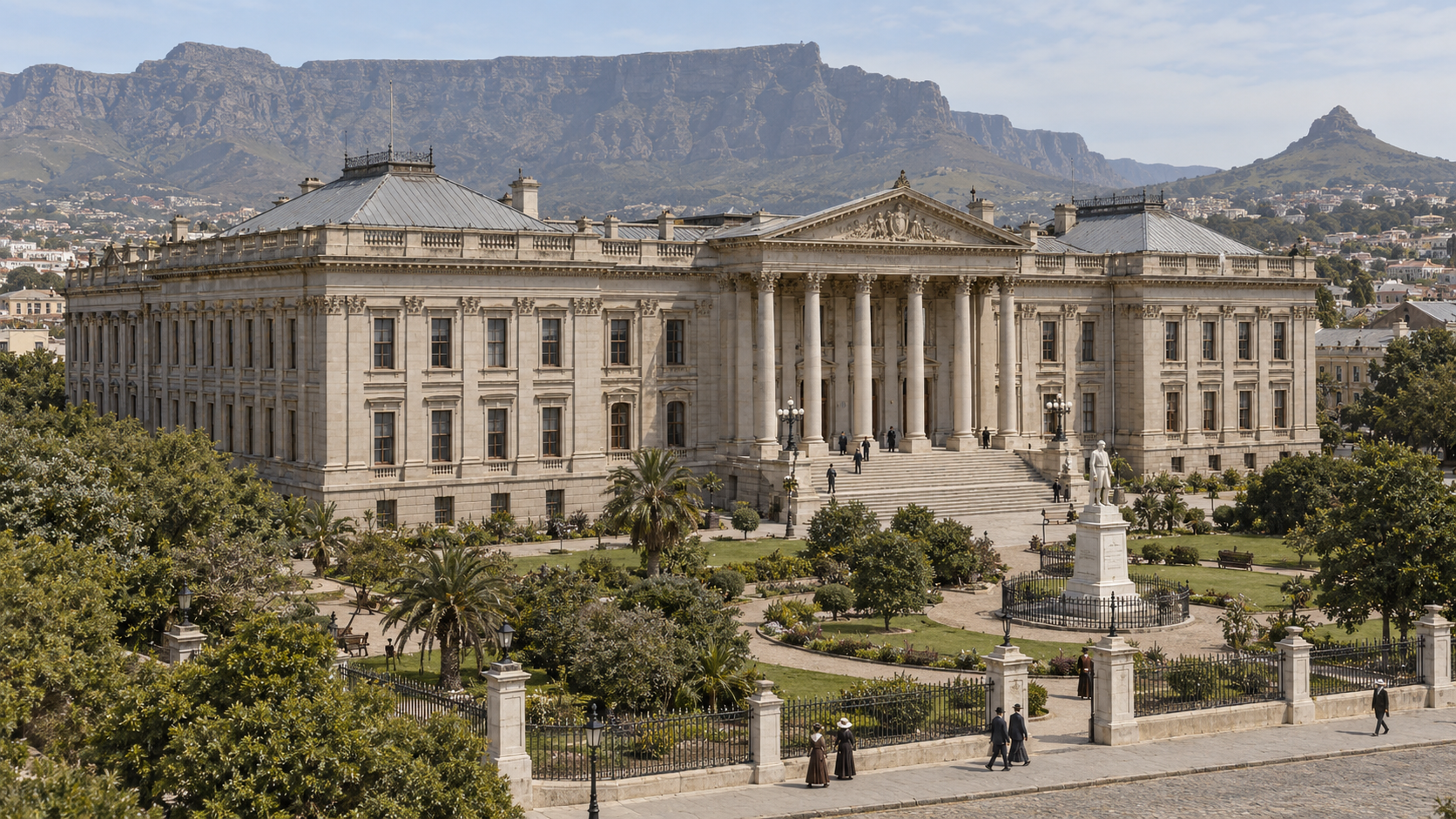
The constitutional framework came from the South Africa Act of 1909, passed by the British Parliament after negotiations among the colonies. The act united them under the British Crown and converted them into provinces. It provided for a governor-general, a Senate, and a House of Assembly, while placing the seat of government in Pretoria and Parliament in Cape Town. These arrangements created common institutions across territories with different histories and interests. They did not establish an independent republic in 1910. The Union remained connected to the monarchy, and the division of national functions reflected the compromises needed to bring the former colonies into a single political structure.
Political rights remained deeply unequal. The act preserved existing provincial voting qualifications rather than creating universal suffrage. In the Cape, some Black and Coloured men retained access to the common electoral roll under qualified franchise rules, with special constitutional procedures governing changes based on race. Yet membership of the national House of Assembly was restricted to British subjects of European descent. The distinction between a limited right to vote and eligibility to hold national office exposed the narrow reach of the settlement. African and Coloured political leaders objected to the terms, warning that unification could strengthen institutions capable of further restricting their communities’ rights.
The consequences extended far beyond the inauguration of the new government. Opposition to exclusion helped give rise to the South African Native National Congress in 1912, the organization later known as the African National Congress. The Union’s political order also preceded further segregationist legislation and, after 1948, the more comprehensive system of apartheid. These later developments were not all enacted on May 31, but the founding structure placed authority overwhelmingly in white hands. The date marks an important stage in the making of the modern South African state. It also highlights the limits of a national settlement that reconciled powerful groups while denying equal citizenship to the majority.
The Union of South Africa began on May 31, 1910.
It joined the Cape, Natal, Transvaal, and Orange Free State.
Louis Botha became the first prime minister.
The new state remained under the British Crown.
Political rights and eligibility for national office were racially unequal.
Opposition to exclusion contributed to the founding of the future ANC in 1912.
Explore more of "On This Day ..."
Discover more events from the same date across news, politics, technology, sports, and other fields. Each link highlights significant moments that shaped history on different fronts.