

Dietary Fiber Explainer
Dietary fiber is a group of carbohydrates in foods that the body’s digestive enzymes do not fully break down. It is found in plant foods such as beans, whole grains, fruits, vegetables, nuts, and seeds. Unlike sugars and starches that are readily digested, fiber can reach the large intestine, where some forms are used by gut microbes. Fiber is therefore more than an inert filler. Different types have different effects, making variety in food sources useful rather than treating every gram as identical.
The familiar distinction between soluble and insoluble fiber describes how a fiber behaves with water. Some soluble fibers form gels that influence movement of food through the digestive tract; some fibers are fermented by microbes. Other fibers help add bulk to stool. These properties do not divide foods into two perfectly separate groups, because many foods contain a mixture. Effects depend on the particular fiber, the quantity, and the person. A simple label cannot predict every digestive response or replace attention to overall eating patterns.
Fiber can support regular bowel movements and contribute to a satisfying eating pattern. Some forms can also help with blood cholesterol or the handling of glucose after meals. These benefits do not make fiber a cure for every digestive problem or a substitute for other care. Increasing intake quickly can cause gas, bloating, or discomfort. Gradual changes and suitable fluid intake can make a change easier to tolerate, while people with particular medical conditions may need guidance about the types and amounts that fit their situation.
Food labels can help compare fiber content, but the serving size must be considered. A food marketed as whole grain or high fiber may still differ substantially from another product. Whole foods also supply other nutrients, while a supplement provides a more limited ingredient. The useful goal is a sustainable pattern that fits health needs and daily life. Understanding fiber’s varied roles makes it easier to evaluate claims, ask practical questions, and adjust eating habits without assuming that the largest possible intake must be the healthiest.
Fiber includes several substances with different physical and chemical properties. Solubility, thickness when mixed with fluid, and fermentability each describe an aspect of behavior. These categories overlap. Saying that a food contains soluble fiber does not mean it acts exactly like every other soluble fiber. This explains why research on one specific ingredient should not be generalized to all fiber products.
The large intestine contains microbes that can use certain fibers and produce compounds during fermentation. Other fibers remain relatively intact and contribute to stool structure. The process varies with the diet and microbial community. Popular claims about feeding good bacteria often simplify this biology. A varied diet is a more useful starting point than assuming one branded ingredient guarantees a particular microbiome.
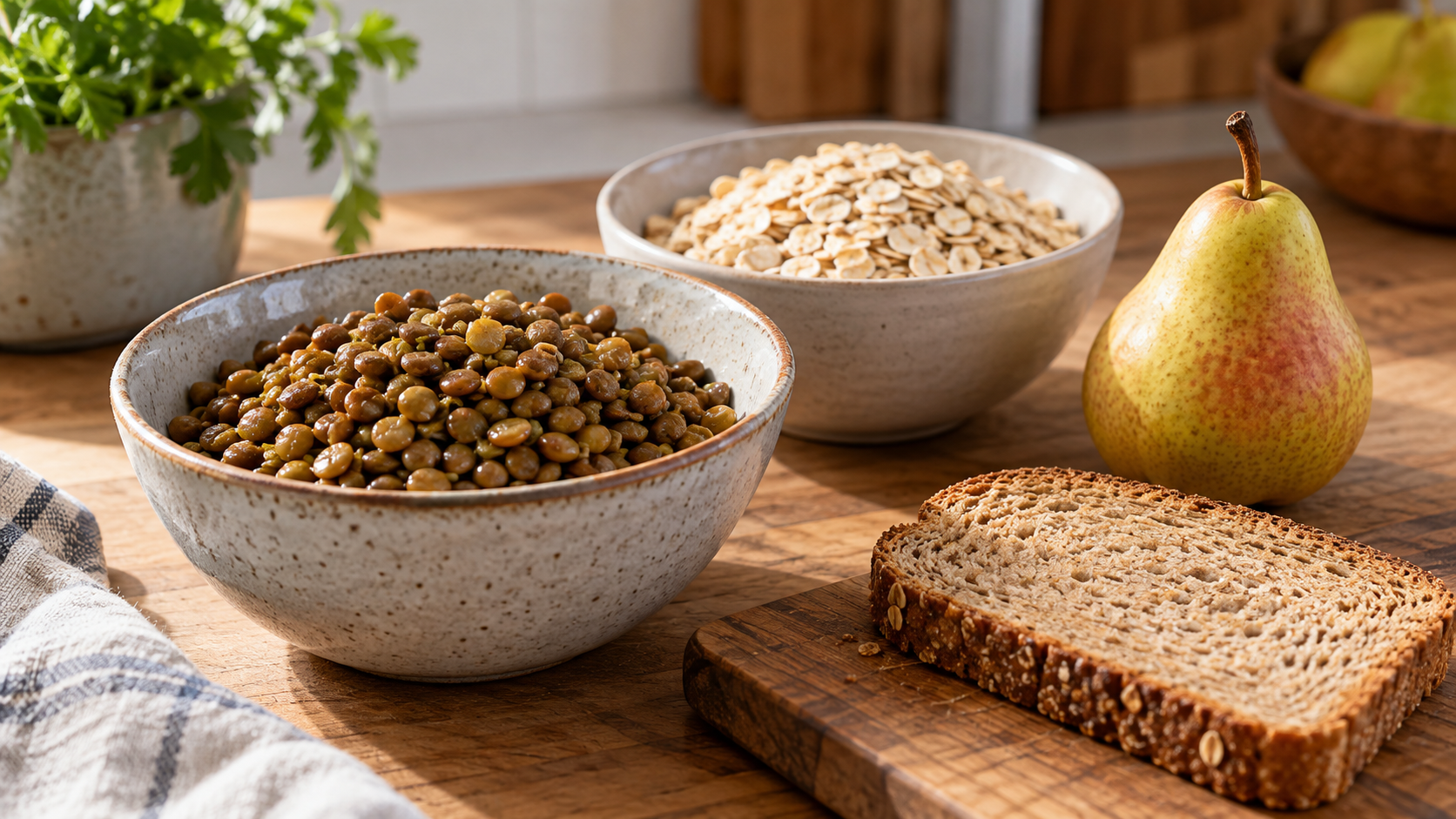
Legumes, oats, whole-grain breads, fruit, vegetables, nuts, and seeds provide different combinations of fiber and nutrients. Familiar meals can incorporate these foods without requiring a specialized product. Preparation, portion size, cost, and preferences affect what is practical. A plan becomes more sustainable when it builds on foods a person can obtain and enjoys eating regularly.
Comparing products requires reading the stated serving size as well as the fiber amount. The percentage daily value is a reference for interpreting the label, not a prescription personalized to every individual. Added fiber may contribute to the listed amount while the food differs in other respects. Looking at the whole product prevents one nutrient claim from settling every question about quality.
A sudden increase can create discomfort even when the long-term direction of the change is useful. Individual tolerance differs, and persistent pain or major bowel changes need assessment rather than repeated escalation of fiber intake. Some conditions require particular dietary instructions. General advice should support a conversation with the clinical team instead of overriding a plan designed for a specific problem.
Supplements can have a role, but the appropriate product and use depend on the goal and medical context. They do not reproduce every feature of a fiber-rich eating pattern. Questions about timing with medicines, fluid requirements, and symptoms are useful for a pharmacist or clinician. The aim is an appropriate, tolerable intake rather than pursuing a high number for its own sake.
Explore more "Explainers"
Discover additional explainers across politics, science, business, technology, and other fields. Each explainer breaks down a complex idea into clear, everyday language—helping you better understand how major concepts, systems, and debates shape the world around us.