

On This Day in Health: March 5, 2019
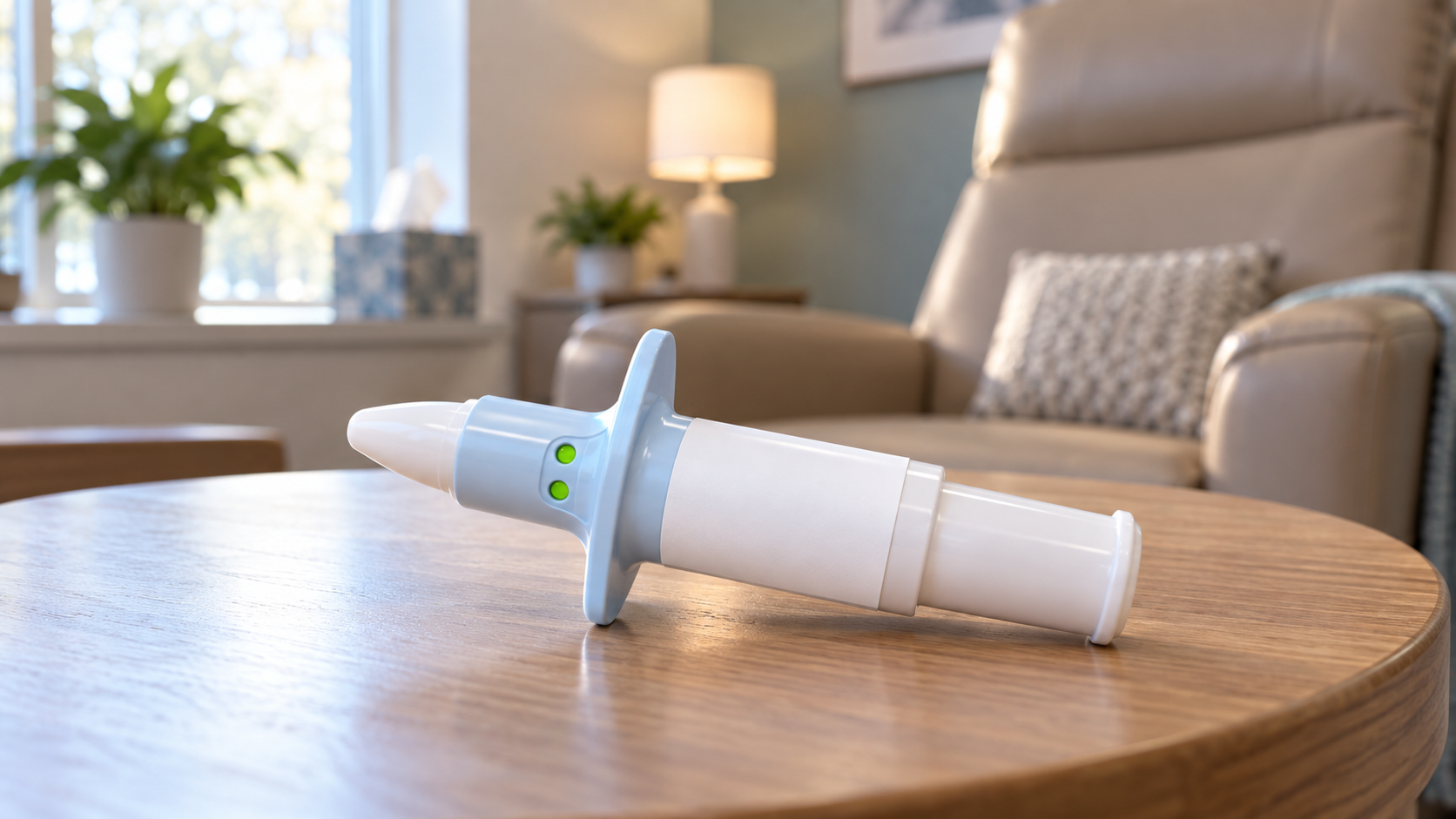
On March 5, 2019, the United States Food and Drug Administration approved esketamine nasal spray, marketed as Spravato, for adults with treatment-resistant depression. The original authorization required its use alongside an oral antidepressant. It applied to people whose depression had not adequately responded to at least two antidepressant treatments in the current episode. The decision introduced a new option for a group facing persistent symptoms despite established care. It also came with a carefully defined system of supervised administration. The milestone was therefore both a treatment approval and a framework for managing a medicine whose effects and risks required observation in a clinical setting.
Esketamine is related to ketamine and acts through the N-methyl-D-aspartate receptor, part of the brain's glutamate signaling system. This approach differs from that of many familiar antidepressants. Delivery through the nose allows the medicine to be absorbed through the lining of the nasal passages. A different mechanism offered a reason to investigate the drug in people who had not benefited from previous treatments, but novelty alone could not establish its usefulness. The approval depended on studies assessing symptoms and the maintenance of benefit. Those studies formed an evidence base for a defined indication, rather than proving that the spray would work for every person living with depression.
The original clinical program included short-term studies and a longer maintenance study. In the short-term trials, both the esketamine and comparison groups began a new oral antidepressant, an important feature when interpreting the findings. The treatment was not approved in 2019 as a stand-alone replacement for all other depression care. Its restricted distribution program required a certified office or clinic, where a patient administered the spray under a healthcare professional's supervision. Observation lasted at least two hours after a dose. Sedation, dissociation, changes in blood pressure, and the potential for misuse helped explain why the medicine could not simply be taken home like an ordinary prescription spray.
For people with depression that had resisted previous treatment, another evidence-based option carried considerable significance. Yet the organization of care remained part of the treatment itself: appointments, monitoring, and arrangements for leaving the clinic safely all mattered. Later changes in indications or prescribing requirements should be distinguished from the scope of the March 2019 decision. Remembering this date highlights a recurring feature of medical progress. A new medicine can expand possibilities while also creating responsibilities for patients, clinicians, and health systems. The history of esketamine is not only about a different biological target; it is also about evaluating benefit, acknowledging uncertainty, and building a setting in which a treatment can be offered with appropriate safeguards.
The original indication required an oral antidepressant alongside the spray. Later authorizations should not be treated as part of the 2019 approval.
The drug acts through the NMDA receptor in the glutamate system. That mechanism differed from many established antidepressant approaches.
Short-term trials and a maintenance study contributed evidence. A new biological mechanism still needed clinical evaluation.
Administration took place under supervision in a certified clinic. At least two hours of observation followed each dose under the original program.
Sedation, dissociation, blood pressure changes, and misuse risks shaped the delivery system. The approval included restrictions as well as a new option.
Appointment access and monitoring became practical parts of care. The milestone joined a treatment innovation with an organized clinical pathway.
Explore more of "On This Day ..."
Discover more events from the same date across news, politics, technology, sports, and other fields. Each link highlights significant moments that shaped history on different fronts.