

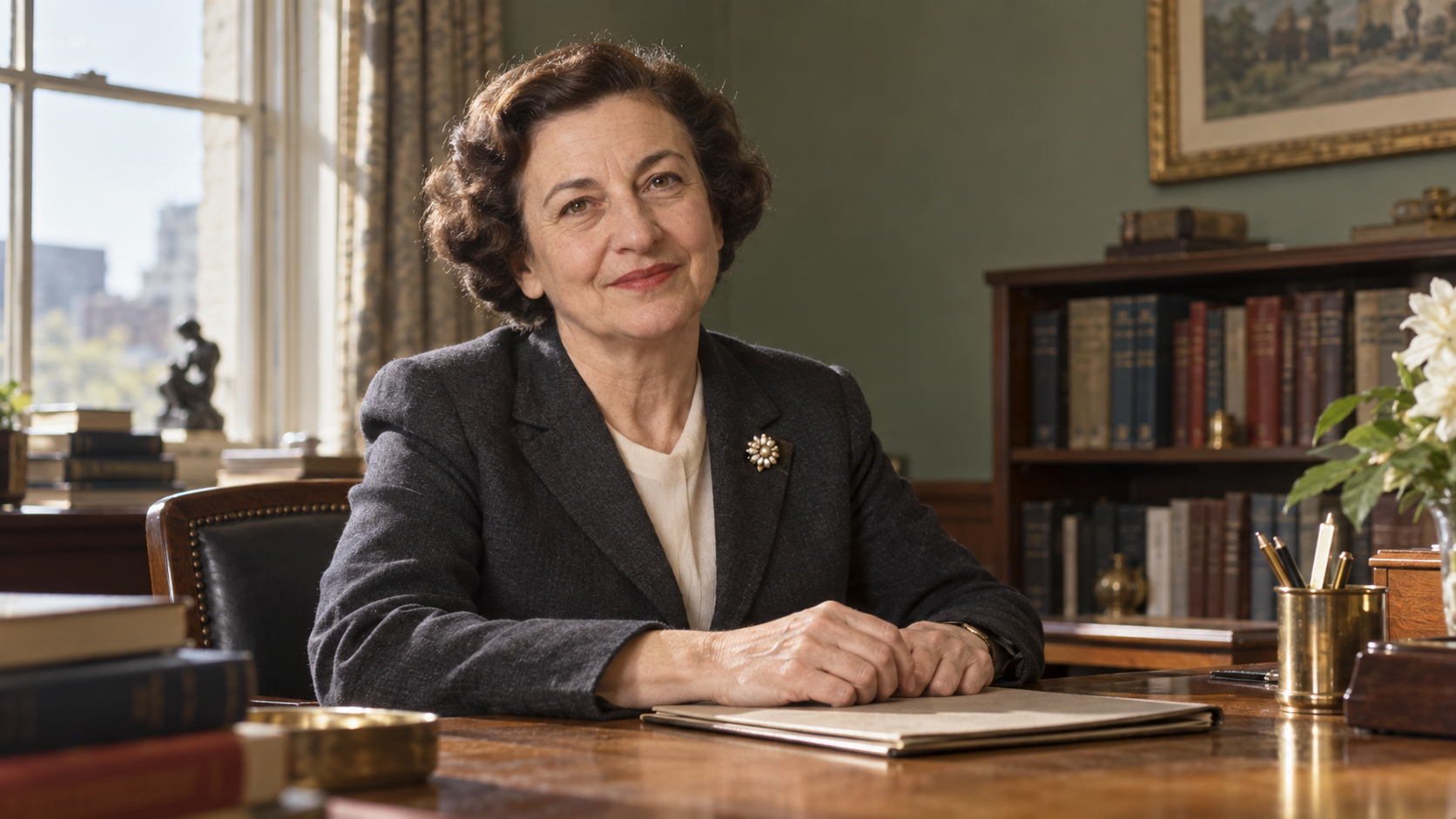
“If you think research is expensive, try disease.”
Mary Lasker’s memorable question makes a budget conversation larger. Medical research requires people, equipment, time and a willingness to investigate ideas whose usefulness remains uncertain. Those expenses are visible: they can be counted, discussed and challenged. Disease carries expenses too, although many arrive outside a research budget. A family may rearrange its days around appointments. Someone may lose income while recovering, or give up an activity that once provided pleasure and independence. Lasker, an influential advocate for medical research, asked audiences to consider that wider comparison. Her words appear in a 2007 Nature Medicine commentary on global health and in a later tribute by Research!America, where she was a founding board member. The quotation presses a question about priorities without supplying a simple formula for answering it.
Imagine a town discussing whether to support a promising research partnership. The proposed expenditure has a clear line in a document, while the consequences of continuing without better answers are scattered across households and services. Some residents know those consequences intimately; others encounter them only as an abstract concern. Bringing their experiences into the discussion changes what the document can reveal. It does not prove that this particular project will succeed, nor does it settle how scarce resources should be divided. It helps people ask better questions: What problem is being investigated? How will the work be assessed? Who might benefit, and what would make its findings usable? Research can produce disappointing results, useful negative findings or unexpected directions. Responsible support therefore involves scrutiny as well as hope, with attention to the distance between an interesting discovery and something that improves someone’s care.
There is also a moral limit to thinking about illness through money alone. A person deserves attention even when their condition has no convenient economic measure, and their value does not depend on returning to paid work. The hours a caregiver spends offering comfort matter, as do the freedoms that illness can narrow. Lasker’s challenge can make those overlooked burdens part of a public conversation while leaving room for other urgent needs, including access to care today. Investing in future knowledge and helping people now require practical choices rather than a slogan that resolves every disagreement. For an ordinary reader, the invitation is to notice how decisions describe costs and benefits. When only one side has a price tag, ask what experience remains outside the calculation. A thoughtful account of health includes uncertainty, accountability and the human lives that give discovery its purpose.
The quotation challenges a narrow view of medical research spending. It asks readers to include the consequences of disease when considering what society gains or loses through its priorities.
Its wording is confirmed in a Lasker Foundation-hosted scientific commentary and by Research!America. These sources support the attribution; an original date for coining the sentence has not been established here.
No fixed return follows from the quotation. An individual project can fail, and a finding may take considerable time and additional work before it becomes useful in care.
Public support can be accompanied by clear goals, careful evaluation and attention to who receives the eventual benefits. Those questions give the sentiment practical substance.
Disease can affect time, relationships, independence and the everyday experience of a household. These consequences deserve consideration even when they cannot be represented by one number.
A patient’s dignity is not tied to economic productivity. The quote can broaden a discussion of investment while preserving that basic respect for every person.
Explore more "Quotes of The Day"
Discover more notable quotes from influential voices across politics, science, business, technology, sports, and culture. Each quote offers insight into how ideas, beliefs, and decisions shape the world around us.