

Neuropathy Explainer
Neu
ropathy means damage or dysfunction affecting nerves. Peripheral neuropathy concerns nerves outside the brain and spinal cord, which carry information between the central nervous system and the rest of the body. These nerves help people feel touch, move muscles, and regulate automatic functions. Damage can interrupt those signals in different ways, so neuropathy describes a problem that needs an explanation rather than identifying one single disease or cause.
Sensory nerve involvement can produce tingling, burning pain, unusual sensitivity, or numbness. Motor nerve involvement can cause weakness, while autonomic nerve problems can affect functions such as blood pressure regulation or digestion. Symptoms may affect one nerve or several nerves, and the pattern matters. Problems beginning in both feet are different from a localized compressed nerve, even though both can involve altered sensation.
Diabetes is a common cause, but it is not the only explanation. Vitamin deficiencies, nerve compression, certain infections, autoimmune conditions, alcohol-related damage, and some medicines can also contribute. Sometimes a cause remains unclear despite investigation. Clinicians consider the timing, distribution, medical history, and examination together. Assuming that every painful or numb foot has the same cause can miss an important and potentially treatable problem.
Treatment depends on the underlying cause and the effects on daily life. Addressing a deficiency or relieving pressure on a nerve has a different purpose from reducing nerve pain. Rehabilitation and practical protection may help preserve function and prevent injuries when sensation is reduced. Some nerve problems improve, while others persist. A useful care plan therefore considers both the possibility of recovery and how to live more safely with ongoing symptoms.
Sensory nerves report information such as temperature, pain, and position. Damage can create sensations that should not be there, including burning, or reduce sensations that should be present. These effects can coexist: a foot may feel painfully abnormal while failing to detect an injury. Numbness is therefore not necessarily a milder or less important problem than pain, especially when it interferes with protective awareness.
Motor nerves control muscle activity, while autonomic nerves support automatic bodily processes. Weakness, balance difficulties, or changes in sweating may belong to different patterns of nerve involvement. Symptoms alone do not reveal exactly which nerve fibers are affected. Their distribution and associated findings help clinicians decide whether a localized injury, a widespread condition, or another explanation is more likely.
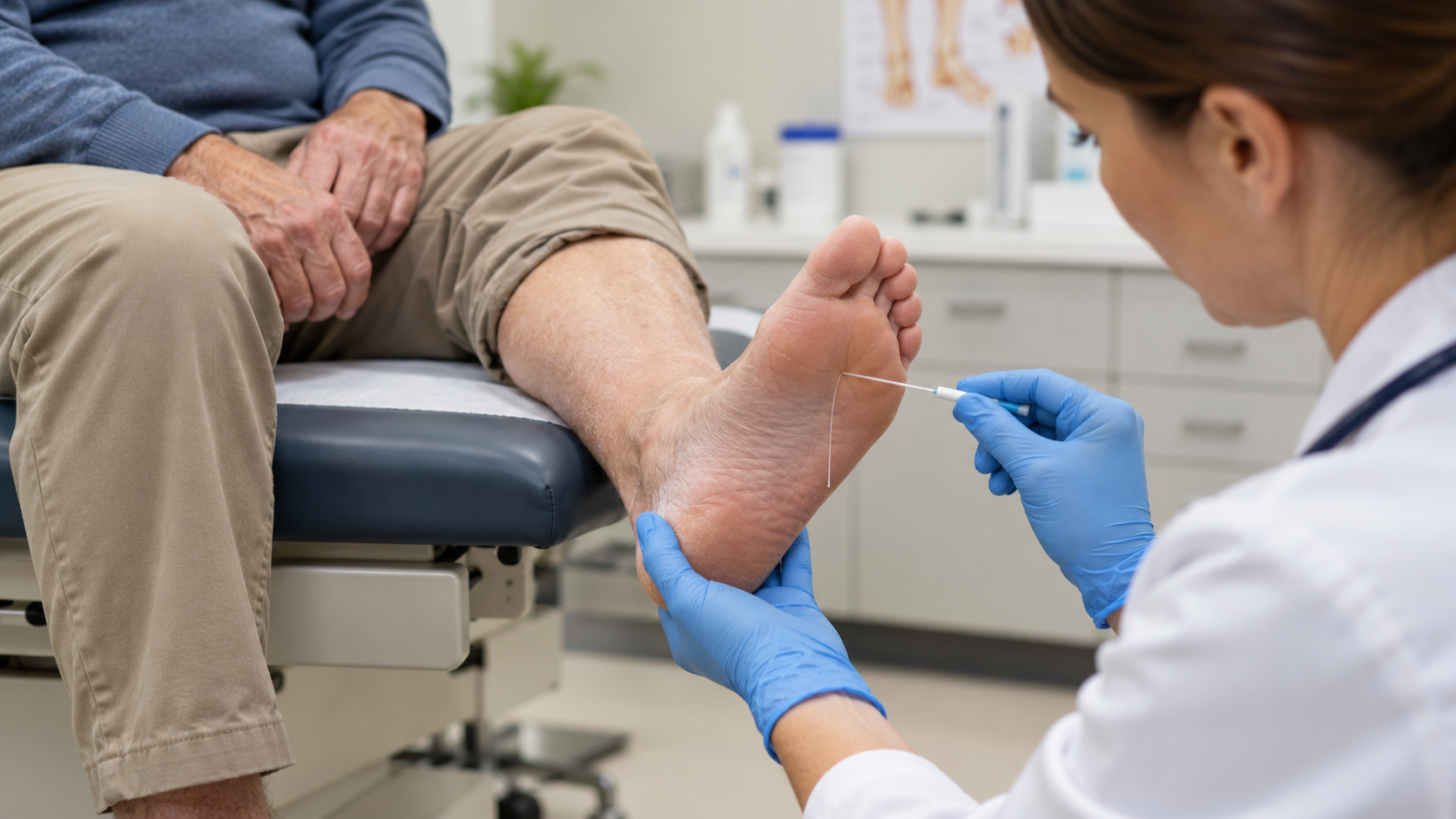
Assessment usually begins with a history and an examination of sensation, strength, and reflexes. The clinician asks about medical conditions, medicines, exposures, and when the changes started. Blood tests may investigate possible contributors such as diabetes or vitamin deficiency. The purpose is to find an explanation that fits the person’s pattern, rather than to order every available test for every symptom.
Nerve conduction studies and electromyography may help assess how nerves and muscles function. Other investigations are selected according to the suspected cause, and some types of nerve damage require a different testing approach. A normal result on one test does not automatically settle every possibility. Findings need to be interpreted with the examination and history, including whether symptoms are changing over time.
Cause-directed treatment may prevent further injury or support recovery, but it does not guarantee that existing damage will disappear. Medicines used for nerve pain can differ from ordinary pain relievers and require an individualized discussion of benefits and side effects. If a prescribed medicine is suspected of contributing, the care team should review it. Independently stopping an important treatment can create another health problem.
Reduced sensation can make cuts, pressure injuries, or heat damage harder to notice. Appropriate foot care, suitable footwear, and regular checks may therefore become part of management, particularly when diabetes is involved. Physiotherapy or other rehabilitation can address mobility and function. New or worsening weakness deserves medical assessment, and treatment goals should include practical safety as well as symptom relief.
Explore more "Explainers"
Discover additional explainers across politics, science, business, technology, and other fields. Each explainer breaks down a complex idea into clear, everyday language—helping you better understand how major concepts, systems, and debates shape the world around us.