

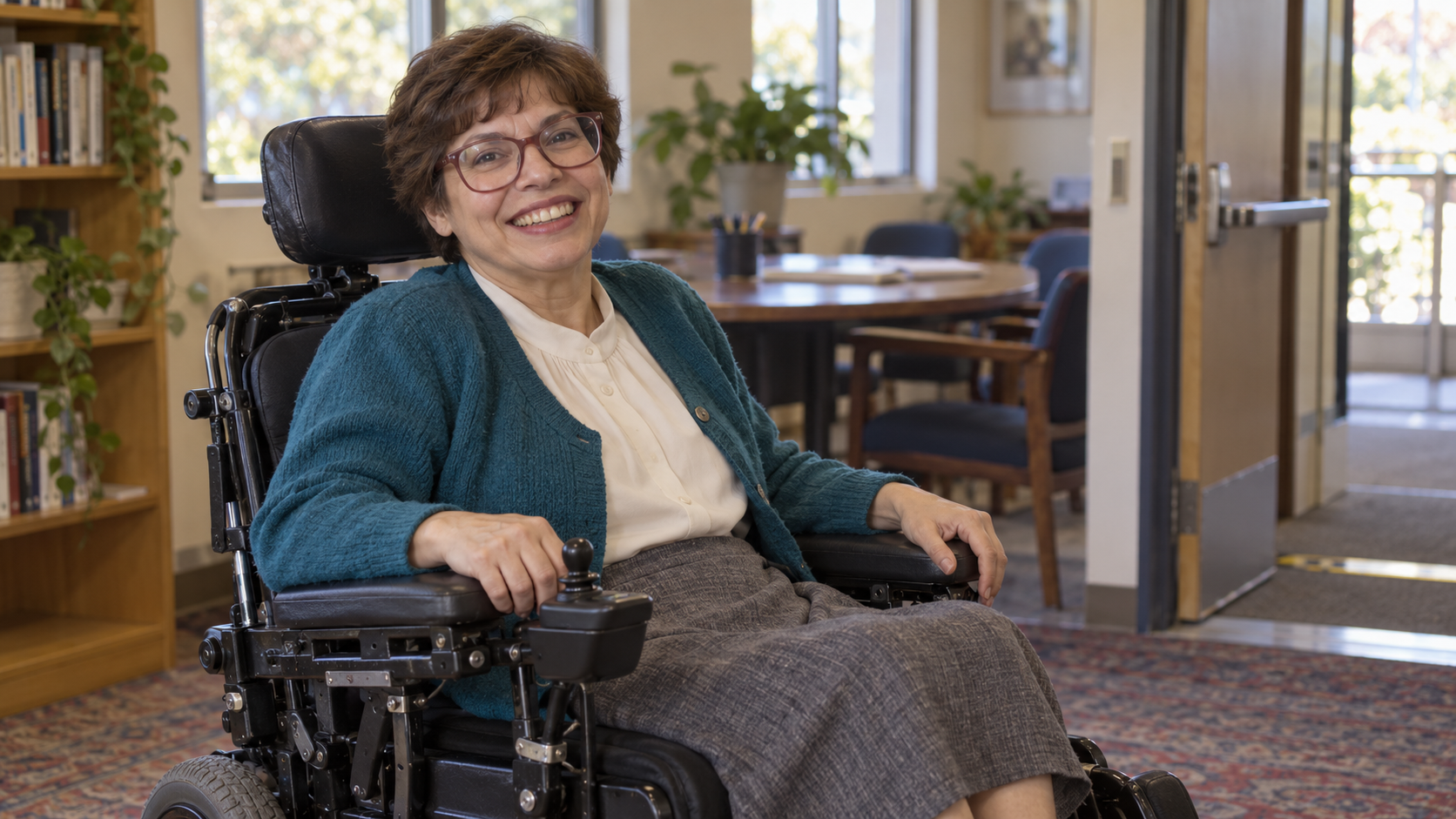
“It is not a tragedy to me that I’m living in a wheelchair.”
Judith Heumann speaks with authority about her own life. The sentence is part of a statement she made to journalist Joseph Shapiro in 1987, as he later recalled in his reporting. Her preceding words focused on society’s failure to provide opportunities and accessible buildings. Read together, the two thoughts challenge an assumption: that someone else can look at a wheelchair and decide what the person’s life means. Heumann’s answer directs attention toward exclusion and participation. It does not require every disabled person to describe their experience identically. Rather, it makes room for the person living that life to define it. For a health reader, this is a reminder that a description of a body or an assistive device cannot stand in for a whole account of someone’s ambitions, relationships and choices.
A planned gathering offers a simple way to consider the distinction. An invitation can sound welcoming while leaving practical questions unanswered. Can the guest enter the building, use the meeting space and take part in the activity as intended? If those details have not been considered, the invitation may offer a welcome that the setting does not deliver. The host could respond by treating the guest’s absence as inevitable, or could ask what needs to change and take responsibility for finding out. These responses lead toward different ideas of belonging. One treats participation as an exception to be managed; the other regards access as part of planning. Asking the person about their needs and preferences helps avoid a further mistake: choosing a solution for them without considering whether it is one they want. Welcome becomes more useful when it is attached to concrete preparation.
Heumann’s words also question the habit of making pity the first response to disability. Concern can be sincere while still overlooking what the person is actually saying. They may be discussing a job, a visit, an event or an ordinary frustration, rather than inviting an assessment of their entire life. Listening to the subject they have chosen respects that difference. It lets a conversation proceed between people instead of turning one person into an object of someone else’s assumptions. This does not dismiss hardship or imply that every barrier can be resolved through a friendly exchange. It asks the listener to attend to the barrier that is present and to the person’s own priorities. Readers can apply the thought whenever they organize a shared activity: consider access early, invite input and follow through on what has been agreed. The quotation’s enduring challenge is to replace a presumed story with attention to the life and choices in front of us.
Heumann’s preceding words address exclusion from opportunities and accessible places. They locate a problem in what society fails to provide.
Her chosen sentence asserts how she understands her own life. It should not be turned into a demand that everyone describe disability the same way.
An invitation needs practical preparation that allows the guest to participate. Access belongs within planning.
Ask about the person’s needs and preferences instead of selecting an unwanted arrangement on their behalf.
Follow the topic the person is actually discussing. A wheelchair does not explain an entire life.
Attention to someone’s priorities can make an offer more relevant. Follow-through matters alongside a welcoming intention.
Explore more "Quotes of The Day"
Discover more notable quotes from influential voices across politics, science, business, technology, sports, and culture. Each quote offers insight into how ideas, beliefs, and decisions shape the world around us.