

Peripheral Artery Disease Explainer
Peripheral artery disease, or PAD, usually develops when fatty deposits build up inside arteries and restrict blood flow. Lower limb PAD affects arteries supplying the legs and feet. These vessels carry oxygen-rich blood toward tissues, so reduced circulation can become especially noticeable when muscles need more oxygen during activity. PAD is an artery problem, distinct from the vein clots or varicose veins that can also affect the legs.
A familiar symptom is leg muscle discomfort brought on by walking and relieved by rest, called intermittent claudication. The discomfort may feel like cramping, aching, or heaviness, often in the calf. However, many people have less typical symptoms or none they recognize. A slowly healing foot wound, a colder foot, or pain at rest can also be relevant. The absence of classic walking pain does not exclude the condition.
PAD matters beyond walking ability. Plaque in leg arteries can accompany disease elsewhere in the circulation, increasing concern about heart attack and stroke. Treatment therefore aims to protect overall cardiovascular health as well as improve symptoms and prevent limb complications. Calling the problem poor circulation without identifying the cause can obscure these wider goals. Diagnosis helps turn a vague description into a plan with specific priorities.
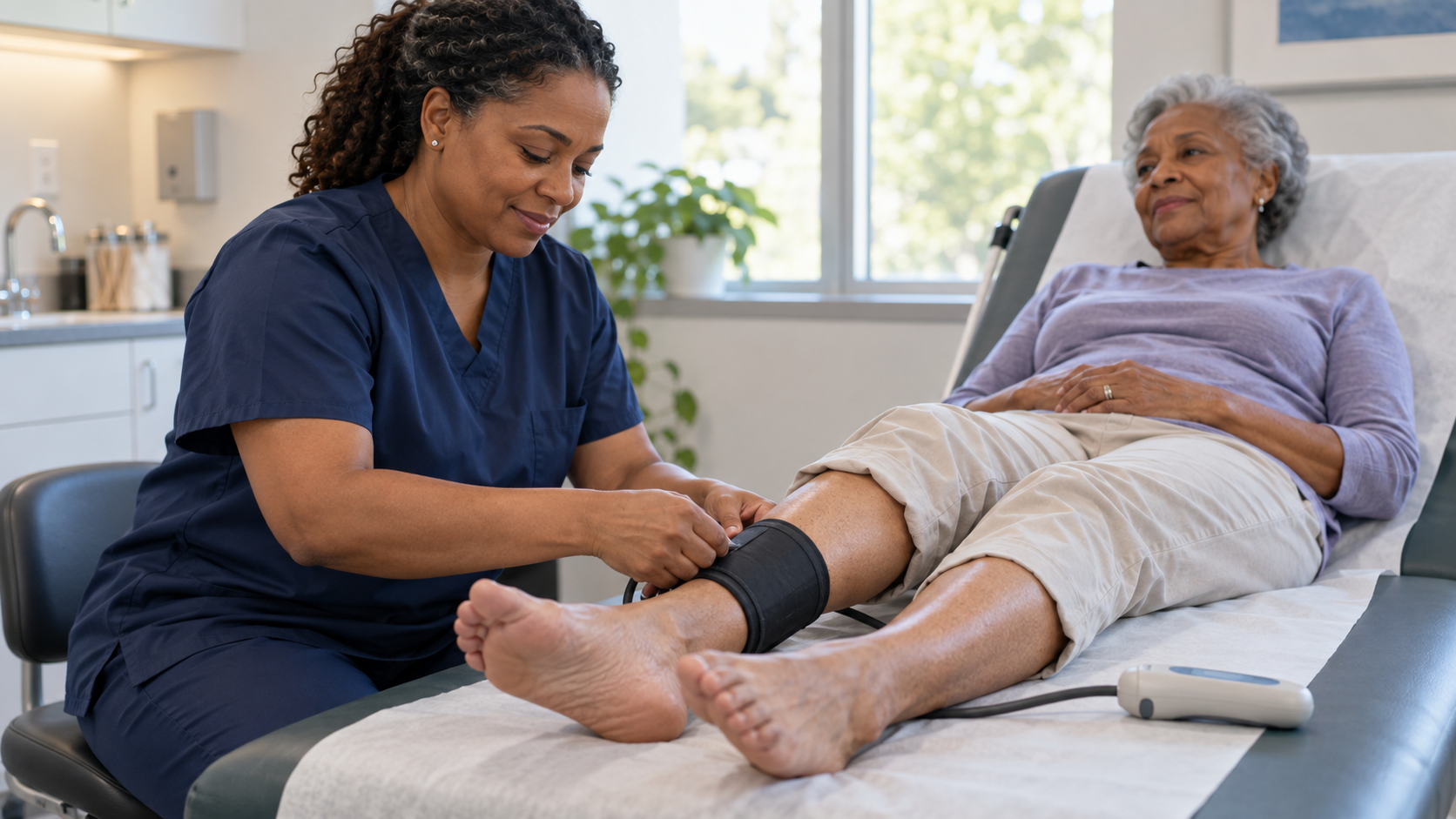
Assessment combines history, examination, and selected tests. An ankle-brachial index compares blood pressure at the ankle with pressure in the arm. Other testing may be needed to clarify results or locate narrowing. Care can include support to stop smoking, appropriate exercise, medicines, and sometimes procedures to restore blood flow. The combination depends on severity and other health conditions, rather than a rule that everyone requires an operation.
During exercise, a narrowed artery may not deliver enough extra blood to meet muscle demand. Rest reduces that demand, which helps explain the recurring pattern of claudication. Joint disorders, nerve problems, and other conditions can also cause leg pain. The clinician asks what triggers it, what relieves it, and where it occurs. A recognizable pattern is useful evidence, but an individual symptom is not sufficient to establish PAD.
More severe reduction in blood supply can cause pain even at rest or impair healing. Foot wounds deserve attention, particularly when diabetes or reduced sensation is also present. A sudden painful, cold, pale, or numb limb can indicate an acute circulation emergency and needs immediate assessment. It should not be treated as an ordinary exercise ache. The change in timing and severity can be as important as the symptom itself.
Examination may include checking pulses, skin, wounds, and temperature differences, alongside questions about smoking and cardiovascular history. The ankle-brachial index provides a comparison of pressures rather than a direct photograph of the artery. Some circumstances make its interpretation less straightforward. A clinician may use another pressure measurement or testing after exercise when necessary, so a single number should be understood within the assessment rather than interpreted in isolation.
Doppler ultrasound can assess blood flow and help locate areas of narrowing. Other imaging provides more detail when the team needs it, for example before planning a procedure. Blood tests may check related risks such as cholesterol or blood glucose, but they do not directly show the location of a blockage. The purpose of each investigation should be clear: confirming PAD, assessing its effect, or helping select treatment.
A tailored activity program can improve walking and function. Supervised programs or structured home programs with support are different from simply being told to walk through any symptom. The provider sets a suitable plan and considers other illnesses or foot problems. Smoking cessation and management of blood pressure, cholesterol, and diabetes address broader risk. Medicines may serve these protective goals even when their benefit is not immediately felt in the leg.
Procedures can open or bypass a blocked section of artery in selected circumstances. They do not remove the need for ongoing cardiovascular care, because atherosclerosis can affect other vessels. Follow-up considers symptoms, walking capacity, skin and wound health, and treatment safety. Understanding which part of the plan improves movement and which part reduces future risk helps people assess progress without expecting one intervention to solve every consequence of the disease.
Explore more "Explainers"
Discover additional explainers across politics, science, business, technology, and other fields. Each explainer breaks down a complex idea into clear, everyday language—helping you better understand how major concepts, systems, and debates shape the world around us.