

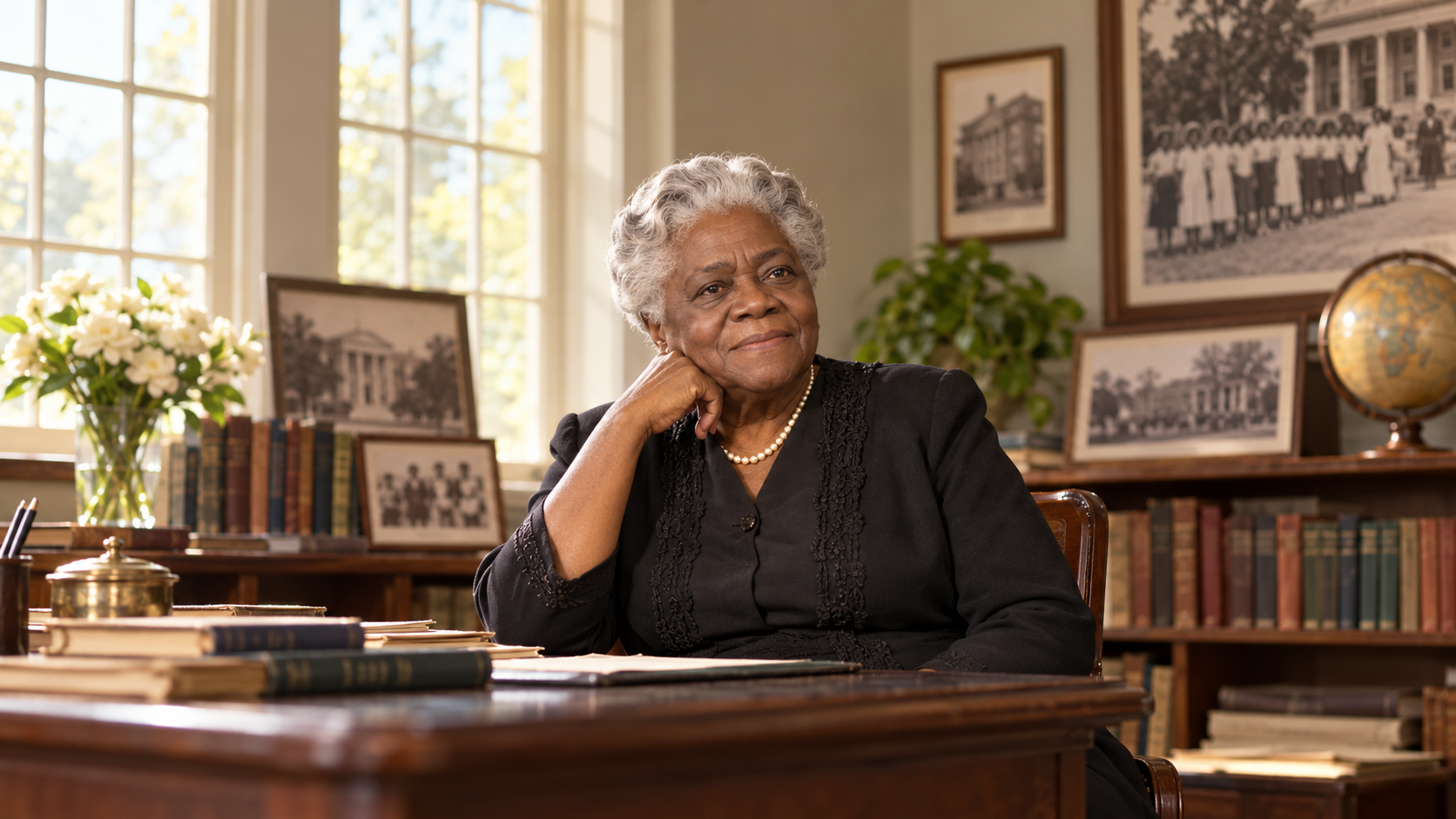
“Faith is the first factor in a life devoted to service. Without it, nothing is possible. With it, nothing is impossible.”
Mary McLeod Bethune placed these words in her “Last Will and Testament,” a 1955 statement that gathered the principles she hoped to leave to future generations. By then, she had spent decades building institutions: she founded the school that became Bethune-Cookman College, led the National Council of Negro Women, and advised national leaders while pressing for fuller Black participation in public life. The sentence therefore did not come from a detached meditation on optimism. It came from a life in which conviction had repeatedly been translated into classrooms, organizations, coalitions, and political pressure. April 6 is only the quotation’s position in the NewsStreets calendar; 1955 identifies its historical source.
Bethune’s grammar connects faith to service before it connects faith to achievement. That order matters. The faith she names is not a guarantee that every plan will succeed, nor is it a license to ignore evidence, risk, or limited resources. It is the prior commitment that makes sustained responsibility possible when results are delayed or uncertain. “Without it, nothing is possible” describes the paralysis that can follow when people no longer believe their actions matter. “With it, nothing is impossible” names the widened horizon that appears when purpose, courage, and collective effort reinforce one another. Her point is less about magical thinking than about the practical force of conviction.
The quotation also deserves a careful reading because faith can be used carelessly. Telling an exhausted person simply to believe harder can hide material barriers or shift responsibility away from institutions. Bethune’s own record points in the opposite direction. She paired spiritual assurance with fundraising, administration, organizing, negotiation, and the patient construction of durable networks. Service was not a feeling of goodwill; it required skill, time, and shared infrastructure. Nor did she work alone. Her achievements depended on students, teachers, clubwomen, donors, public officials, and communities whose labor made programs real. Faith, in this context, is not denial of obstacles. It is a reason to meet them with preparation and allies.
A contemporary application begins by giving belief a task. Someone who cares about education might tutor regularly, help a family navigate enrollment, or defend a library budget. A person concerned about isolation might schedule the call, deliver the meal, or build a dependable rotation rather than waiting for perfect inspiration. The useful question is not “Do I feel certain?” but “What form of service can this conviction support today?” Small actions do not erase structural problems, yet they can create trust and evidence for larger action. Bethune’s sentence remains bracing because it joins inward resolve to outward obligation. Faith becomes credible when it helps a person keep showing up, learn from setbacks, and widen the circle of people able to act.
Bethune included the line in her 1955 “Last Will and Testament,” a statement of values composed near the end of a career devoted to education, civil rights, and institution building.
The full document presents faith alongside love, hope, education, racial dignity, and responsibility to young people. The quotation belongs to that wider civic and spiritual inheritance.
Faith here is a sustaining commitment that precedes service. It creates the confidence to begin and continue difficult work without pretending that obstacles have disappeared.
Bethune’s example keeps the line grounded: belief was joined to planning, administration, coalition building, and repeated practical action, not offered as a substitute for them.
Many public problems can make individual effort feel inconsequential. The quotation argues that durable service starts by refusing the conclusion that responsible action is pointless.
A useful practice is to name one conviction, give it one recurring act of service, and invite one other person to share the work so that hope gains structure.
Explore more "Quotes of The Day"
Discover more notable quotes from influential voices across politics, science, business, technology, sports, and culture. Each quote offers insight into how ideas, beliefs, and decisions shape the world around us.