

On This Day in Business: August 12, 1851
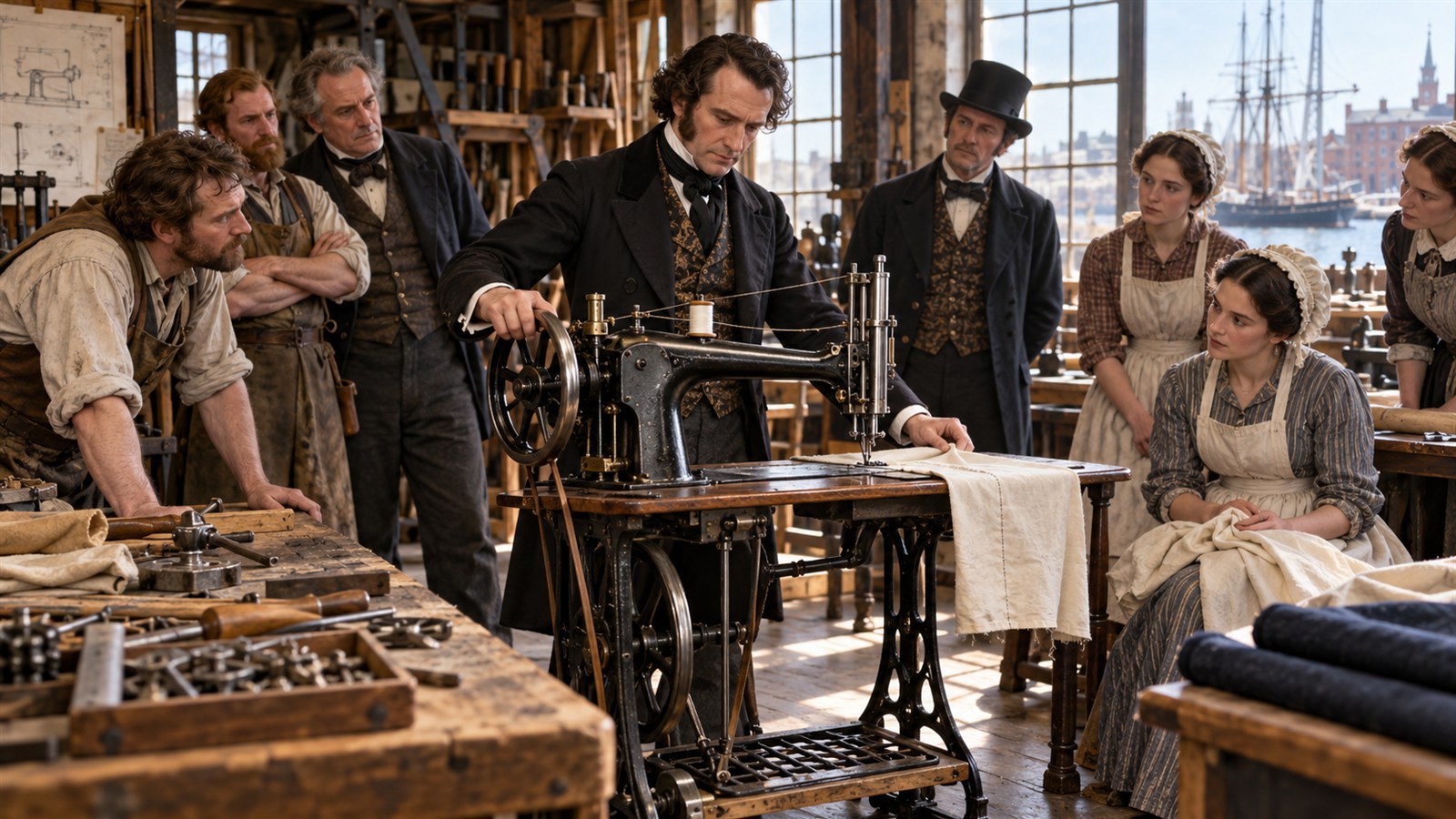
On August 12, 1851, Isaac Merritt Singer received U.S. Patent No. 8,294 for improvements to the sewing machine. His design used a straight, vertically moving needle, a reciprocating shuttle, thread-tension controls, and a foot-powered treadle that left both hands free to guide cloth. Singer did not invent sewing by machine, and other inventors held important patents on the lockstitch. His contribution was to refine a workable commercial machine and demonstrate it persuasively. The patent became one component in a much larger enterprise built around production, sales, financing, and customer support.
Early sewing-machine makers fought costly patent disputes because a successful product depended on several protected mechanisms. In 1856, leading firms formed the Sewing Machine Combination, a patent pool that licensed essential claims and reduced litigation among participants. The arrangement allowed manufacturers to focus more resources on building and selling machines, though it also raised barriers for outsiders. It was an early example of competitors cooperating around intellectual property to create a stable market. The episode shows that complex products often require negotiated access to a bundle of inventions rather than ownership of one decisive patent.
Singer's company also innovated in distribution. Sewing machines were expensive for many households, so installment plans spread the purchase price over time. Demonstration rooms, traveling sales agents, standardized parts, repair support, and trade-ins reduced buyers' uncertainty. Those methods treated the machine as a durable system requiring trust and service, not merely an object sold once. Credit expanded the addressable market, while local representatives taught customers how to use the product. The business model helped convert labor-saving machinery from factory equipment into a household purchase with a recognizable international brand.
The sewing machine transformed garment production and domestic work, though its effects varied across factories, homes, and labor markets. It increased output and encouraged ready-made clothing, yet it also supported demanding piecework systems and did not automatically improve workers' conditions. Singer's August patent therefore belongs to both technology and business history. The enduring lesson is that product advantage alone rarely creates a mass market. Manufacturing scale, compatible intellectual property, financing, training, maintenance, and persuasive retailing all helped turn a mechanical improvement into a global industry. The company sold confidence along with machinery, giving buyers a path to afford, learn, repair, and eventually replace a durable product. That system generated repeat revenue from supplies and service while protecting the brand's reputation. It also gave the company information about failures and customer behavior, allowing future machines and sales practices to improve through experience gathered in the field.
Isaac Singer received U.S. Patent No. 8,294 on August 12, 1851.
His machine combined a straight needle, shuttle, tension control, and foot treadle.
Multiple companies held essential sewing-machine patents, leading to extensive litigation.
A patent pool later allowed leading manufacturers to license key claims through one arrangement.
Installment credit and local demonstrations helped make expensive machines accessible to households.
Singer's growth showed how service, financing, and distribution can be as important as the invention itself.
Explore more of "On This Day ..."
Discover more events from the same date across news, politics, technology, sports, and other fields. Each link highlights significant moments that shaped history on different fronts.