

On This Day in Business: August 15, 1914
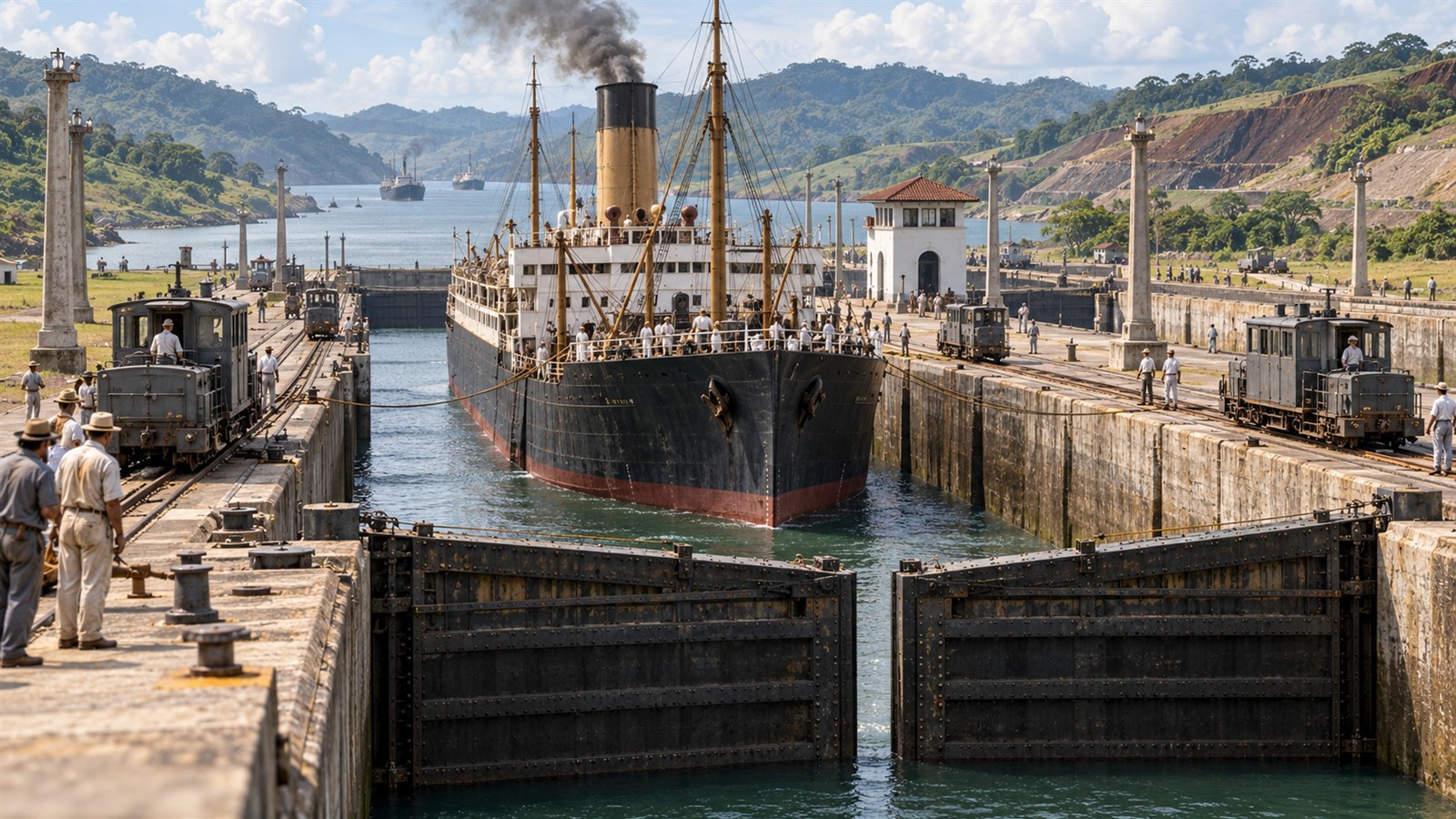
On August 15, 1914, the cargo and passenger ship Ancon made the official first transit marking the Panama Canal's opening to commercial traffic. The waterway connected the Atlantic and Pacific through a system of locks, an artificial lake, and excavated channels. Ships traveling between the coasts of the Americas no longer needed to round Cape Horn, saving thousands of miles on many routes. The opening represented decades of engineering, investment, disease control, and political conflict. It also introduced a piece of infrastructure capable of changing where companies placed ports, warehouses, naval bases, and production.
A canal creates value by reducing distance, time, fuel, and uncertainty. Those savings influence freight rates and make some goods economical to trade across markets that were previously too far apart. Steamship lines could redesign schedules, while ports on the Gulf and East Coasts gained more direct access to Pacific commerce. The benefits were not evenly distributed, and the canal's creation involved a failed French effort, enormous worker sacrifice, U.S. intervention in Panama, and unequal sovereignty arrangements. Its commercial success cannot be separated from the human and political costs built into the project.
Operating the canal required a permanent service organization. Locks had to be staffed and maintained, water managed, channels dredged, traffic scheduled, and tolls collected. Shipping companies needed accurate rules and reliable transit times. The canal therefore became both a route and a platform coordinating thousands of private voyages through a publicly administered bottleneck. Capacity limits influenced ship design, giving rise to the Panamax dimensions used across global fleets, ports, and cargo terminals. One infrastructure standard propagated through investments made far beyond Panama itself.
Panama assumed control of the canal at the end of 1999, and a major expansion opened in 2016 to accommodate larger ships. Drought and changing trade patterns continue to test its capacity and economic importance. The 1914 opening remains a vivid example of infrastructure reshaping markets by changing the effective map of the world. Companies did not merely travel faster; they reorganized supply chains around a new passage. The canal's history also warns that strategic assets require continuing investment, environmental stewardship, and legitimate governance if their commercial benefits are to endure. A bottleneck can create enormous value, but it also concentrates risk, making maintenance, capacity planning, and water management matters of global commercial concern. Canal tolls and waiting times also became inputs to private routing decisions. Shipowners continually compare the passage with longer alternatives, so the canal must deliver enough time and fuel savings to justify its price while funding the system that keeps those savings possible.
The steamship Ancon made the official opening transit on August 15, 1914.
The canal linked the Atlantic and Pacific through locks, Gatun Lake, and excavated channels.
Shorter routes reduced voyage time and fuel costs for many shipping lanes.
Ports, fleets, warehouses, and trade patterns adjusted to the new commercial geography.
Canal dimensions influenced standardized Panamax ship and port investments around the world.
The project delivered enormous economic value while carrying deep human, political, and environmental costs.
Explore more of "On This Day ..."
Discover more events from the same date across news, politics, technology, sports, and other fields. Each link highlights significant moments that shaped history on different fronts.