

On This Day in Life: August 1, 1907
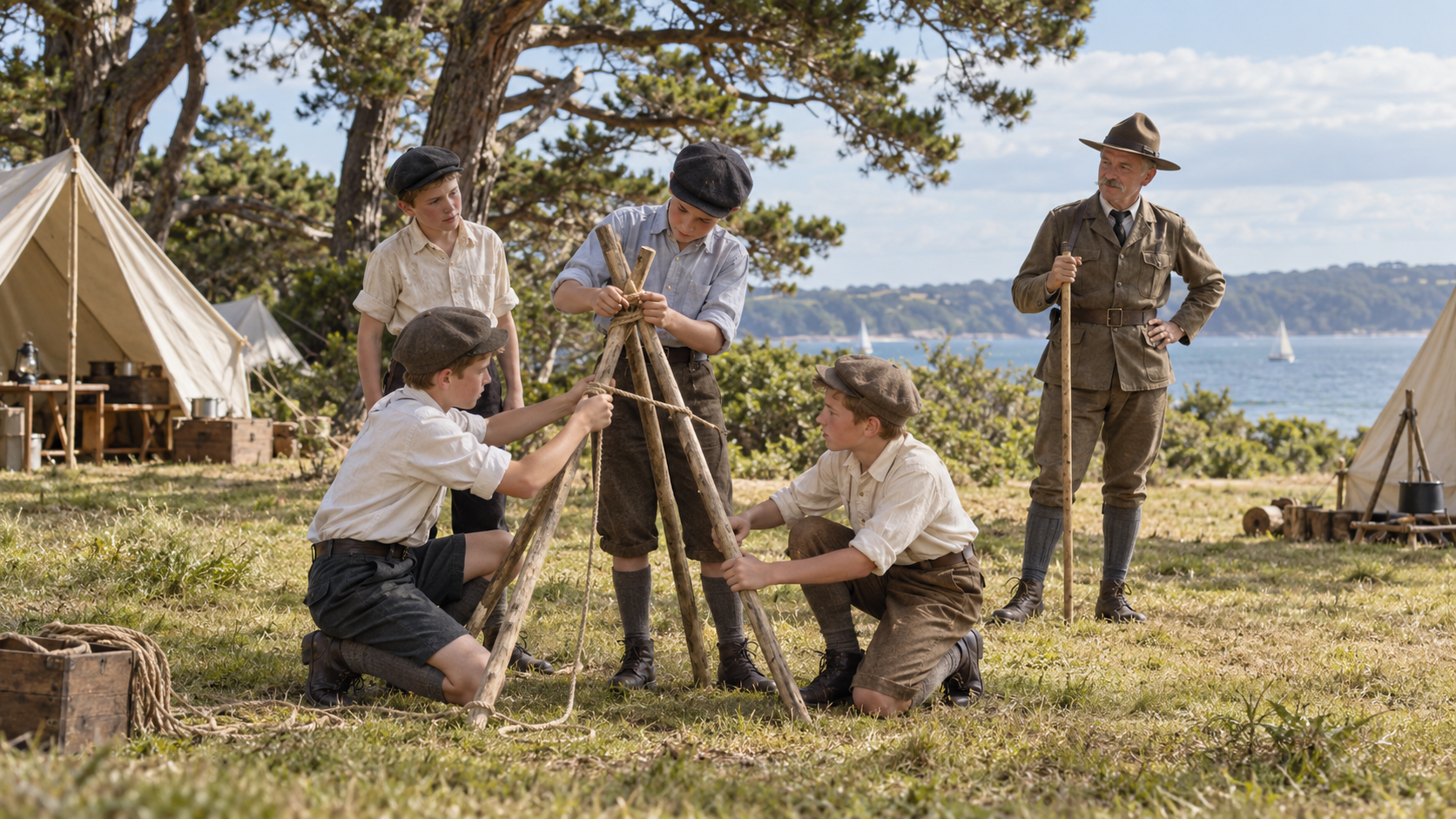
On August 1, 1907, Robert Baden-Powell opened an experimental camp for 20 boys on Brownsea Island in Poole Harbour, Dorset, to test a youth program built around patrols, outdoor skills, observation, and responsibility. The date matters in lifestyle history because an outdoor experiment helped turn camping, teamwork, and service into an organized part of childhood. It was not merely a headline for institutions or specialists; it touched the settings, objects, expectations, and shared rituals through which people organized ordinary days. On the island’s grassy clearings, boys in shirts, knickerbockers, caps, and long socks practiced campcraft beneath pines while Baden-Powell supervised with a staff in hand. Seen at human scale, the episode shows how a public milestone becomes meaningful through repeated personal choices, conversations, and memories.
The boys had arrived the previous day and came from public schools and local Boys’ Brigade units. They were divided into four patrols identified as Bulls, Wolves, Curlews, and Ravens, with colored shoulder knots and youth leaders. The daily program used camping, tracking, cooking, games, nature study, first aid, and evening campfires rather than a conventional classroom. The setting is essential to understanding why the event attracted attention. New ideas rarely arrive in isolation: they meet existing technology, commerce, custom, law, and desire. Contemporary newspapers, public spaces, shops, schools, workplaces, or homes carried the story outward, giving people practical ways to interpret it. Some welcomed the change, others doubted it, and many first encountered it indirectly. That mixture of novelty and familiarity helped the moment travel from a single date into a broader change in behavior.
The camp showed that a small patrol could give young people real responsibility while making practical learning adventurous. Its social mix was limited by the standards of modern youth programs, but the attempt to bring boys from different backgrounds together was unusual in Edwardian Britain. In daily life, the consequences appeared through altered routines, new expectations, and different ways of spending time or money. Baden-Powell drew on the successful experiment while publishing Scouting for Boys in 1908. Local groups formed rapidly, followed by a worldwide movement that later added programs for girls and younger children and adapted its methods across cultures. The benefits were never the whole story; major changes also exposed questions about access, responsibility, fairness, cost, and who had power to define progress. Those tensions deserve a place beside the celebration because they show how culture actually develops. The event mattered not because everyone experienced it in the same way, but because it opened a durable argument about how people wanted to live.
Today, the legacy remains visible: Scouting remains a major international youth movement, while its organizations continue to reassess inclusion, safeguarding, leadership, and the colonial and military influences within their history. Familiarity can make that inheritance easy to overlook, yet the practices surrounding it were built through years of experimentation, adaptation, criticism, and use. Looking back does more than celebrate an anniversary. It reveals the chain between public decisions and private habits, between ambitious ideas and the small acts that make them ordinary. On this day, one historical moment became part of the texture of modern life. Remembering the full setting lets the milestone feel less like a frozen fact and more like a living part of experience.
On August 1, 1907, Robert Baden-Powell opened an experimental camp for 20 boys on Brownsea Island in Poole Harbour, Dorset, to test a youth program built around patrols, outdoor skills, observation, and responsibility.
The boys had arrived the previous day and came from public schools and local Boys' Brigade units. They were divided into four patrols identified as Bulls, Wolves, Curlews, and Ravens, with colored shoulder knots and youth leaders. The daily program used camping, tracking, cooking, games, nature study, first aid, and evening campfires rather than a conventional classroom.
The camp showed that a small patrol could give young people real responsibility while making practical learning adventurous. Its social mix was limited by the standards of modern youth programs, but the attempt to bring boys from different backgrounds together was unusual in Edwardian Britain.
The event matters in lifestyle history because an outdoor experiment helped turn camping, teamwork, and service into an organized part of childhood.
Baden-Powell drew on the successful experiment while publishing Scouting for Boys in 1908. Local groups formed rapidly, followed by a worldwide movement that later added programs for girls and younger children and adapted its methods across cultures.
The legacy remains visible today: Scouting remains a major international youth movement, while its organizations continue to reassess inclusion, safeguarding, leadership, and the colonial and military influences within their history.
Explore more of "On This Day ..."
Discover more events from the same date across news, politics, technology, sports, and other fields. Each link highlights significant moments that shaped history on different fronts.