

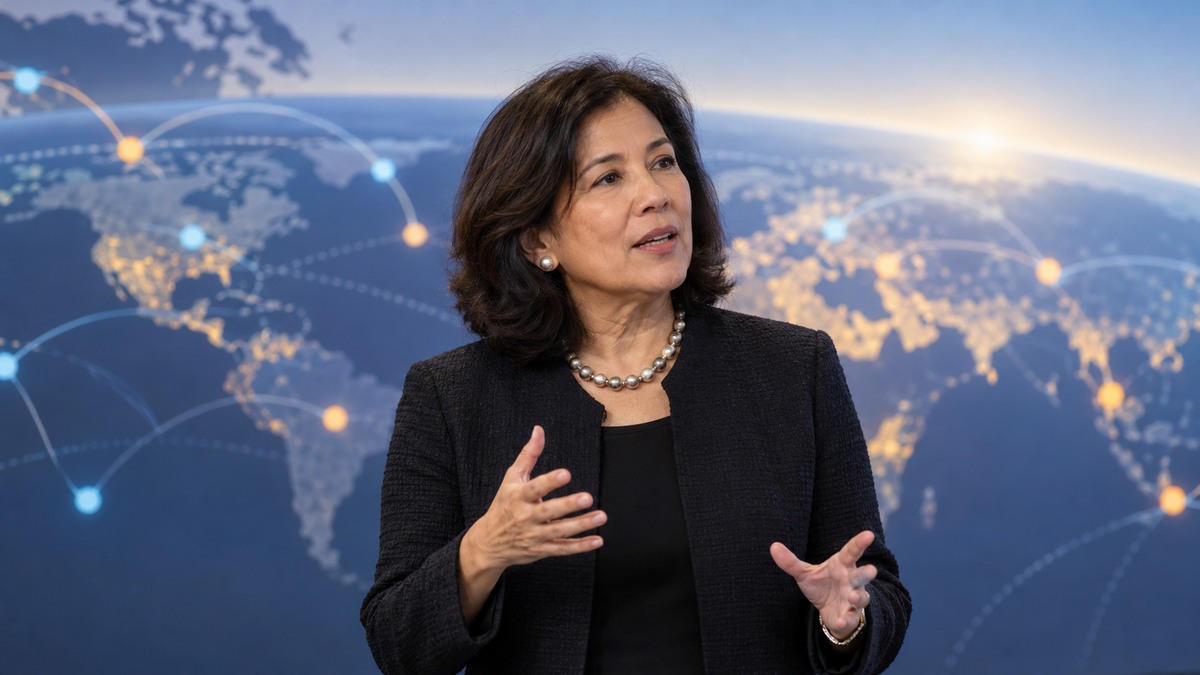
“Great leaders are not head-down. They see around corners, shaping their future, not just reacting to it.”
Roselinde Torres made this statement in her 2013 TED talk on what it takes to be a great leader. Her research emphasized anticipation, diverse relationships, and the courage to abandon practices that once produced success but no longer fit a changing environment. Seeing around corners is not prediction theater. It is disciplined exposure to signals beyond the executive routine: customers, technologies, communities, critics, adjacent industries, and people whose experience differs from the leader’s. Breadth improves the questions asked before a trend becomes obvious. Behind the concise wording is a claim about how organizations create results. It encourages leaders to look beyond individual effort and examine design, incentives, information, relationships, and the customer context that determine whether a good intention becomes reliable performance.
Leaders can reserve time for external learning, map whose perspectives shape their thinking, and invite credible disagreement into strategic reviews. Scenario work should connect weak signals to contingent actions, so attention becomes preparation rather than a collection of interesting observations. Managers can translate the claim into a small experiment with a baseline, an owner, a defined customer or employee outcome, and a review date. Specificity protects the work from drifting into broad language that nobody can challenge or verify.
Foresight can become fashionable speculation or a reason to neglect current obligations. Diverse networks are not decorative contact lists, and long-range claims require evidence. The organization needs thresholds for action, clear owners, and humility about what cannot be known. Responsible use also requires naming the tradeoff. Speed, cost, autonomy, safety, equity, and learning may not all improve at once. People closest to the consequences should have a meaningful voice, and uncertainty should be reported instead of hidden behind confidence.
AI accelerates shifts in skills, products, and information while making confident forecasts cheap. Leaders gain more from interrogating assumptions, monitoring second-order effects, and building adaptable capacity than from presenting a single precise future as inevitable. Identify one assumption on which the strategy depends, seek a knowledgeable person outside the usual network who might challenge it, and define the signal that would trigger a prepared alternative. Evidence from the experiment can guide scaling, revision, or stopping. The durable lesson is to join purpose with measurement and human judgment, so the organization becomes better at seeing reality and responding before a local success or failure hardens into mythology. Recording the decision and its limits gives colleagues a foundation they can inspect, challenge, and improve instead of asking them to rely on memory, authority, or an unexplained result.
Roselinde Torres made this statement in her 2013 TED talk on what it takes to be a great leader. Her research emphasized anticipation, diverse relationships, and the courage to abandon practices that once produced success but no longer fit a changing environment.
Seeing around corners is not prediction theater. It is disciplined exposure to signals beyond the executive routine: customers, technologies, communities, critics, adjacent industries, and people whose experience differs from the leader's. Breadth improves the questions asked before a trend becomes obvious.
Leaders can reserve time for external learning, map whose perspectives shape their thinking, and invite credible disagreement into strategic reviews. Scenario work should connect weak signals to contingent actions, so attention becomes preparation rather than a collection of interesting observations.
Foresight can become fashionable speculation or a reason to neglect current obligations. Diverse networks are not decorative contact lists, and long-range claims require evidence. The organization needs thresholds for action, clear owners, and humility about what cannot be known.
AI accelerates shifts in skills, products, and information while making confident forecasts cheap. Leaders gain more from interrogating assumptions, monitoring second-order effects, and building adaptable capacity than from presenting a single precise future as inevitable.
Identify one assumption on which the strategy depends, seek a knowledgeable person outside the usual network who might challenge it, and define the signal that would trigger a prepared alternative.
Explore more "Quotes of The Day"
Discover more notable quotes from influential voices across politics, science, business, technology, sports, and culture. Each quote offers insight into how ideas, beliefs, and decisions shape the world around us.