

“AI is the new electricity.”
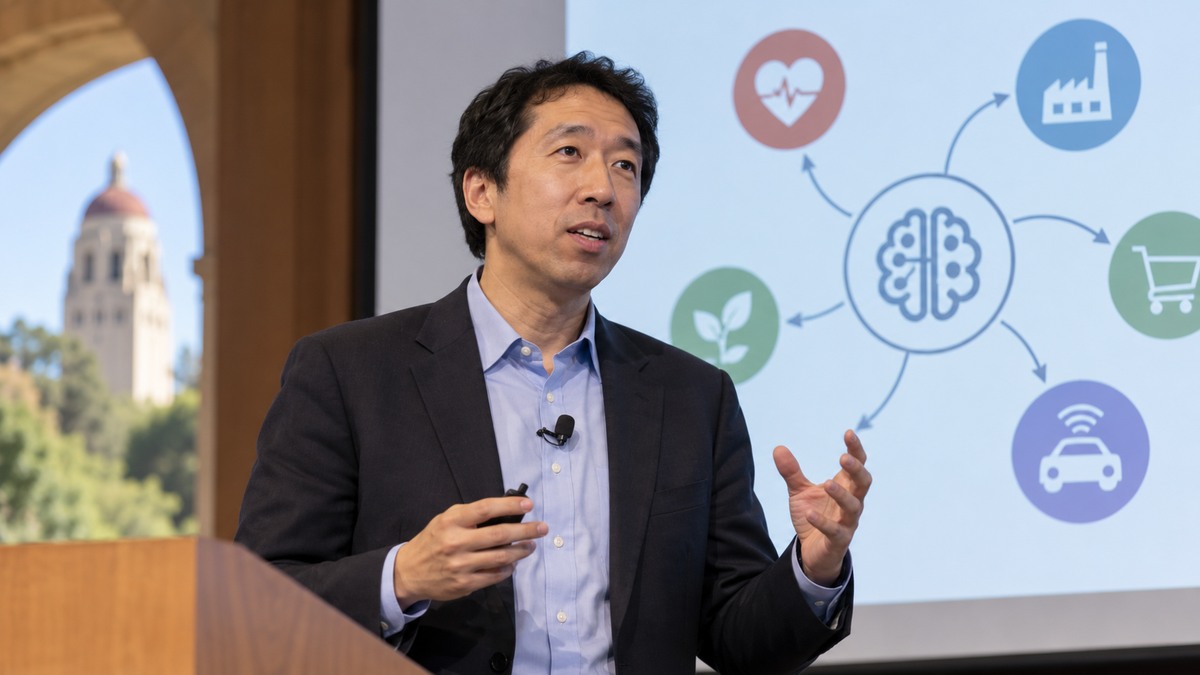
Andrew Ng used this analogy in a 2017 Stanford Graduate School of Business talk. Electricity transformed industries not as a single product but as a general-purpose technology that enabled organizations to redesign factories, homes, transportation, and services. Ng argued that AI would spread in a similarly broad way. The analogy directs attention from spectacular demonstrations to pervasive applications. General-purpose technologies create value through complementary invention, infrastructure, skills, standards, and process change. Adoption can take years because organizations must learn how to reorganize around the new capability. Read closely, the quotation is an operating claim rather than a decorative slogan. It asks leaders to connect an admired principle with the conditions, measures, and behavior through which customers and employees would actually experience it. Companies can build a portfolio of use cases tied to valuable workflows, create shared data and evaluation foundations, and develop both technical and domain talent. Early projects should produce learning and reusable capability rather than isolated pilots that cannot reach operations. To make that connection visible, decision makers should name the choice the idea is meant to change, the evidence they will review, and the person responsible for follow-through. A principle becomes useful when others can observe its effect on work. Electricity can sound inevitable and neutral, while AI systems encode objectives, data, labor, and institutional choices. The analogy should not minimize environmental cost, surveillance, bias, labor disruption, or the need to reject harmful uses. The strongest interpretation holds ambition and restraint together. Teams should ask who benefits, who carries risk, what evidence would disconfirm the current belief, and how a person affected by the decision can question it before costs become difficult to reverse. AI is moving into ordinary software, but reliable value still depends on integration, change management, security, and trust. Leaders need to distinguish infrastructure from product advantage and avoid buying generalized capability without a responsible operating model. Map one high-value workflow, identify the specific AI capability and complementary changes it needs, and fund the data, evaluation, training, and governance together rather than treating the model as a plug-in. A practical review should compare the promise with outcomes, experience, and unintended effects. The final test is not whether the words sound inspiring, but whether they help the organization learn earlier, act responsibly, and create value that can withstand scrutiny. Results should be shared in plain language, including disappointments, so later decisions begin with accumulated evidence rather than a polished story that hides the conditions under which the earlier choice succeeded.Andrew Ng used this analogy in a 2017 Stanford Graduate School of Business talk. Electricity transformed industries not as a single product but as a general-purpose technology that enabled organizations to redesign factories, homes, transportation, and services. Ng argued that AI would spread in a similarly broad way.
The analogy directs attention from spectacular demonstrations to pervasive applications. General-purpose technologies create value through complementary invention, infrastructure, skills, standards, and process change. Adoption can take years because organizations must learn how to reorganize around the new capability.
Companies can build a portfolio of use cases tied to valuable workflows, create shared data and evaluation foundations, and develop both technical and domain talent. Early projects should produce learning and reusable capability rather than isolated pilots that cannot reach operations.
Electricity can sound inevitable and neutral, while AI systems encode objectives, data, labor, and institutional choices. The analogy should not minimize environmental cost, surveillance, bias, labor disruption, or the need to reject harmful uses.
AI is moving into ordinary software, but reliable value still depends on integration, change management, security, and trust. Leaders need to distinguish infrastructure from product advantage and avoid buying generalized capability without a responsible operating model.
Map one high-value workflow, identify the specific AI capability and complementary changes it needs, and fund the data, evaluation, training, and governance together rather than treating the model as a plug-in.
Explore more "Quotes of The Day"
Discover more notable quotes from influential voices across politics, science, business, technology, sports, and culture. Each quote offers insight into how ideas, beliefs, and decisions shape the world around us.