

On This Day in Business: September 5, 1882
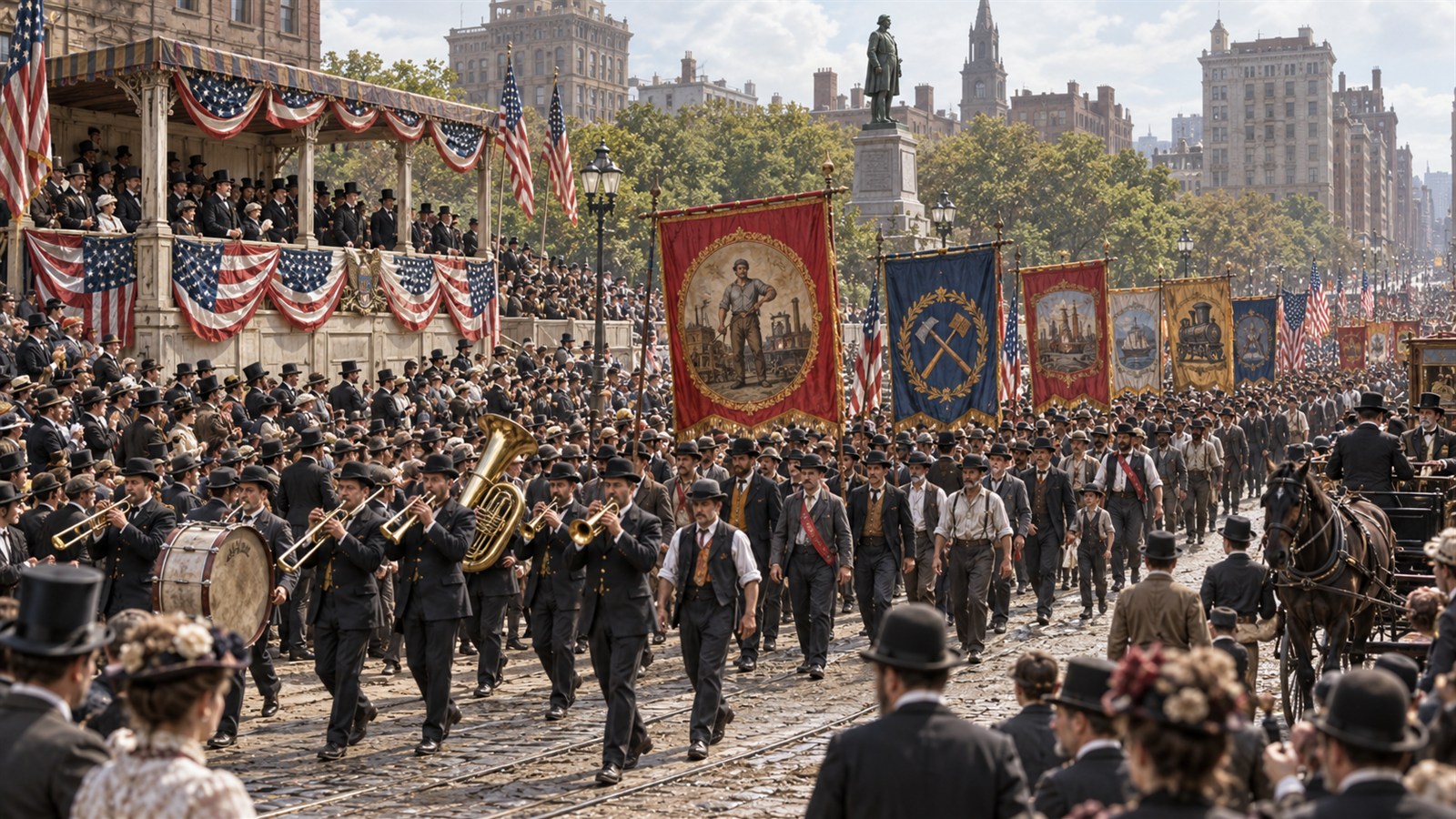
On September 5, 1882, thousands of workers assembled in New York City for what became the nation's first Labor Day parade. Organized by the Central Labor Union, the procession moved from lower Manhattan toward Union Square before participants continued to a festival. Marchers carried banners, wore the regalia of their trades, and walked behind bands. The event was not yet a federal holiday; it was a public demonstration that the people who built, moved, printed, manufactured, and repaired the city's goods could act collectively and claim recognition for their contribution to prosperity.
The parade reflected an economy transformed by industrialization. Factories and large employers brought workers together, but long hours, dangerous conditions, unstable employment, and limited bargaining power created conflict over how the gains from growth should be shared. Labor organizations supplied insurance, education, political pressure, and leverage in negotiations. A parade turned those dispersed workplace relationships into a visible constituency. It also combined protest with recreation, making the proposed holiday attractive to families and communities rather than limiting it to a single trade or dispute.
For business history, the event matters because labor is not merely a cost on a ledger. Skills, health, morale, turnover, and the ability to coordinate production all shape enterprise value. Employers and unions would spend the following decades contesting wages, hours, safety, and authority, sometimes through bitter strikes and violence. Yet those conflicts also produced rules and institutions that made mass employment more predictable. The first Labor Day parade placed the social contract of industrial business in the street, where customers, politicians, employers, and workers could see that production depended on human organization as much as machinery or capital.
Cities and states gradually adopted Labor Day observances, and Congress made the first Monday in September a federal holiday in 1894. The modern weekend includes travel, retail promotions, and end-of-summer rituals, but its economic foundation remains the dignity and bargaining power of work. The 1882 parade demonstrated how a symbolic event can become durable civic infrastructure. It gave organized labor a repeatable public forum and helped translate workplace demands into a national tradition. For companies, its legacy is a reminder that labor relations influence reputation, productivity, and political legitimacy. For workers, it marks the moment a diverse group of trades stepped into public view as a shared economic force. The date also reminds modern employers that durable growth depends on workers having a credible voice in how prosperity is created and distributed. Recognition alone is not a substitute for safe conditions or fair negotiation, but public recognition can help keep those economic questions visible.
The Central Labor Union organized America's first Labor Day parade in New York on September 5, 1882.
Workers marched with bands, banners, trade regalia, and a public festival after the procession.
The event made organized labor visible during a period of rapid industrial growth and difficult working conditions.
Unions used collective action to press for wages, hours, safety, and recognition.
States adopted Labor Day observances before Congress established the federal holiday in 1894.
The parade linked the dignity of work with the business realities of productivity, bargaining power, and social legitimacy.
Explore more of "On This Day ..."
Discover more events from the same date across news, politics, technology, sports, and other fields. Each link highlights significant moments that shaped history on different fronts.