

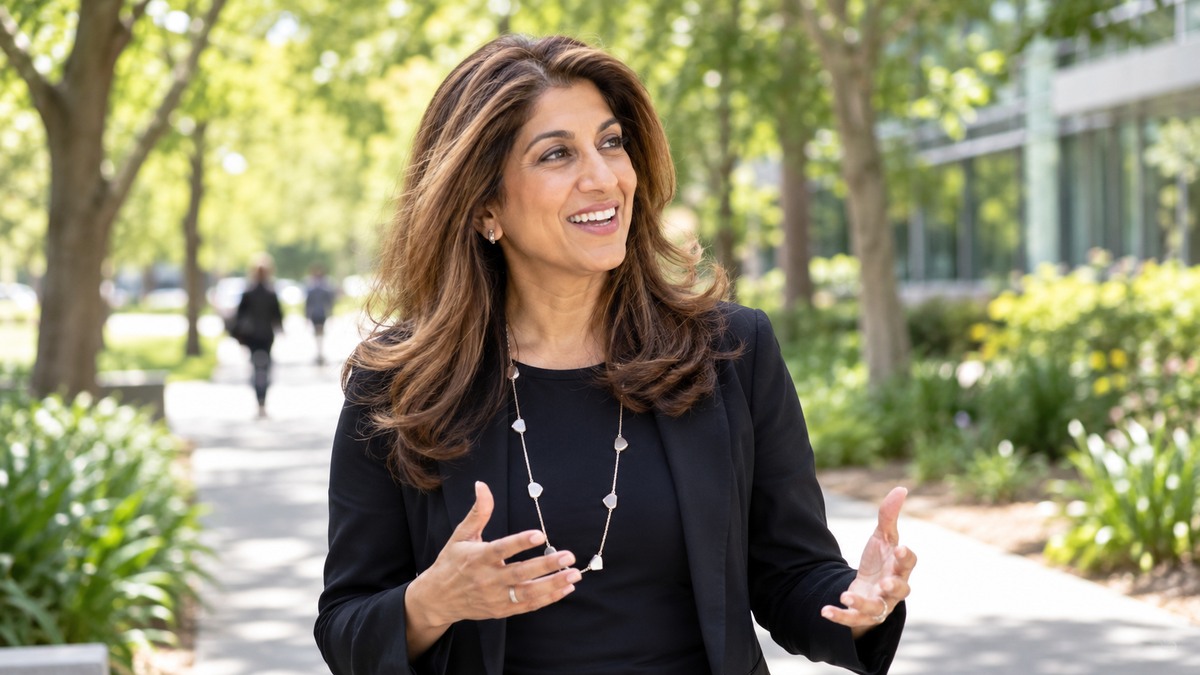
“Fresh air drives fresh thinking.”
Nilofer Merchant used this sentence in her 2013 TED talk proposing walking meetings. The idea began as a practical response to the hours knowledge workers spend sitting, but it also described a change in conversation: moving side by side can alter pace, attention, and the social texture of a meeting. Merchant’s point is less about turning every agenda into exercise than about questioning inherited meeting defaults. A conference room, screen, and seated hierarchy may be appropriate for some tasks, yet they are not neutral. Physical setting influences energy, candor, focus, and who can participate. Read closely, the quotation is an operating claim rather than a decorative slogan. It asks leaders to connect an admired principle with the conditions, measures, and behavior through which customers and employees would actually experience it.
Managers can reserve walking meetings for one-to-one conversations that require exploration rather than shared documents. Participants should know the route, duration, purpose, accessibility options, and how decisions will be recorded so the informal format does not create missing information for others. To make that connection visible, decision makers should name the choice the idea is meant to change, the evidence they will review, and the person responsible for follow-through. A principle becomes useful when others can observe its effect on work.
Walking is not accessible or comfortable for everyone, and outdoor conversation can compromise privacy or exclude remote colleagues. The principle is thoughtful variety, not a new mandate. Offer equivalent choices and let the people involved select a setting that supports both the work and their needs. The strongest interpretation holds ambition and restraint together. Teams should ask who benefits, who carries risk, what evidence would disconfirm the current belief, and how a person affected by the decision can question it before costs become difficult to reverse.
Hybrid work has multiplied screen-based interactions and made meeting design more consequential. Leaders can treat format as an operating decision: asynchronous notes for information, video for distributed dialogue, rooms for sensitive collaboration, and movement when it genuinely supports reflection. Audit one week of meetings and label the purpose of each. Replace one routine one-to-one with an optional walk or movement-friendly alternative, then ask whether the setting changed candor, attention, or the quality of ideas. Keep the result, not the novelty. A practical review should compare the promise with outcomes, experience, and unintended effects. The final test is not whether the words sound inspiring, but whether they help the organization learn earlier, act responsibly, and create value that can withstand scrutiny. Results should be shared in plain language, including disappointments, so later decisions begin with accumulated evidence rather than a polished story that hides the conditions under which the earlier choice succeeded.
Nilofer Merchant used this sentence in her 2013 TED talk proposing walking meetings. The idea began as a practical response to the hours knowledge workers spend sitting, but it also described a change in conversation: moving side by side can alter pace, attention, and the social texture of a meeting.
Merchant’s point is less about turning every agenda into exercise than about questioning inherited meeting defaults. A conference room, screen, and seated hierarchy may be appropriate for some tasks, yet they are not neutral. Physical setting influences energy, candor, focus, and who can participate.
Managers can reserve walking meetings for one-to-one conversations that require exploration rather than shared documents. Participants should know the route, duration, purpose, accessibility options, and how decisions will be recorded so the informal format does not create missing information for others.
Walking is not accessible or comfortable for everyone, and outdoor conversation can compromise privacy or exclude remote colleagues. The principle is thoughtful variety, not a new mandate. Offer equivalent choices and let the people involved select a setting that supports both the work and their needs.
Hybrid work has multiplied screen-based interactions and made meeting design more consequential. Leaders can treat format as an operating decision: asynchronous notes for information, video for distributed dialogue, rooms for sensitive collaboration, and movement when it genuinely supports reflection.
Audit one week of meetings and label the purpose of each. Replace one routine one-to-one with an optional walk or movement-friendly alternative, then ask whether the setting changed candor, attention, or the quality of ideas. Keep the result, not the novelty.
Explore more "Quotes of The Day"
Discover more notable quotes from influential voices across politics, science, business, technology, sports, and culture. Each quote offers insight into how ideas, beliefs, and decisions shape the world around us.