

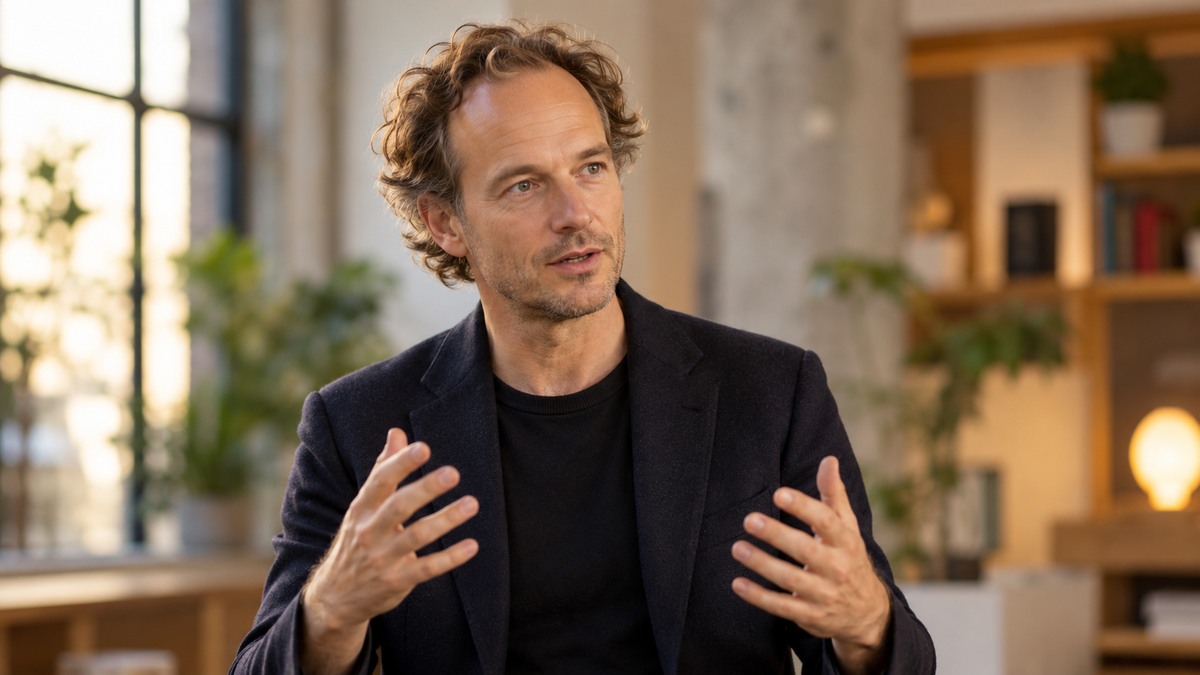
“In the face of artificial intelligence and machine learning, we need a new radical humanism.”
Tim Leberecht made this appeal in his 2016 TED talk about building a beautiful company. He argued that as efficiency, measurement, and automation expand, organizations should deliberately preserve experiences that make work meaningful, surprising, emotionally resonant, and recognizably human. Radical humanism does not reject technology or operational discipline. It asks what efficiency is for and which human qualities should remain visible in the design of work. Ritual, generosity, vulnerability, and beauty can signal that people are participants in a shared endeavor rather than interchangeable inputs. Behind the concise wording is a claim about how organizations create results. It encourages leaders to look beyond individual effort and examine design, incentives, information, relationships, and the customer context that determine whether a good intention becomes reliable performance.
Leaders can examine moments that define an employee or customer relationship and ask where choice, craft, care, or ceremony would add meaning. The design should be specific and voluntary, supported by fair conditions, and connected to the organization’s purpose rather than cosmetic perks. Managers can translate the claim into a small experiment with a baseline, an owner, a defined customer or employee outcome, and a review date. Specificity protects the work from drifting into broad language that nobody can challenge or verify.
Beautiful language can disguise unequal power, insecurity, or overwork. A carefully designed office, retreat, or brand ritual cannot compensate for unsafe jobs or arbitrary management. Humanism begins with dignity, voice, pay, accessibility, and honest treatment before it becomes an aesthetic. Responsible use also requires naming the tradeoff. Speed, cost, autonomy, safety, equity, and learning may not all improve at once. People closest to the consequences should have a meaningful voice, and uncertainty should be reported instead of hidden behind confidence.
AI systems increasingly mediate hiring, scheduling, customer support, and creative work. Companies should identify where people need explanation, empathy, appeal, and responsibility, then make those human capacities part of the product and operating model rather than an exception after automation fails. Map one automated or highly standardized journey and find the moment where a person is most uncertain or vulnerable. Redesign that point to provide understanding, meaningful choice, and accountable human help, then measure trust as well as throughput. Evidence from the experiment can guide scaling, revision, or stopping. The durable lesson is to join purpose with measurement and human judgment, so the organization becomes better at seeing reality and responding before a local success or failure hardens into mythology. Recording the decision and its limits gives colleagues a foundation they can inspect, challenge, and improve instead of asking them to rely on memory, authority, or an unexplained result.
Tim Leberecht made this appeal in his 2016 TED talk about building a beautiful company. He argued that as efficiency, measurement, and automation expand, organizations should deliberately preserve experiences that make work meaningful, surprising, emotionally resonant, and recognizably human.
Radical humanism does not reject technology or operational discipline. It asks what efficiency is for and which human qualities should remain visible in the design of work. Ritual, generosity, vulnerability, and beauty can signal that people are participants in a shared endeavor rather than interchangeable inputs.
Leaders can examine moments that define an employee or customer relationship and ask where choice, craft, care, or ceremony would add meaning. The design should be specific and voluntary, supported by fair conditions, and connected to the organization’s purpose rather than cosmetic perks.
Beautiful language can disguise unequal power, insecurity, or overwork. A carefully designed office, retreat, or brand ritual cannot compensate for unsafe jobs or arbitrary management. Humanism begins with dignity, voice, pay, accessibility, and honest treatment before it becomes an aesthetic.
AI systems increasingly mediate hiring, scheduling, customer support, and creative work. Companies should identify where people need explanation, empathy, appeal, and responsibility, then make those human capacities part of the product and operating model rather than an exception after automation fails.
Map one automated or highly standardized journey and find the moment where a person is most uncertain or vulnerable. Redesign that point to provide understanding, meaningful choice, and accountable human help, then measure trust as well as throughput.
Explore more "Quotes of The Day"
Discover more notable quotes from influential voices across politics, science, business, technology, sports, and culture. Each quote offers insight into how ideas, beliefs, and decisions shape the world around us.