

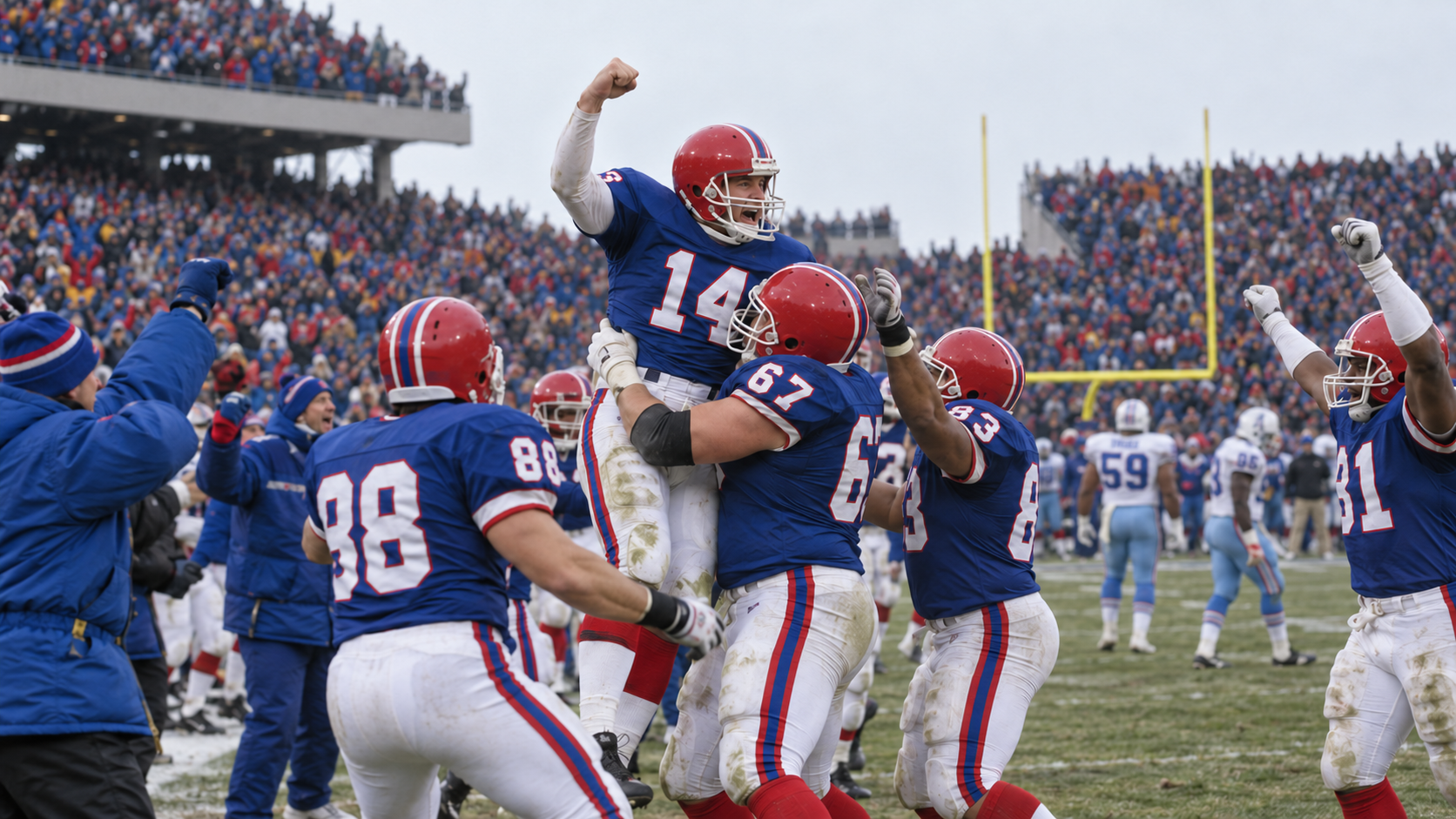
On This Day in Sports: January 3, 1993
On January 3, 1993, at Rich Stadium in Orchard Park, New York, the Buffalo Bills turned an AFC wild-card game against the Houston Oilers into the most dramatic comeback the NFL postseason had seen. Buffalo started backup quarterback Frank Reich because Jim Kelly was injured, and the Bills also lacked other key regulars. Houston quarterback Warren Moon attacked quickly, throwing four first-half touchdown passes as the Oilers built a 28–3 halftime lead. The situation became even worse for Buffalo early in the third quarter, when safety Bubba McDowell returned a Reich interception 58 yards for a touchdown. At 35–3, the game appeared settled.
Buffalo answered with a sequence that changed the mood of the stadium and the shape of the game. Kenneth Davis scored on a short run, then the Bills recovered an onside kick. Reich found Don Beebe for a 38-yard touchdown before connecting with Andre Reed three times for scores. Those five consecutive Buffalo touchdowns transformed a 32-point deficit into a 38–35 lead. The rally depended on aggressive fourth-down decisions, precise throws against Houston’s pressure, and a defense that stopped giving Moon easy possessions. Fans who had remained in the cold watched a contest that had looked hopeless become a one-score fight.
Houston did not collapse completely. Al Del Greco kicked a 26-yard field goal with 12 seconds left in regulation to tie the score at 38 and force overtime. The Oilers received the opening possession, but Buffalo cornerback Nate Odomes intercepted Moon. A facemask penalty on the return moved the Bills deeper into Houston territory, and kicker Steve Christie ended the game with a 32-yard field goal. Buffalo won 41–38 after scoring 38 points following Houston’s 35–3 lead. Reich finished with four touchdown passes, while Reed caught three of them during the second-half surge.
The 32-point rally became the largest comeback in NFL history at the time and remains the league’s biggest postseason comeback. Minnesota later surpassed it in a regular-season game in 2022, but Buffalo’s playoff record still stands. The victory also kept alive a Bills season that reached a third consecutive Super Bowl. Houston, by contrast, entered a painful offseason after one of the most damaging defeats in franchise history. The game endures because it shows how quickly football can turn: one recovery, one stop, and one completed drive at a time changed a rout into a benchmark for resilience. Its enduring lesson is that postseason pressure magnifies every possession but never makes the outcome inevitable.
Buffalo entered the wild-card round without injured starting quarterback Jim Kelly, placing the offense in the hands of veteran backup Frank Reich.
Houston’s run-and-shoot offense had beaten Buffalo 27–3 one week earlier and carried that advantage into a first half led by Warren Moon’s four touchdown passes.
Buffalo scored five consecutive touchdowns after falling behind 35–3, but Houston still forced overtime with Al Del Greco’s late field goal.
The win did not erase every weakness: the Bills had surrendered four first-half touchdown passes and needed an overtime interception to finish the recovery.
The comeback preserved Buffalo’s path to a third straight Super Bowl and became the defining performance of Reich’s playing career.
A larger regular-season comeback occurred in 2022, but Buffalo’s 32-point rally remains the largest comeback in NFL postseason history.
Explore more "On This Day in Sports"
Discover more landmark games, records, championships, and turning points from sports history. Each day revisits the athletes, teams, and moments that shaped competition and culture.