

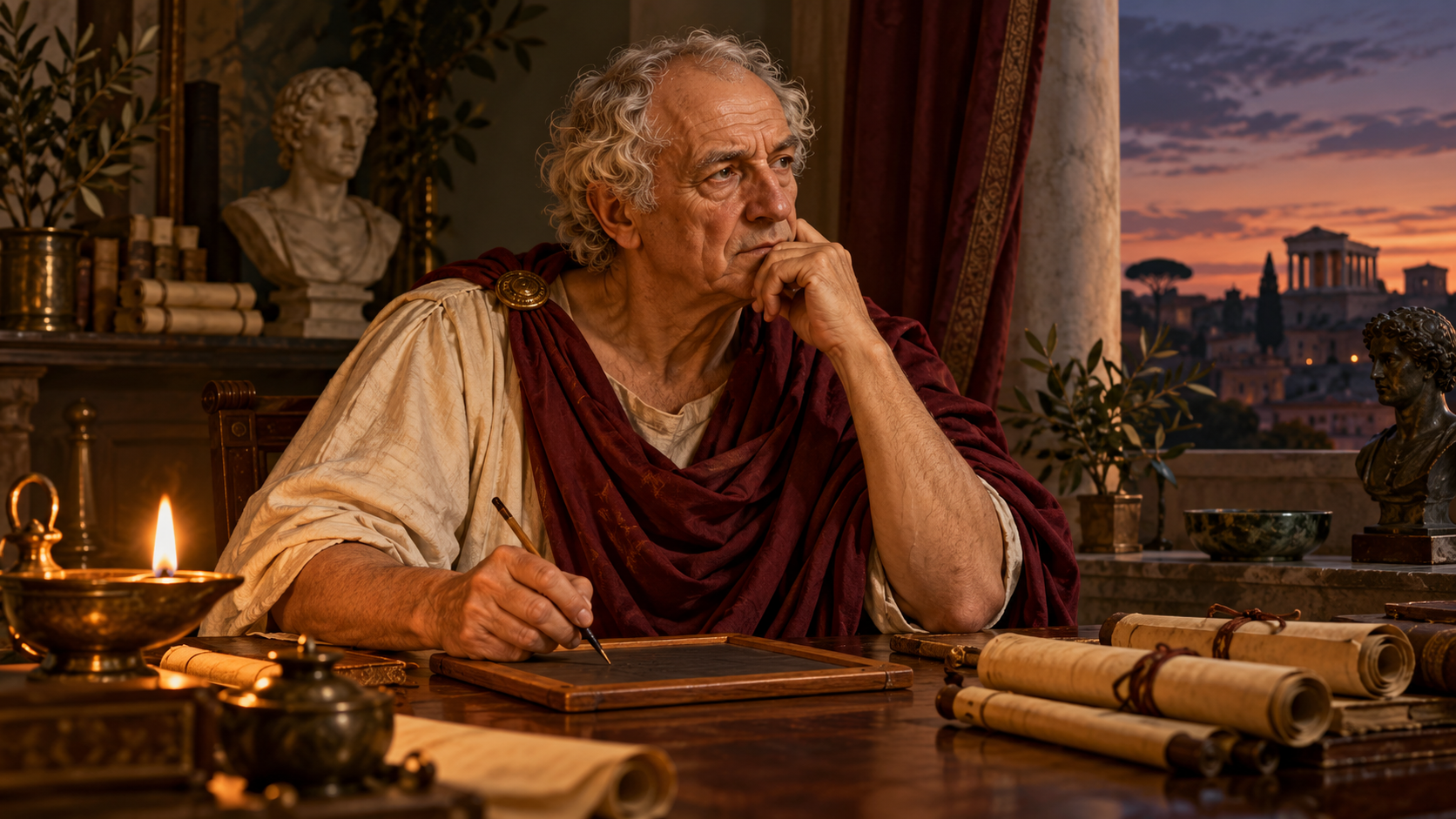
“We suffer more often in imagination than in reality.”
Seneca wrote this line to his friend Lucilius in Moral Letter 13, “On Groundless Fears,” around the middle of the first century. In Richard M. Gummere’s translation, the full sentence begins by saying that more things are likely to frighten us than to crush us. Seneca is examining anticipatory fear: the mind’s ability to experience a possible injury repeatedly before evidence shows that the event will occur. His concern is not pain itself, but suffering borrowed from an uncertain future.
Imagination is powerful because it can rehearse consequences in vivid detail while leaving probability vague. A delayed reply becomes rejection; a symptom becomes the worst diagnosis; one mistake becomes permanent failure. The body may respond to these scenes as if they are present. Seneca’s distinction invites a simple separation between what is happening now, what might happen later, and what the mind has added. That separation can return attention to the next useful decision.
The quote does not mean that anxiety is imaginary in the sense of being fake. Anticipated harm can produce real distress, and preparation for credible danger is wise. Trauma, illness, financial risk, and unsafe conditions may require professional care or protective action, not philosophical correction. The point is not to shame fear or guarantee that nothing bad will happen. It is to prevent possibility from quietly becoming certainty and to keep preparation from turning into endless punishment before the facts arrive.
The line remains practical when worry loops without producing new information. Write the feared event in one sentence, then list present evidence, unknowns, and the next time more information will be available. Choose one proportionate action—make the call, gather a document, seek medical advice, or set a boundary—and postpone further rehearsal until it can change the plan. If the worry repeatedly overwhelms daily life, ask for qualified help. Seneca’s insight is a discipline of timing. Meet an actual difficulty with resources and honesty, but do not make the mind endure every possible future in advance. Imagination can serve preparation; it should not automatically become the place where an uncertain event is suffered again and again. Review past worries without mocking the person who felt them. Notice which dangers occurred, which did not, and which preparations were genuinely useful. This creates a personal base rate for future judgment. The aim is not perfect calm; it is a more accurate partnership between imagination and evidence, so attention can return to the present responsibilities that fear would otherwise crowd out.
The line comes from Seneca’s Moral Letter 13 to Lucilius, traditionally titled “On Groundless Fears,” written around 64 CE.
The complete passage contrasts events that frighten people with events that actually crush them and examines anxiety about uncertain futures.
Anticipatory fear creates real distress, and credible dangers still deserve preparation, protection, treatment, or professional help.
The distinction is between possibility and present fact, not between a worthy person and someone who should feel ashamed of anxiety.
Uncertain messages, symptoms, or setbacks can become detailed worst-case stories before enough evidence exists to judge them.
Separate present facts, unknowns, and the next available action, then delay further rehearsal until new information can change the plan.
Explore more "Quotes of The Day"
Continue exploring how writers, thinkers, artists, and advocates have described the choices that shape an everyday life.