

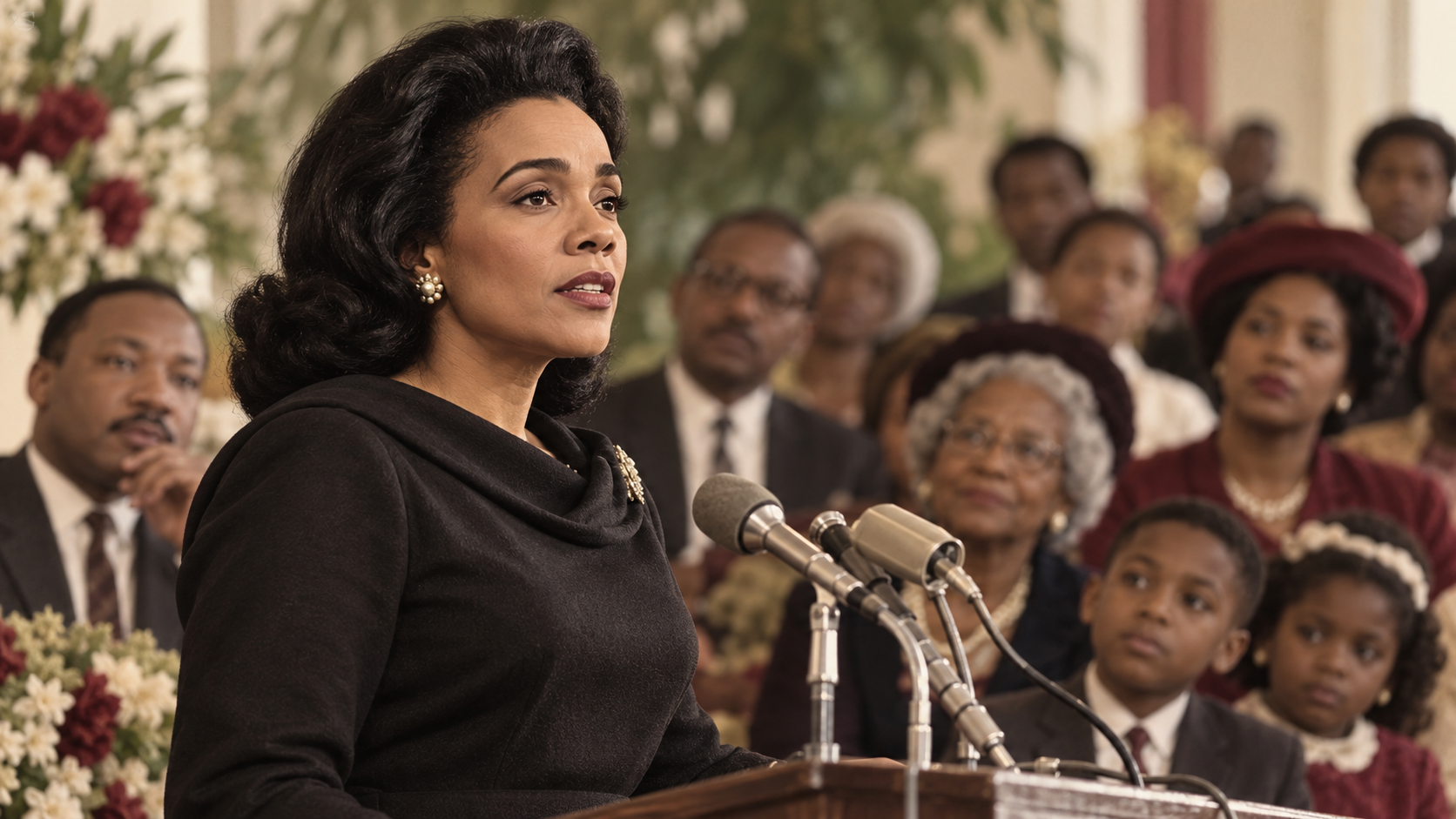
“Struggle is a never-ending process. Freedom is never really won; you earn it and win it in every generation.”
Coretta Scott King included this declaration in My Life with Martin Luther King, Jr., published in 1969. The memoir recounts both a marriage and a movement, including the organizing, sacrifice, and collective work surrounding victories often remembered through a few famous events. Written after her husband’s assassination, the line rejects the idea that one law, leader, or generation can permanently finish the work of freedom. Gains must be protected, extended, and translated into lived conditions.
Freedom is never simply inherited in perfect condition. Institutions change, new technologies create new forms of power, and rights on paper can weaken when access, enforcement, or public memory declines. Each generation receives achievements produced by earlier struggle, along with unfinished obligations and new circumstances. To earn freedom does not mean proving oneself worthy of basic rights. It means accepting responsibility for keeping those rights real and available to people who remain excluded.
The phrase “never-ending” can sound like a sentence to permanent exhaustion. King’s meaning should not erase rest, joy, care, or the need to pass work among many hands. Movements that depend on continual sacrifice from the same people reproduce harm. Nor does every generation need to repeat identical tactics. Protecting a principle may require new methods, new coalitions, and honest criticism of strategies that once worked but no longer fit the conditions.
The line matters when a past victory is used as evidence that present vigilance is unnecessary. Choose one freedom you rely on and learn how it was secured, which institution now protects it, and who still has difficulty exercising it. Support a concrete form of maintenance: vote in a local election, document an access problem, teach the history accurately, fund legal work, or make an organization’s procedures more inclusive. King’s sentence turns commemoration into stewardship. Gratitude for an earlier generation is incomplete if it leaves its achievement unattended. The work continues not because progress is meaningless, but because progress creates something valuable enough to defend, improve, and hand forward in stronger condition. Intergenerational work also requires a real transfer of authority. Older participants can offer history, relationships, and lessons from failure without treating younger people as assistants to a finished plan. Younger participants can bring new tools and questions without assuming that recent visibility created the struggle. Shared leadership keeps memory from becoming nostalgia and innovation from becoming amnesia. Freedom is renewed when each generation can learn, decide, and accept responsibility for what comes next.
King published the statement in her 1969 memoir My Life with Martin Luther King, Jr., written after years of organizing and her husband’s assassination.
The sentence places famous civil-rights victories within a longer process of collective work, enforcement, protection, and renewal.
Earning freedom means sustaining rights in practice, not proving that any person or group deserves basic dignity.
Continuing struggle should include rest, joy, shared leadership, and new tactics so responsibility does not become permanent exhaustion for the same people.
Legal and social gains can weaken when enforcement, access, history, and public participation are neglected.
Choose one freedom you rely on, learn how it is maintained, and support one institution or practice that keeps it usable for others.
Explore more "Quotes of The Day"
Continue exploring how writers, thinkers, artists, and advocates have described the choices that shape an everyday life.