

How VAR Works in Soccer Explainer
The video assistant referee system gives match officials a second look at a narrow set of game-changing decisions. Under the Laws of the Game, VAR may assist with goals, penalty decisions, direct red cards, and mistaken identity. It does not review every foul, throw-in, or yellow card. The goal is minimum interference with maximum benefit.
Every potentially reviewable incident is checked in the video operation room, usually without delaying play. If the VAR sees no clear problem, the original decision stands. If there may be a clear and obvious error or a serious missed incident, the VAR recommends a review and provides the referee with video angles and factual information.
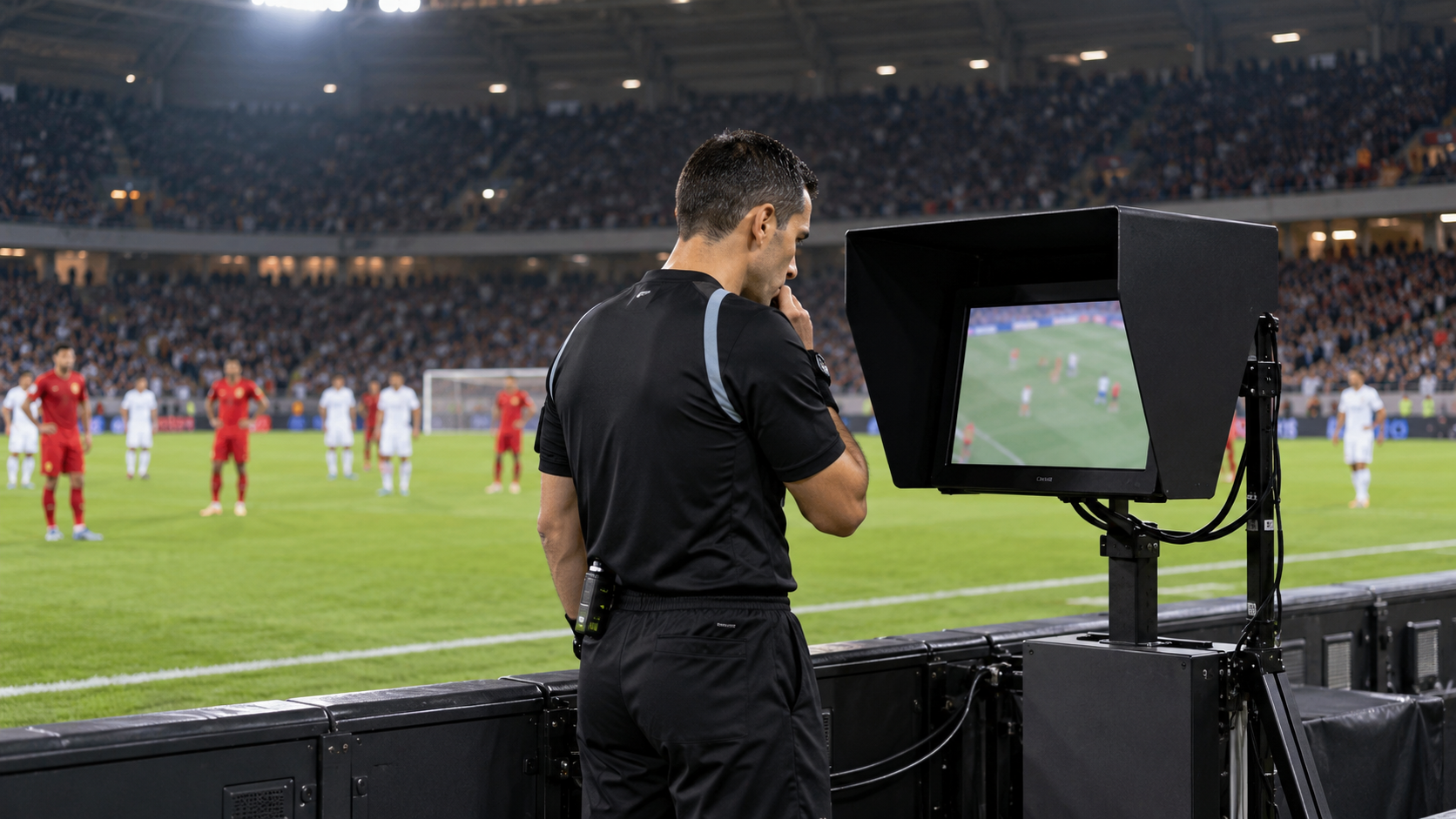
Some questions are largely factual, such as whether a player was offside or the ball left the field before a goal. Others require judgment, including the intensity of a challenge or whether contact justifies a penalty. For subjective decisions, the referee can conduct an on-field review at the pitch-side monitor. The referee, not the VAR, makes the final decision.
The system cannot eliminate debate because many soccer decisions remain matters of interpretation. Camera angles, frame selection, and the chosen attacking phase can affect what is examined. VAR also operates only where the competition has approved and implemented the required protocol. It is best understood as a safety net for major mistakes, not a replacement for the on-field officiating team.
The protocol covers goals, penalty decisions, direct red cards, and mistaken identity. It does not reopen every decision in a match.
Checks occur in the background. A formal review begins only when the VAR identifies a possible clear error or serious missed incident.
Offside position and whether the ball crossed a boundary can often be resolved from factual video evidence.
Fouls and misconduct usually require judgment. The referee may watch the pitch-side monitor before deciding whether to change the call.
The VAR communicates evidence and can recommend a review, but the referee retains authority over the decision.
The original ruling should stand unless the review threshold is met. VAR is designed as a limited correction system, not continuous re-refereeing.
Explore more "Explainers"
Discover additional explainers across politics, science, business, technology, and other fields. Each explainer breaks down a complex idea into clear, everyday language—helping you better understand how major concepts, systems, and debates shape the world around us.