

How Cricket’s Decision Review System Works Explainer
Cricket’s Decision Review System combines television replays and specialized technology to help correct important umpiring errors. A player review usually begins when the fielding captain or the dismissed batter challenges an on-field decision within the permitted time. The television umpire then follows a set sequence of checks rather than judging from one dramatic replay.
Different tools answer different questions. Slow motion can show catches, run-outs, and boundary contact. Edge-detection systems may reveal whether the ball touched the bat, while ball tracking estimates the path of a delivery before and after impact. For a leg-before-wicket decision, the review considers where the ball pitched, where it struck the batter, whether a legal bat contact came first, and whether the projected path would hit the stumps.
“Umpire’s call” applies to marginal ball-tracking outcomes defined by the playing conditions. Because tracking has a measurement tolerance, a close decision can remain with the on-field umpire even when the replay shows partial contact with the wicket zone. In that situation the review is normally retained, recognizing that the challenge was reasonable even though the original decision stands.
Teams receive a limited number of unsuccessful reviews, so strategy matters. A captain must weigh confidence, match situation, and the value of keeping a review for later. DRS does not replace the umpires: it creates a formal route for checking a specific decision with consistent technology and a controlled standard for overturning it.
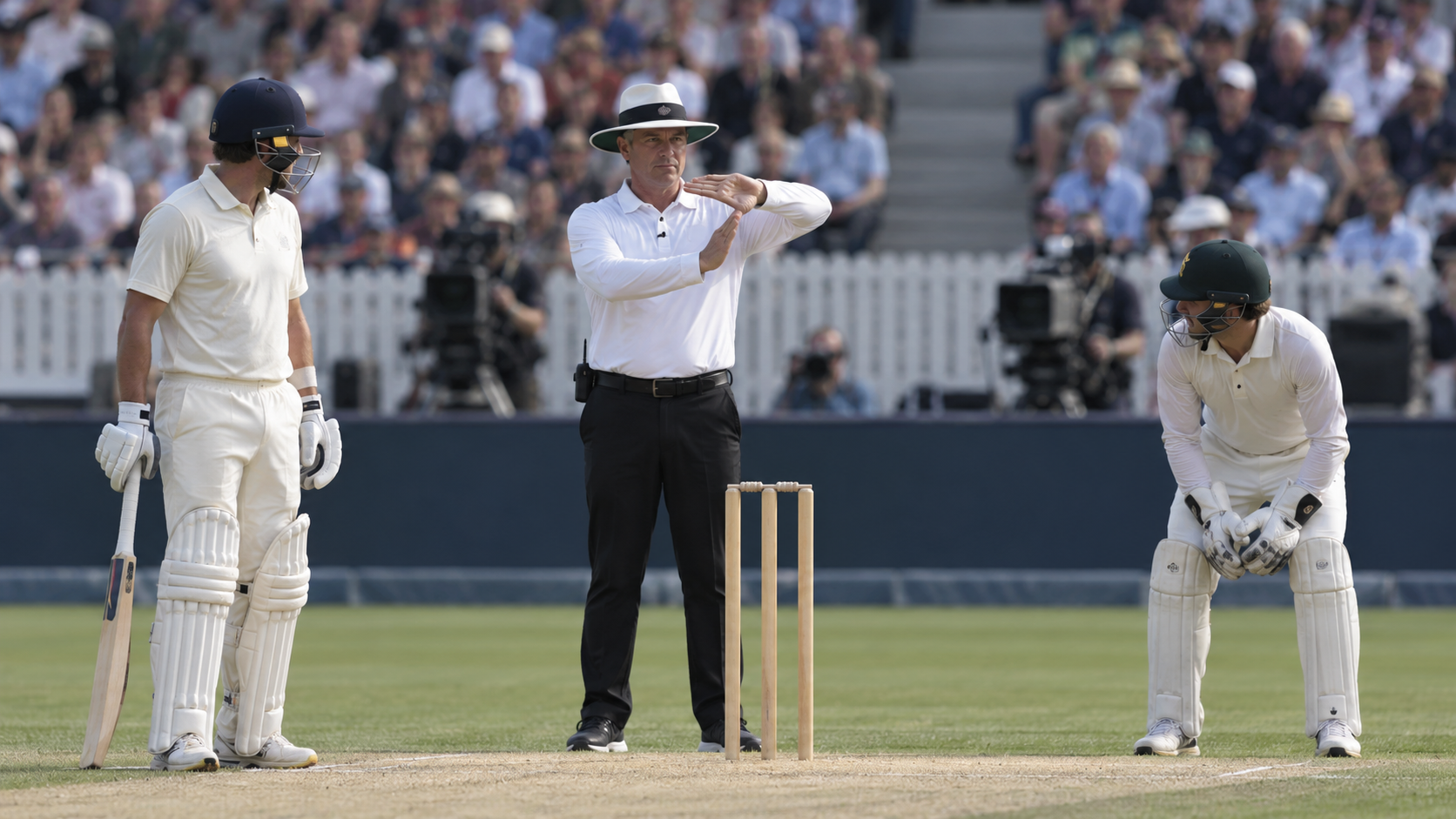
A player must signal within the allowed period after the on-field decision. The television umpire checks the correct incident under the competition’s DRS procedures.
Teams have limited unsuccessful reviews, so a speculative challenge can reduce their options later in the innings.
Replays examine catches, run-outs, boundaries, and possible bat contact. Ball tracking estimates pitching point, impact, and the projected path toward the stumps.
The television umpire combines those tools in a prescribed order and communicates the result to the on-field umpire.
Tracking systems carry a defined tolerance. Borderline projected contact with the wicket can therefore leave the original leg-before-wicket decision unchanged.
The reviewing team generally keeps its review in an umpire’s-call outcome, acknowledging that the challenge was close rather than clearly wrong.
Explore more "Explainers"
Discover additional explainers across politics, science, business, technology, and other fields. Each explainer breaks down a complex idea into clear, everyday language—helping you better understand how major concepts, systems, and debates shape the world around us.