

On This Day in Lifestyles: October 19, 1985
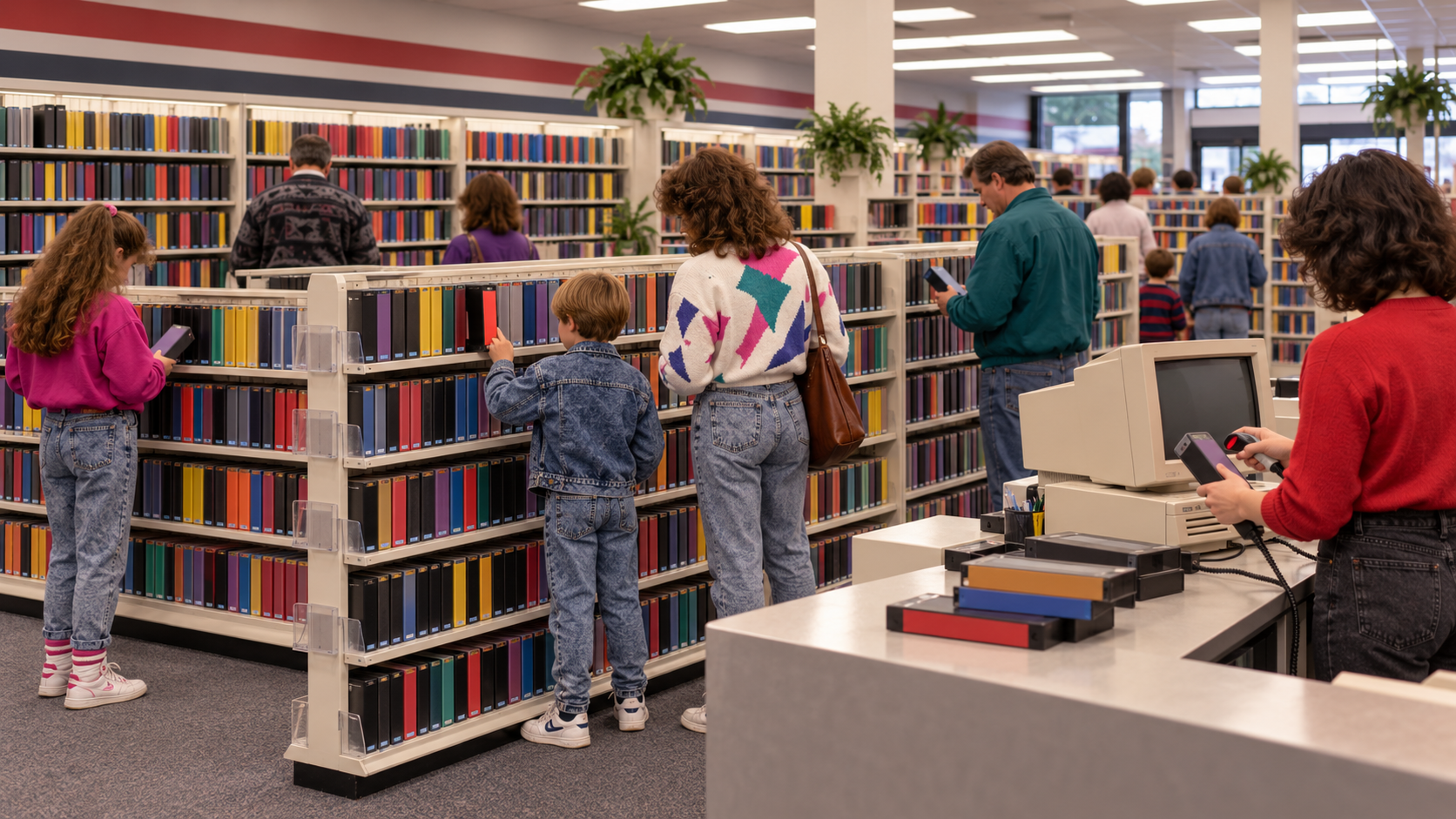
On October 19, 1985, the first Blockbuster video store opened in Dallas with thousands of tapes displayed in a large, brightly lit retail space. The date matters in lifestyle history because a retail format turned home movie choice into a highly recognizable social ritual. It was not merely a headline for institutions or specialists; it touched the settings, objects, expectations, and shared rituals through which people organized ordinary days. Families browsed long shelves of colorful but unreadable VHS cases in a large 1985 Dallas video store beneath bright fluorescent lighting Seen at human scale, the episode shows how a public milestone becomes meaningful through repeated personal choices, conversations, and memories.
Video rental already existed, but the new store used a computerized inventory system, extended hours, broad selection, and a family-oriented layout. Customers browsed cover boxes on shelves and brought selections to a counter, making movie choice a physical outing. The model suited the expanding ownership of videocassette recorders in American homes. The setting is essential to understanding why the event attracted attention. New ideas rarely arrive in isolation: they meet existing technology, commerce, custom, law, and desire. Contemporary newspapers, public spaces, shops, schools, workplaces, or homes carried the story outward, giving people practical ways to interpret it. Some welcomed the change, others doubted it, and many first encountered it indirectly. That mixture of novelty and familiarity helped the moment travel from a single date into a broader change in behavior.
The store standardized a weekend ritual: walk the aisles, debate a title, add snacks, and return the tape on time. Rapid franchising and corporate expansion put similar stores in communities across the country. Convenience came with membership records, limited copies, late fees, content decisions, and pressure on independent rental shops. In daily life, the consequences appeared through altered routines, new expectations, and different ways of spending time or money. Blockbuster became a symbol of 1990s home entertainment before mail-order DVDs, kiosks, digital downloads, and streaming displaced its physical network. Nostalgia for the stores reflects not only the movies but also the shared labor of choosing, scarcity, local browsing, and a trip that marked the start of an evening. The benefits were never the whole story; major changes also exposed questions about access, responsibility, fairness, cost, and who had power to define progress. Those tensions deserve a place beside the celebration because they show how culture actually develops. The event mattered not because everyone experienced it in the same way, but because it opened a durable argument about how people wanted to live.
Today, the legacy remains visible: streaming offers instant abundance while recommendation algorithms, licensing changes, subscriptions, and fragmented catalogs replace the limits of a neighborhood shelf. Familiarity can make that inheritance easy to overlook, yet the practices surrounding it were built through years of experimentation, adaptation, criticism, and use. Looking back does more than celebrate an anniversary. It reveals the chain between public decisions and private habits, between ambitious ideas and the small acts that make them ordinary. On this day, one historical moment became part of the texture of modern life. Remembering the full setting lets the milestone feel less like a frozen fact and more like a living part of experience.
On October 19, 1985, the first Blockbuster video store opened in Dallas with thousands of tapes displayed in a large, brightly lit retail space.
Video rental already existed, but the new store used a computerized inventory system, extended hours, broad selection, and a family-oriented layout. Customers browsed cover boxes on shelves and brought selections to a counter, making movie choice a physical outing. The model suited the expanding ownership of videocassette recorders in American homes.
The store standardized a weekend ritual: walk the aisles, debate a title, add snacks, and return the tape on time. Rapid franchising and corporate expansion put similar stores in communities across the country. Convenience came with membership records, limited copies, late fees, content decisions, and pressure on independent rental shops.
The event matters in lifestyle history because a retail format turned home movie choice into a highly recognizable social ritual.
Blockbuster became a symbol of 1990s home entertainment before mail-order DVDs, kiosks, digital downloads, and streaming displaced its physical network. Nostalgia for the stores reflects not only the movies but also the shared labor of choosing, scarcity, local browsing, and a trip that marked the start of an evening.
The legacy remains visible today: streaming offers instant abundance while recommendation algorithms, licensing changes, subscriptions, and fragmented catalogs replace the limits of a neighborhood shelf.
Explore more of “This Day in Lifestyles”
Discover more moments in everyday life, design, education, travel, food, fashion, and culture. Each story connects a calendar date with an event that changed how people lived.