

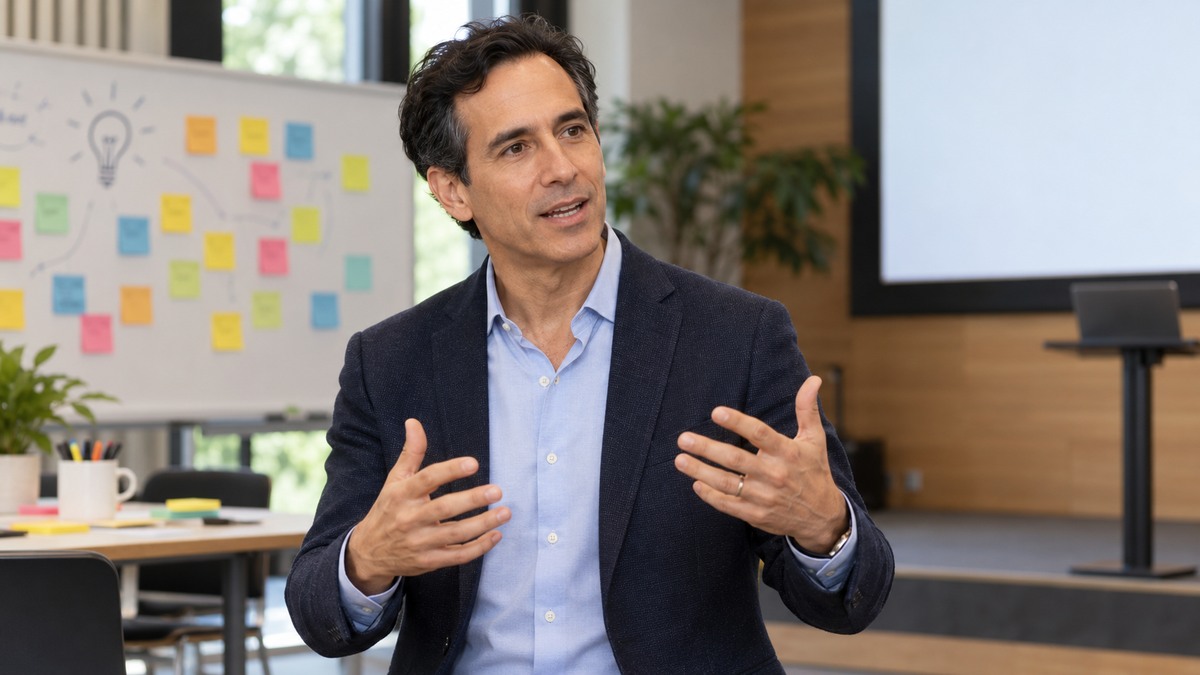
“They go through life deliberately alternating between two zones: the learning zone and the performance zone.”
Eduardo Briceño introduced this distinction in his 2016 TED talk about improving at things people care about. He observed that effective individuals and teams alternate between performing with established skills and practicing specifically to improve skills that are not yet reliable. In the performance zone, the goal is execution and errors are minimized. In the learning zone, the goal is growth, so challenge, feedback, and mistakes are expected. Briceño argued that people often plateau because workplaces make nearly every task high stakes and leave little room for deliberate practice. The most useful reading joins ambition with verifiable responsibility. The review should distinguish a failure of the idea from a failure of support, timing, skill, or execution.
A business can protect short periods for rehearsal, critique, simulation, and experimentation away from customer consequences. Sales teams might review calls, operators can practice rare failures, and managers can test difficult conversations. The work should target a defined subskill and include useful feedback. A principle gains credibility when the people affected can see the decision, the evidence, and the owner. That distinction guides whether to stop, redesign, practice, or change the surrounding conditions.
Learning activities need discipline. Unstructured experimentation can waste time, and a critical service cannot become a practice arena without safeguards. Leaders should clearly label the zone, lower consequences where possible, and ensure that lessons return to performance rather than becoming endless preparation. It also needs a stopping rule so commitment does not harden into denial when conditions change. It also prevents accountability from collapsing into blame when the organization itself created contradictory goals or inadequate resources.
Automation changes tasks faster than experience alone can keep workers current. Briceño’s model explains why doing more of yesterday’s work may not build tomorrow’s capability. Organizations need deliberate transitions between delivery and improvement instead of demanding flawless output while announcing that mistakes are welcome. Select one capability tied to a real business result. Schedule a low-stakes practice session, define the behavior to improve, obtain feedback from an expert or peer, and decide when it will be tested in live work. Keep the learning metric separate from the delivery metric. Over time, that discipline helps a company improve both its results and the way it learns from them. The result is a more honest form of confidence: commitment strong enough to act and humility strong enough to revise. The aim is not perfect prediction but a repeatable capacity to notice reality early, correct responsibly, and preserve the knowledge gained.
Vint Cerf used this declaration as the title and central refrain of RFC 3271, published in 2002. The document celebrated the Internet’s open reach while warning that access, affordability, disability, language, security, privacy, and harmful uses could prevent the promise from becoming true.
“Everyone” is an architectural and institutional commitment, not a description of equal access already achieved. Networks gain value as participation expands, but markets alone may not serve remote, low-income, or marginalized communities. Standards and policy shape who can connect and on what terms.
Technology companies can design for accessibility, low bandwidth, multiple languages, device diversity, and interoperable protocols from the beginning. Metrics should examine meaningful use and reliability across communities, not only aggregate accounts or traffic in well-served markets.
Universal access does not require unrestricted harmful conduct or the collection of unlimited personal data. Security, privacy, child protection, and due process matter. Governance should be transparent and capable of addressing abuse without turning inclusion into surveillance or arbitrary exclusion.
Connectivity increasingly determines access to education, work, finance, health, and public life. Satellite systems, community networks, and lower-cost devices offer new routes, while shutdowns, censorship, and affordability gaps show that technical reach can still be politically or economically withheld.
Choose one digital service and test it under low bandwidth, assistive technology, older hardware, and the languages of underserved users. Publish the largest access gap, assign an owner, and prioritize the change that enables meaningful participation rather than a nominal connection.
Explore more "Quotes of The Day"
Discover more notable quotes from influential voices across politics, science, business, technology, sports, and culture. Each quote offers insight into how ideas, beliefs, and decisions shape the world around us.