

On This Day in Business: December 6, 1877
On December 6, 1877, The Washington Post published its first issue in the nation's capital. The four-page newspaper sold for three cents and began with a reported circulation of 10,000, entering a competitive local market where printing capacity, street distribution, and political access shaped survival. The venture joined creative ambition to a distribution system capable of reaching an audience. Content has limited economic value without access, while a channel has little reason to exist without work distinctive enough to make readers, listeners, viewers, or players return. The operating model connected those two sides.
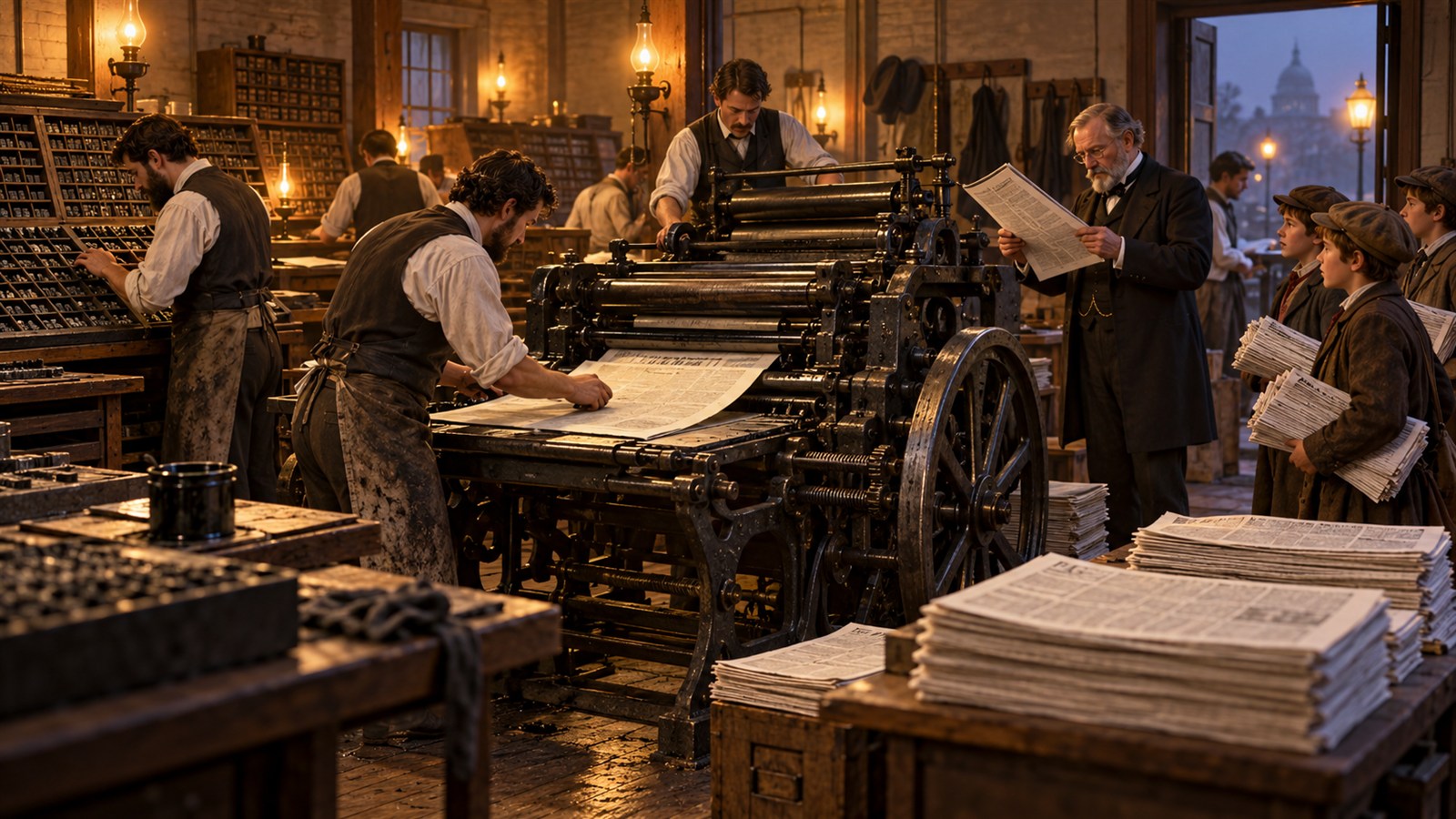
A daily paper had to convert reporting into a physical product on a strict clock. Editors gathered news, compositors set type, presses produced thousands of sheets, and carriers moved copies through the city. Advertising revenue and sales both depended on delivering a useful package before its information went stale. Leaders had to commit to talent, rights, equipment, promotion, and scheduling before demand was fully known. They were effectively buying an option on future attention, accepting near-term uncertainty for the chance to establish habits and a recognizable position in a changing market.
Washington offered a distinctive mix of government, commerce, and national politics. A newspaper that built local relationships could create value for residents while reaching officials and business readers whose decisions mattered beyond the city. Credibility and regularity were assets accumulated issue by issue. Once an audience formed, the enterprise could extend value through advertising, subscriptions, licensing, syndication, merchandise, sequels, or repeat exhibition. Scale also raised expectations: the brand had to deliver consistently, protect credibility, and adapt as competitors copied the format or distribution technology changed.
The Post's later history included changes in ownership, editorial direction, technology, and national influence, but the first issue established the fundamental transaction: invest in reporting and production before knowing exactly how readers and advertisers will respond. That recurring wager remains central to the economics of news. The durable lesson is that media companies are built from both stories and systems. Creative work attracts attention, but rights ownership, operational reliability, audience insight, and distribution determine how long that attention can become revenue. A launch matters most when it begins a repeatable relationship. In practical terms, the advantage came from linking a clear public or customer promise to disciplined execution. Capital and attention had to be committed before demand was certain, partners had to coordinate, and leaders had to keep learning after the first milestone passed into history. The strongest legacy was not the announcement alone, but the repeatable capability, institution, or market that people built around it afterward.
The Washington Post published its first issue on December 6, 1877.
The newspaper contained four pages and sold for three cents.
Its reported starting circulation was 10,000 copies.
Daily publishing required synchronized reporting, typesetting, printing, and delivery.
Washington's political importance gave local news a national business audience.
Trust and habit had to be earned through reliable publication over time.
Explore more of "On This Day ..."
Discover more events from the same date across news, politics, technology, sports, and other fields. Each link highlights significant moments that shaped history on different fronts.