

On This Day in Business: December 21, 1913
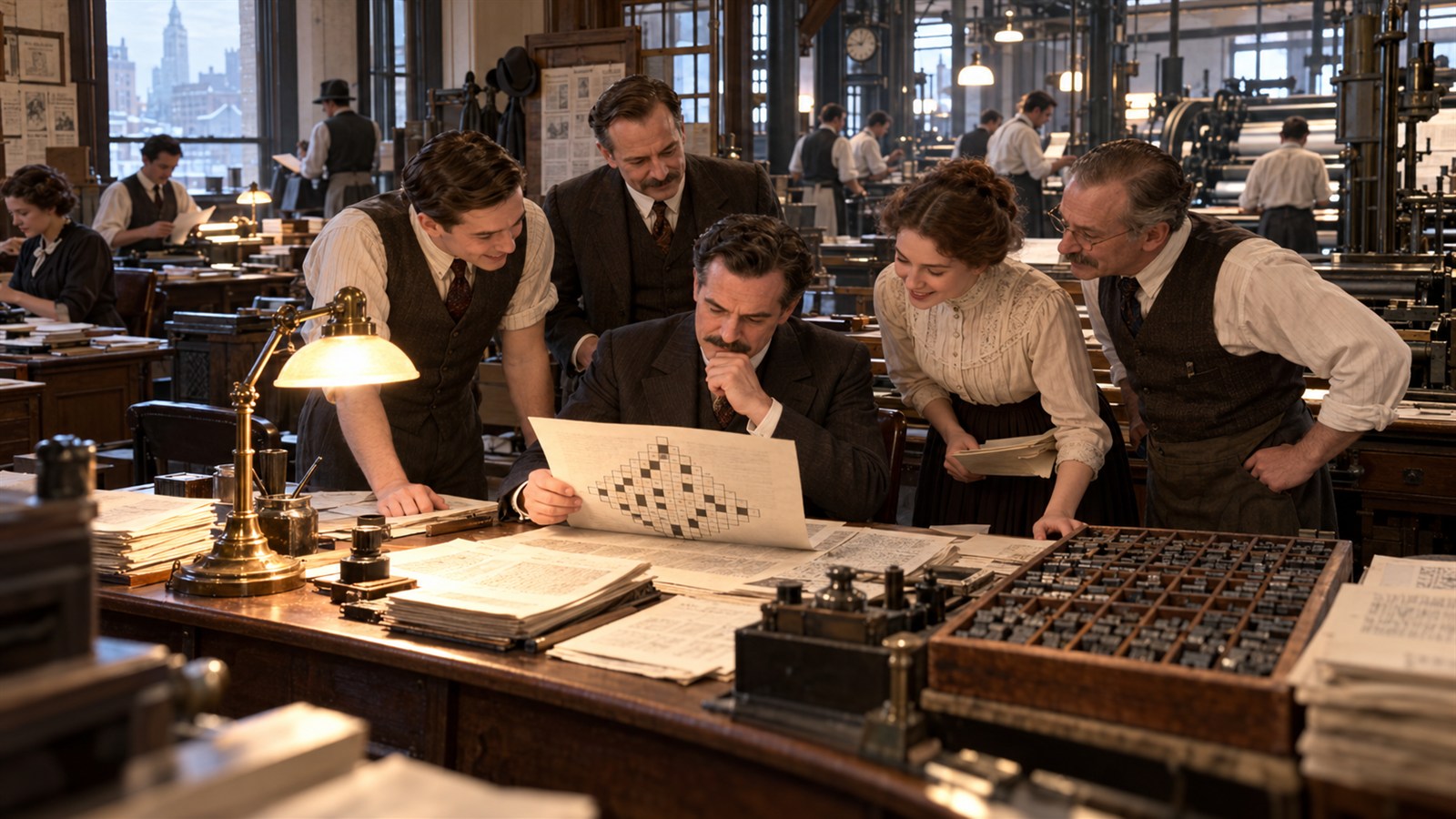
On December 21, 1913, Arthur Wynne's Word-Cross puzzle appeared in the Fun section of the New York World. Its diamond-shaped grid and numbered clues are widely credited as the first modern crossword, adapting familiar word games into a repeatable newspaper feature. The venture joined creative ambition to a distribution system capable of reaching an audience. Content has limited economic value without access, while a channel has little reason to exist without work distinctive enough to make readers, listeners, viewers, or players return. The operating model connected those two sides.
The puzzle gave readers a reason to spend more time with the paper and return for another issue. Its production cost was modest compared with reporting or illustration, while the engagement it created could strengthen circulation, habit, and the appeal of a weekend supplement to advertisers. Leaders had to commit to talent, rights, equipment, promotion, and scheduling before demand was fully known. They were effectively buying an option on future attention, accepting near-term uncertainty for the chance to establish habits and a recognizable position in a changing market.
Readers embraced the format, and other newspapers adopted it. Puzzle books, syndicated features, contests, dictionaries, software, and digital subscriptions later expanded the market. The crossword became both content and a participation ritual, with difficulty and editorial voice helping publications differentiate their versions. Once an audience formed, the enterprise could extend value through advertising, subscriptions, licensing, syndication, merchandise, sequels, or repeat exhibition. Scale also raised expectations: the brand had to deliver consistently, protect credibility, and adapt as competitors copied the format or distribution technology changed.
The business lesson is that small interactive features can create strong loyalty when they reward repeated effort. A successful format needs clear rules, consistent quality, and enough variation to avoid becoming mechanical. What began as one page element grew because it transformed readers from passive recipients into active participants. The durable lesson is that media companies are built from both stories and systems. Creative work attracts attention, but rights ownership, operational reliability, audience insight, and distribution determine how long that attention can become revenue. A launch matters most when it begins a repeatable relationship. In practical terms, the advantage came from linking a clear public or customer promise to disciplined execution. Capital and attention had to be committed before demand was certain, partners had to coordinate, and leaders had to keep learning after the first milestone passed into history. The strongest legacy was not the announcement alone, but the repeatable capability, institution, or market that people built around it afterward.
Arthur Wynne's Word-Cross appeared on December 21, 1913.
The puzzle ran in the New York World's Fun section.
Its grid and clues established the modern crossword format.
Reader participation increased time, habit, and return visits.
Newspapers, syndicates, and book publishers quickly expanded the market.
Crosswords later became valuable features for digital subscriptions as well.
Explore more of "On This Day ..."
Discover more events from the same date across news, politics, technology, sports, and other fields. Each link highlights significant moments that shaped history on different fronts.