

On This Day in Lifestyles: November 16, 1959
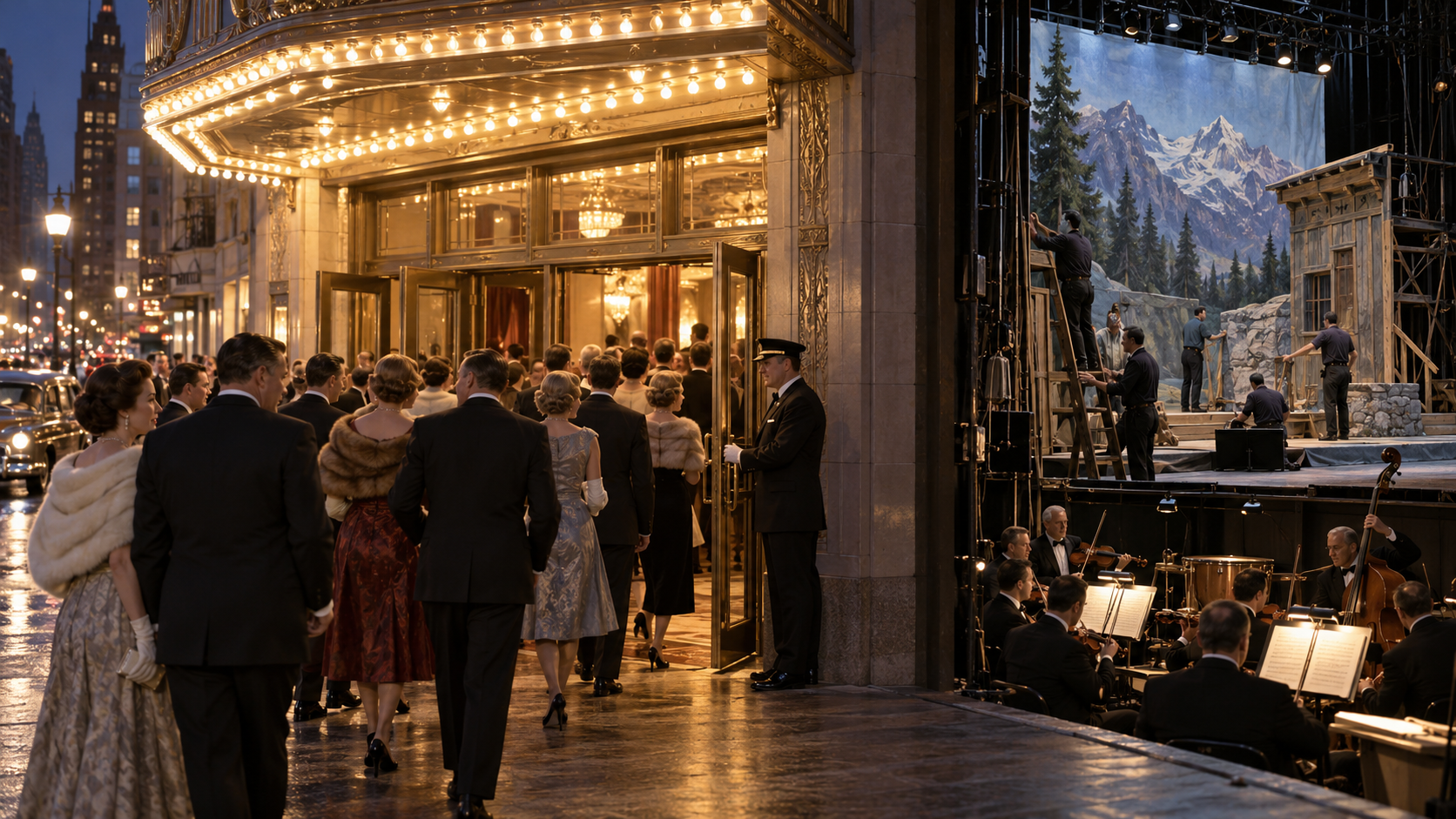
On November 16, 1959, The Sound of Music opened at Broadway’s Lunt-Fontanne Theatre starring Mary Martin and Theodore Bikel. The date matters in lifestyle history because a Broadway opening turned a family story and its songs into a shared cultural inheritance. It was not merely a headline for institutions or specialists; it touched the settings, objects, expectations, and shared rituals through which people organized ordinary days. On opening night in 1959, theatergoers entered the Lunt-Fontanne while stagehands prepared a mountain landscape and an orchestra tuned below the stage Seen at human scale, the episode shows how a public milestone becomes meaningful through repeated personal choices, conversations, and memories.
The musical dramatized the story of Maria and the von Trapp family with music by Richard Rodgers and lyrics by Oscar Hammerstein II. Director Vincent J. Donehue, designers, musicians, dancers, and a large cast shaped the production for the stage. Its blend of family warmth, memorable songs, romance, and the approach of Nazi rule gave audiences both comfort and historical tension. The setting is essential to understanding why the event attracted attention. New ideas rarely arrive in isolation: they meet existing technology, commerce, custom, law, and desire. Contemporary newspapers, public spaces, shops, schools, workplaces, or homes carried the story outward, giving people practical ways to interpret it. Some welcomed the change, others doubted it, and many first encountered it indirectly. That mixture of novelty and familiarity helped the moment travel from a single date into a broader change in behavior.
The production won five Tony Awards and ran for 1,443 performances, making its songs part of school programs, recordings, amateur theater, and family listening. It showed how a Broadway musical could translate a specific European story into broadly accessible emotional themes. Simplification and invention within the narrative also prompted later discussion about how popular theater reshapes history. In daily life, the consequences appeared through altered routines, new expectations, and different ways of spending time or money. A successful film adaptation extended the work’s global reach, but the stage version continues to be revived by professional and community companies. Its music links generations through performance, travel to Salzburg, cast recordings, sing-alongs, and debates about memory and representation. The benefits were never the whole story; major changes also exposed questions about access, responsibility, fairness, cost, and who had power to define progress. Those tensions deserve a place beside the celebration because they show how culture actually develops. The event mattered not because everyone experienced it in the same way, but because it opened a durable argument about how people wanted to live.
Today, the legacy remains visible: school productions, cast albums, film tourism, family playlists, and community theater keep classic musicals active in daily life. Familiarity can make that inheritance easy to overlook, yet the practices surrounding it were built through years of experimentation, adaptation, criticism, and use. Looking back does more than celebrate an anniversary. It reveals the chain between public decisions and private habits, between ambitious ideas and the small acts that make them ordinary. On this day, one historical moment became part of the texture of modern life. Remembering the full setting lets the milestone feel less like a frozen fact and more like a living part of experience.
On November 16, 1959, The Sound of Music opened at Broadway's Lunt-Fontanne Theatre starring Mary Martin and Theodore Bikel.
The musical dramatized the story of Maria and the von Trapp family with music by Richard Rodgers and lyrics by Oscar Hammerstein II. Director Vincent J. Donehue, designers, musicians, dancers, and a large cast shaped the production for the stage. Its blend of family warmth, memorable songs, romance, and the approach of Nazi rule gave audiences both comfort and historical tension.
The production won five Tony Awards and ran for 1,443 performances, making its songs part of school programs, recordings, amateur theater, and family listening. It showed how a Broadway musical could translate a specific European story into broadly accessible emotional themes. Simplification and invention within the narrative also prompted later discussion about how popular theater reshapes history.
The event matters in lifestyle history because a Broadway opening turned a family story and its songs into a shared cultural inheritance.
A successful film adaptation extended the work's global reach, but the stage version continues to be revived by professional and community companies. Its music links generations through performance, travel to Salzburg, cast recordings, sing-alongs, and debates about memory and representation.
The legacy remains visible today: school productions, cast albums, film tourism, family playlists, and community theater keep classic musicals active in daily life.
Explore more of “This Day in Lifestyles”
Discover more moments in everyday life, design, education, travel, food, fashion, and culture. Each story connects a calendar date with an event that changed how people lived.