

On This Day in Lifestyles: November 28, 1925
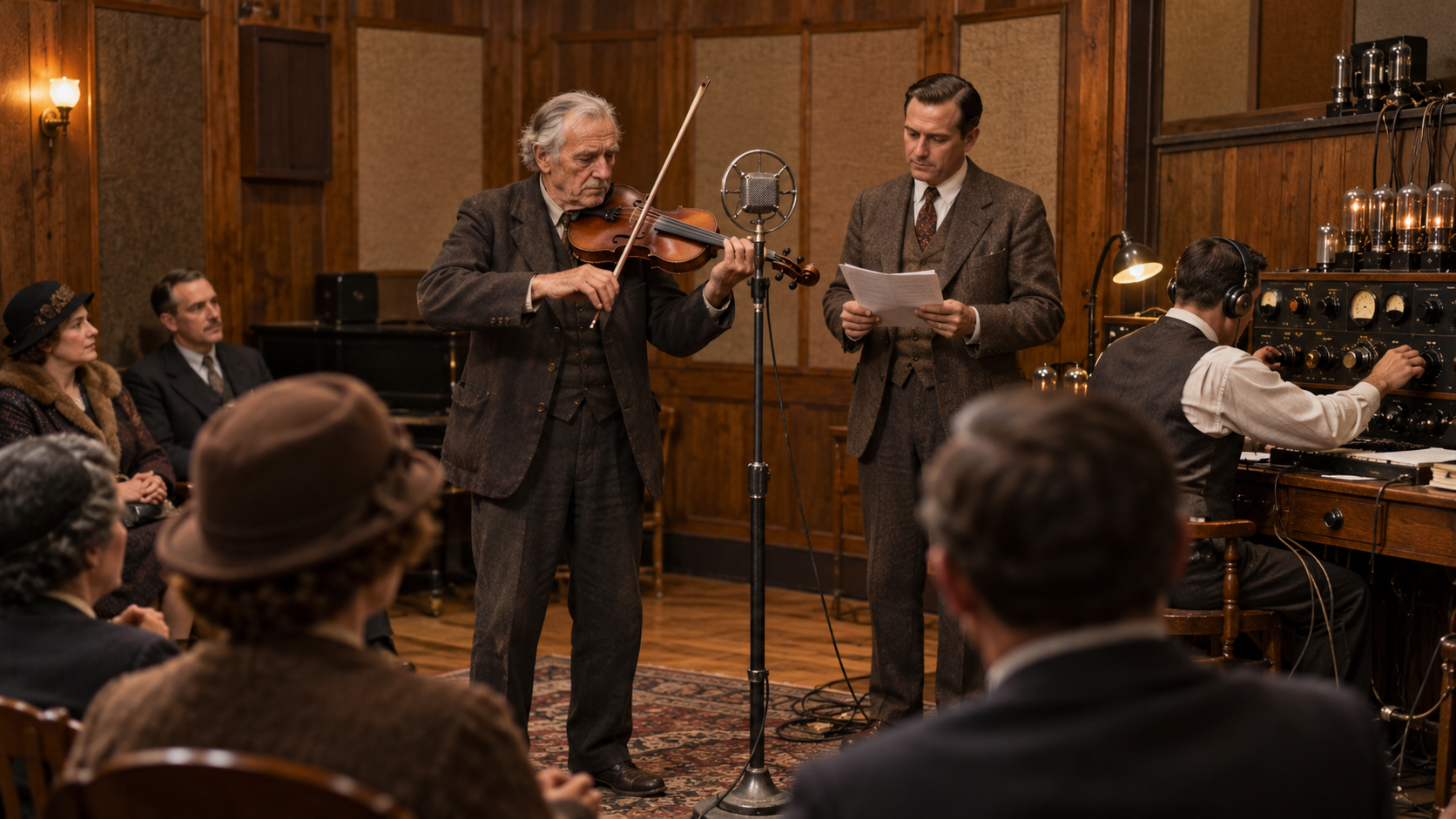
On November 28, 1925, Nashville radio station WSM broadcast the old-time music program later known as the Grand Ole Opry. The date matters in lifestyle history because a live fiddle broadcast turned Saturday-night listening into a lasting family and fan ritual. It was not merely a headline for institutions or specialists; it touched the settings, objects, expectations, and shared rituals through which people organized ordinary days. An elderly fiddler performed into a 1925 studio microphone while an announcer, engineer, and small audience watched and families listened at home Seen at human scale, the episode shows how a public milestone becomes meaningful through repeated personal choices, conversations, and memories.
Announcer George D. Hay introduced seventy-seven-year-old fiddler Uncle Jimmy Thompson during the station’s first weeks on air. The simple live performance reached rural and urban listeners across a wide region through WSM’s powerful signal. The program was first called the WSM Barn Dance and built regular Saturday-night listening around traditional music. The setting is essential to understanding why the event attracted attention. New ideas rarely arrive in isolation: they meet existing technology, commerce, custom, law, and desire. Contemporary newspapers, public spaces, shops, schools, workplaces, or homes carried the story outward, giving people practical ways to interpret it. Some welcomed the change, others doubted it, and many first encountered it indirectly. That mixture of novelty and familiarity helped the moment travel from a single date into a broader change in behavior.
Radio allowed musicians to reach families far beyond a dance hall, supporting record sales, touring, sponsorship, and new professional careers. Listeners gathered around household receivers, wrote to performers, and recognized regional sounds as part of a wider community. The broadcast helped Nashville develop into a center of the country-music business. In daily life, the consequences appeared through altered routines, new expectations, and different ways of spending time or money. Renamed the Grand Ole Opry, the show moved through several venues and continued across radio, stage, television, and digital media. Its history includes beloved performances as well as debate about gatekeeping, race, genre boundaries, and whose traditions received national exposure. The benefits were never the whole story; major changes also exposed questions about access, responsibility, fairness, cost, and who had power to define progress. Those tensions deserve a place beside the celebration because they show how culture actually develops. The event mattered not because everyone experienced it in the same way, but because it opened a durable argument about how people wanted to live.
Today, the legacy remains visible: live broadcasts, concerts, streaming, fan travel, and music tourism continue to connect Nashville stages with distant listeners. Familiarity can make that inheritance easy to overlook, yet the practices surrounding it were built through years of experimentation, adaptation, criticism, and use. Looking back does more than celebrate an anniversary. It reveals the chain between public decisions and private habits, between ambitious ideas and the small acts that make them ordinary. On this day, one historical moment became part of the texture of modern life. Remembering the full setting lets the milestone feel less like a frozen fact and more like a living part of experience.
On November 28, 1925, Nashville radio station WSM broadcast the old-time music program later known as the Grand Ole Opry.
Announcer George D. Hay introduced seventy-seven-year-old fiddler Uncle Jimmy Thompson during the station's first weeks on air. The simple live performance reached rural and urban listeners across a wide region through WSM's powerful signal. The program was first called the WSM Barn Dance and built regular Saturday-night listening around traditional music.
Radio allowed musicians to reach families far beyond a dance hall, supporting record sales, touring, sponsorship, and new professional careers. Listeners gathered around household receivers, wrote to performers, and recognized regional sounds as part of a wider community. The broadcast helped Nashville develop into a center of the country-music business.
The event matters in lifestyle history because a live fiddle broadcast turned Saturday-night listening into a lasting family and fan ritual.
Renamed the Grand Ole Opry, the show moved through several venues and continued across radio, stage, television, and digital media. Its history includes beloved performances as well as debate about gatekeeping, race, genre boundaries, and whose traditions received national exposure.
The legacy remains visible today: live broadcasts, concerts, streaming, fan travel, and music tourism continue to connect Nashville stages with distant listeners.
Explore more of “This Day in Lifestyles”
Discover more moments in everyday life, design, education, travel, food, fashion, and culture. Each story connects a calendar date with an event that changed how people lived.