

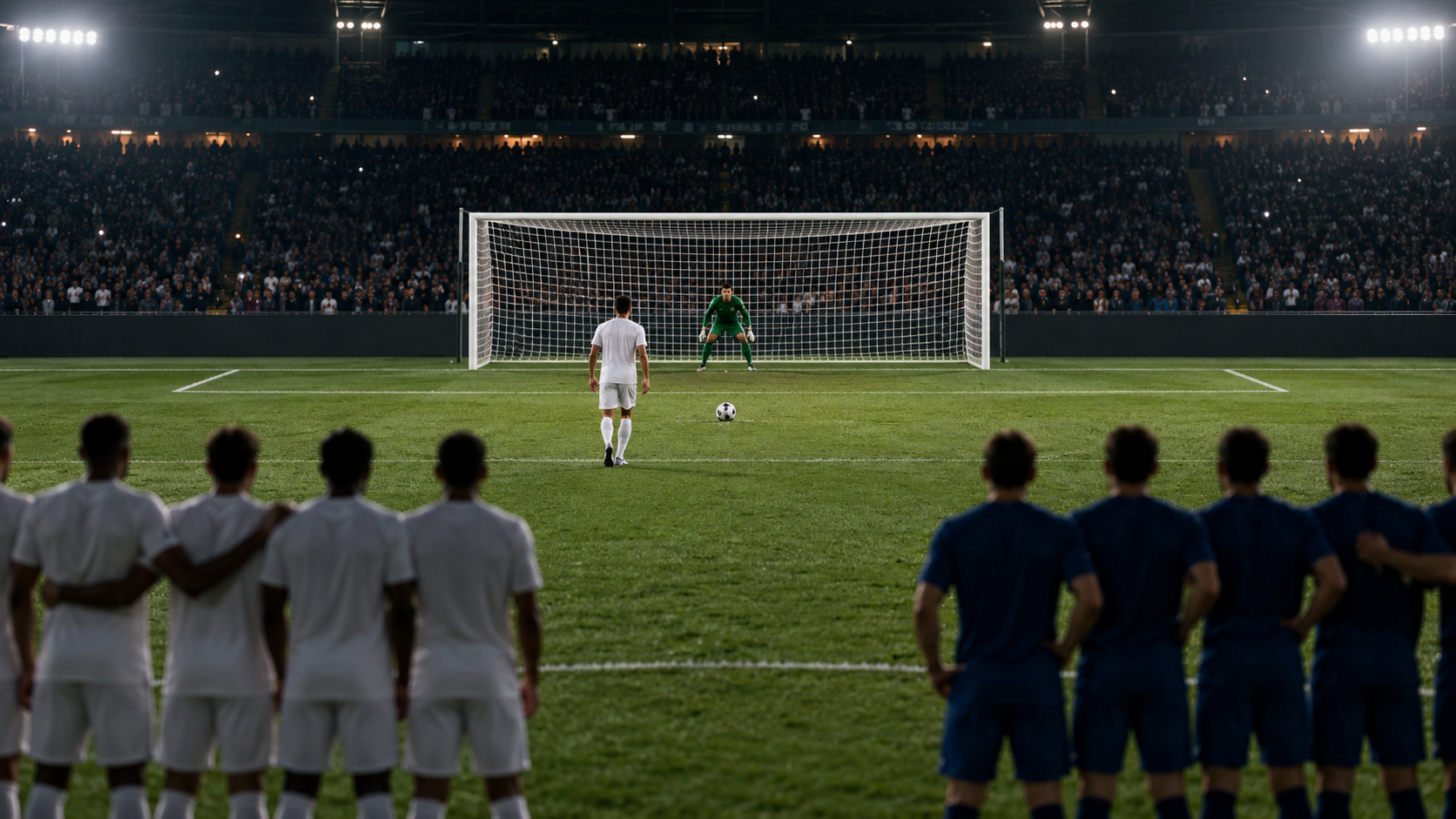
How Soccer Penalty Shootouts Work Explainer
A penalty shootout, formally kicks from the penalty mark, is used when competition rules require one winner after a tied match. It follows regulation and any required extra time, but its kicks are not part of the ordinary match score.
Eligible players on the field at the end normally participate, subject to equalizing team numbers when necessary. Coin tosses establish the goal and which team kicks first, and the sides alternate attempts.
Each team takes up to five kicks. The shootout ends early if one side has more goals than the other could reach with its remaining attempts. If level after five apiece, it continues in sudden-death pairs.
Every eligible player must take once before anyone kicks again, though the second-cycle order may change. The goalkeeper and kicker must follow positioning and movement rules, and officials track eligibility and paired rounds carefully.
Teams alternate up to five kicks each.
The contest can end early when the trailing side cannot catch up.
After five apiece, teams continue one kick each per round.
It ends when one scores and the other misses in the same pair.
Eligible players must all kick once before anyone repeats.
Team numbers are equalized when the law requires it.
Explore more "Explainers"
Discover additional explainers across politics, science, business, technology, and other fields. Each explainer breaks down a complex idea into clear, everyday language—helping you better understand how major concepts, systems, and debates shape the world around us.