

How Ski Jumping Scoring Works Explainer
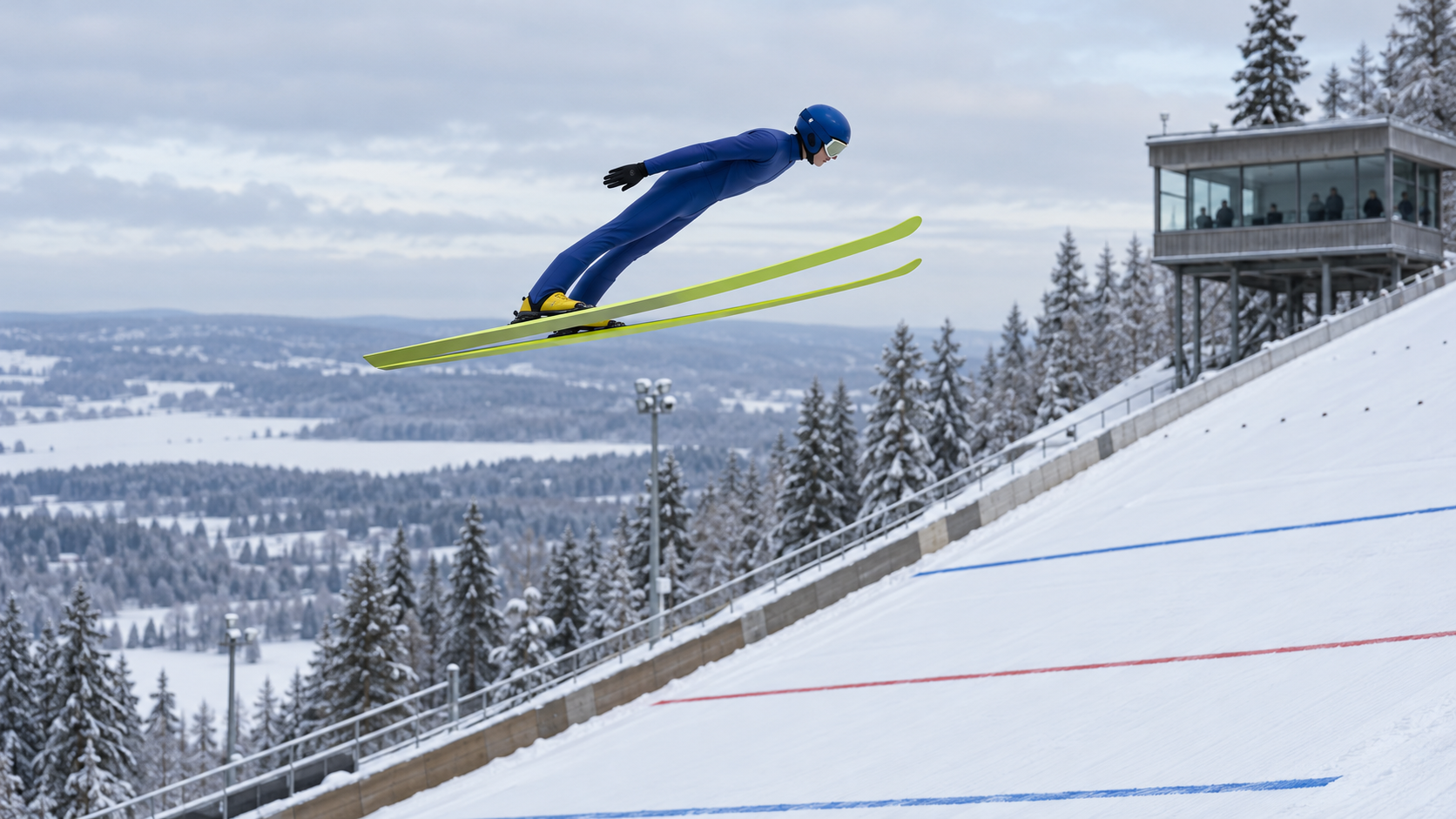
Ski jumping is scored with points rather than distance alone. Each hill has a K-point that anchors the distance calculation. Reaching it earns a base score, with points added or removed for every meter beyond or short.
Five judges award style marks for flight, landing, and outrun. The highest and lowest are discarded and the middle three are added. A long jump can lose points for instability or a poor landing.
Wind and starting-gate compensation adjust for changing conditions. Helpful headwind may subtract points, difficult tailwind may add them, and a gate change accounts for altered inrun speed.
In a typical individual event, a leading group advances from the first round and totals from two jumps determine the result. Other formats vary, but distance, style, and applicable compensation form the core score.
The K-point sets a base, with points added or removed per meter.
The meter value changes with hill size.
Five judges assess flight, landing, and outrun.
The high and low marks are discarded.
Wind and gate formulas adjust for unequal conditions.
They account for aerodynamic help and inrun speed.
Explore more "Explainers"
Discover additional explainers across politics, science, business, technology, and other fields. Each explainer breaks down a complex idea into clear, everyday language—helping you better understand how major concepts, systems, and debates shape the world around us.