

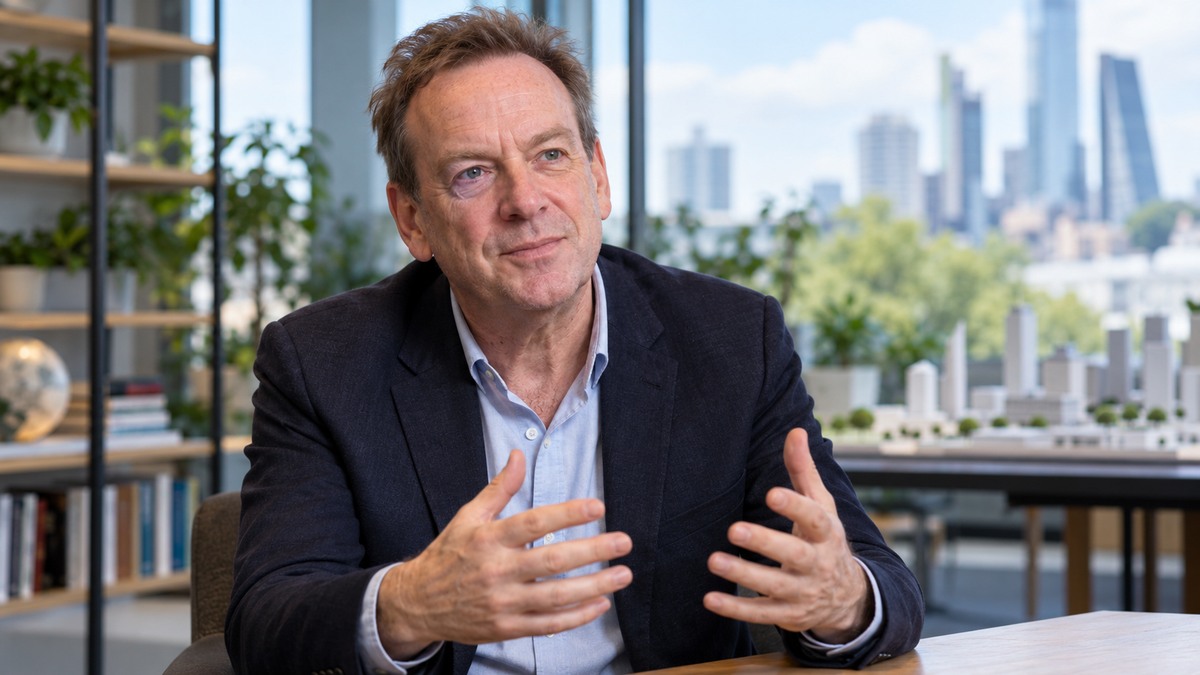
“We need to invest in the economy of the future.”
Social innovation leader Geoff Mulgan made this case in a 2009 TEDGlobal talk delivered after the financial crash. He questioned the instinct to direct public support toward failing legacy industries while promising new social and environmental enterprises struggled for capital. His point distinguishes preserving employment and capacity from preserving every incumbent business model. Recovery spending can address immediate harm while also building institutions, technologies, and services better suited to future needs. Read in context, the statement directs attention toward a mechanism that can be observed, tested, and improved. A decision journal can keep the original facts, uncertainties, and expected result available after memory has edited the story.
Investors and policymakers can evaluate proposals on additionality, learning, public value, and the ability to scale useful outcomes. Patient capital, milestone funding, and procurement may support experiments that ordinary finance rejects because returns are uncertain or distributed. Managers make the idea concrete by naming an owner, an outcome, and a review point. Comparing that expectation with the outcome gives the team a practical basis for revising both the process and belief.
Declaring an industry obsolete can abandon workers and communities that had little control over strategic failure. Transition policy must include income, retraining, regional investment, and participation by affected people. New ventures also require scrutiny rather than automatic virtue. Responsible use also means surfacing the tradeoff that an inspiring summary can hide. If costs fall on people outside the metric, those effects need an owner and a route into the review.
Climate adaptation, care systems, and digital infrastructure all demand choices between patching the past and building capacity for what comes next. Mulgan’s line asks decision makers to state which future their investments make possible. Review one major budget item and identify whether it restores an old operating model or creates a needed future capability. Add a transition plan for affected people and a measurable public or customer outcome before funding the next phase. The strongest result is an organization able to learn from both the outcome and the reasoning that produced it. Improvement becomes credible when the organization reports disappointments as clearly as wins and shows what changed because of them. The organization can strengthen learning by separating the quality of the decision from the luck of the outcome. A sound process may meet an adverse event, while a weak process may succeed once. Reviewing information available at the time, assumptions, and safeguards prevents hindsight from rewarding recklessness. It also makes it safer for teams to report unexpected evidence before a small problem becomes expensive. The next review should compare intended benefit, actual behavior, and any transferred cost.
Social innovation leader Geoff Mulgan made this case in a 2009 TEDGlobal talk delivered after the financial crash. He questioned the instinct to direct public support toward failing legacy industries while promising new social and environmental enterprises struggled for capital.
His point distinguishes preserving employment and capacity from preserving every incumbent business model. Recovery spending can address immediate harm while also building institutions, technologies, and services better suited to future needs.
Investors and policymakers can evaluate proposals on additionality, learning, public value, and the ability to scale useful outcomes. Patient capital, milestone funding, and procurement may support experiments that ordinary finance rejects because returns are uncertain or distributed.
Declaring an industry obsolete can abandon workers and communities that had little control over strategic failure. Transition policy must include income, retraining, regional investment, and participation by affected people. New ventures also require scrutiny rather than automatic virtue.
Climate adaptation, care systems, and digital infrastructure all demand choices between patching the past and building capacity for what comes next. Mulgan’s line asks decision makers to state which future their investments make possible.
Review one major budget item and identify whether it restores an old operating model or creates a needed future capability. Add a transition plan for affected people and a measurable public or customer outcome before funding the next phase.
Explore more "Quotes of The Day"
Discover more notable quotes from influential voices across politics, science, business, technology, sports, and culture. Each quote offers insight into how ideas, beliefs, and decisions shape the world around us.