

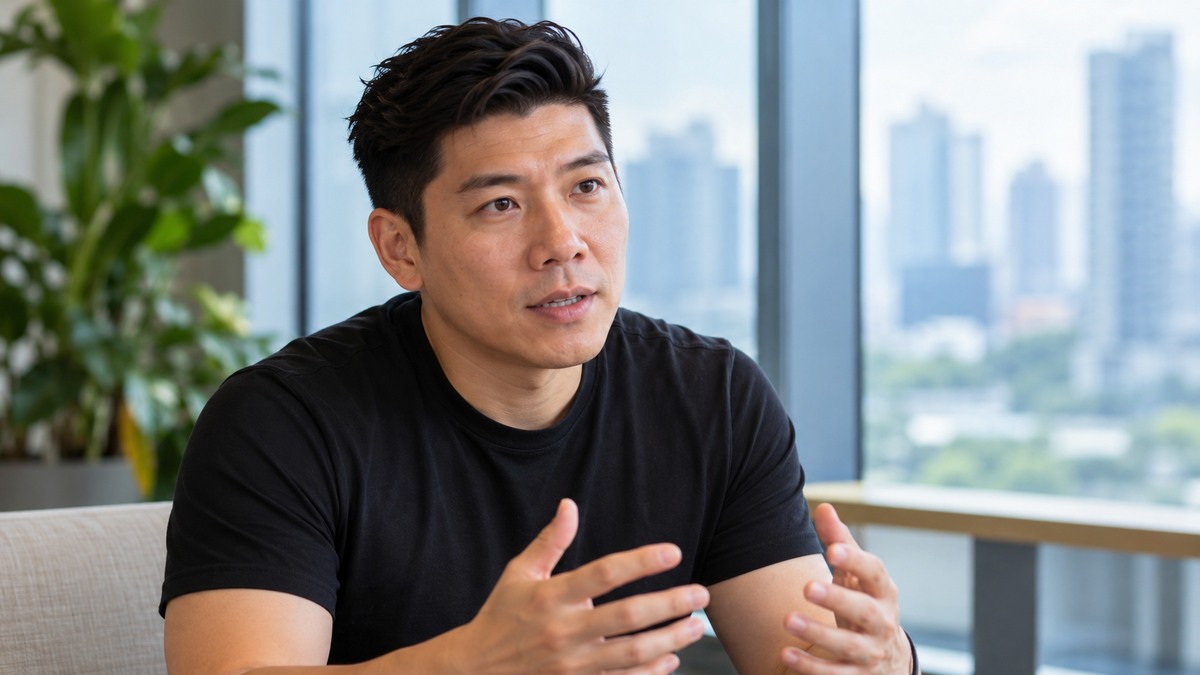
“Find a problem to solve.”
Grab cofounder Anthony Tan emphasized this principle in a 2024 TED@BCG conversation with Amane Dannouni. He described building services around difficult transportation and livelihood problems in Southeast Asia while balancing profit, social impact, and environmental pressure. The phrase puts the customer or community need before the product. A company earns relevance by understanding a costly, persistent problem and creating a model that can keep solving it, rather than starting with technology and searching for demand. The line is best treated as a hypothesis about how results are created, not as a universal law. The point is to make judgment observable without reducing a complicated human system to one convenient number.
Entrepreneurs can spend time with affected users, quantify the current workaround, and test whether a solution improves a meaningful outcome. The business model should align revenue with continued problem resolution and account for workers and partners required to deliver it. Teams can translate that hypothesis into a defined behavior and a signal that matters to customers or colleagues. Qualitative evidence, operational data, and direct experience should be considered together before expansion.
Problem-solving language can justify expansion or claim social value without independent evidence. Platforms may solve one inconvenience while creating labor, competition, or privacy harms. Impact claims need counter-metrics and accessible recourse. Nuance protects the idea from becoming a justification for speed, pressure, or symbolic compliance. This prevents the loudest advocate or most polished presentation from defining reality for everyone else.
Capital markets often reward scale before a company proves durable value. Tan’s advice restores a useful sequence: define the problem, build trust, test the economics, and grow only as the solution remains beneficial across stakeholders. Write the problem statement for one proposed product without naming the product. Validate its frequency, cost, and affected groups, then run a small test that includes both customer benefit and any burden placed on workers or partners. When results are shared honestly, later decisions can build on evidence instead of authority or memory. Scaling should follow demonstrated value and clear safeguards, with enough flexibility to pause when new evidence changes the balance. If the practice affects partners or communities outside the company, their evidence should enter the review without being filtered entirely through the project sponsor. Direct feedback, independent measurement, and transparent remedies make external impact visible. They also reveal whether a gain recorded inside the business depends on unpaid effort, increased risk, or reduced choice elsewhere in the value chain. Follow-up should include the people who use the process and those who absorb its risks.
Grab cofounder Anthony Tan emphasized this principle in a 2024 TED@BCG conversation with Amane Dannouni. He described building services around difficult transportation and livelihood problems in Southeast Asia while balancing profit, social impact, and environmental pressure.
The phrase puts the customer or community need before the product. A company earns relevance by understanding a costly, persistent problem and creating a model that can keep solving it, rather than starting with technology and searching for demand.
Entrepreneurs can spend time with affected users, quantify the current workaround, and test whether a solution improves a meaningful outcome. The business model should align revenue with continued problem resolution and account for workers and partners required to deliver it.
Problem-solving language can justify expansion or claim social value without independent evidence. Platforms may solve one inconvenience while creating labor, competition, or privacy harms. Impact claims need counter-metrics and accessible recourse.
Capital markets often reward scale before a company proves durable value. Tan’s advice restores a useful sequence: define the problem, build trust, test the economics, and grow only as the solution remains beneficial across stakeholders.
Write the problem statement for one proposed product without naming the product. Validate its frequency, cost, and affected groups, then run a small test that includes both customer benefit and any burden placed on workers or partners.
Explore more "Quotes of The Day"
Discover more notable quotes from influential voices across politics, science, business, technology, sports, and culture. Each quote offers insight into how ideas, beliefs, and decisions shape the world around us.