

On This Day in Lifestyles: December 4, 1956
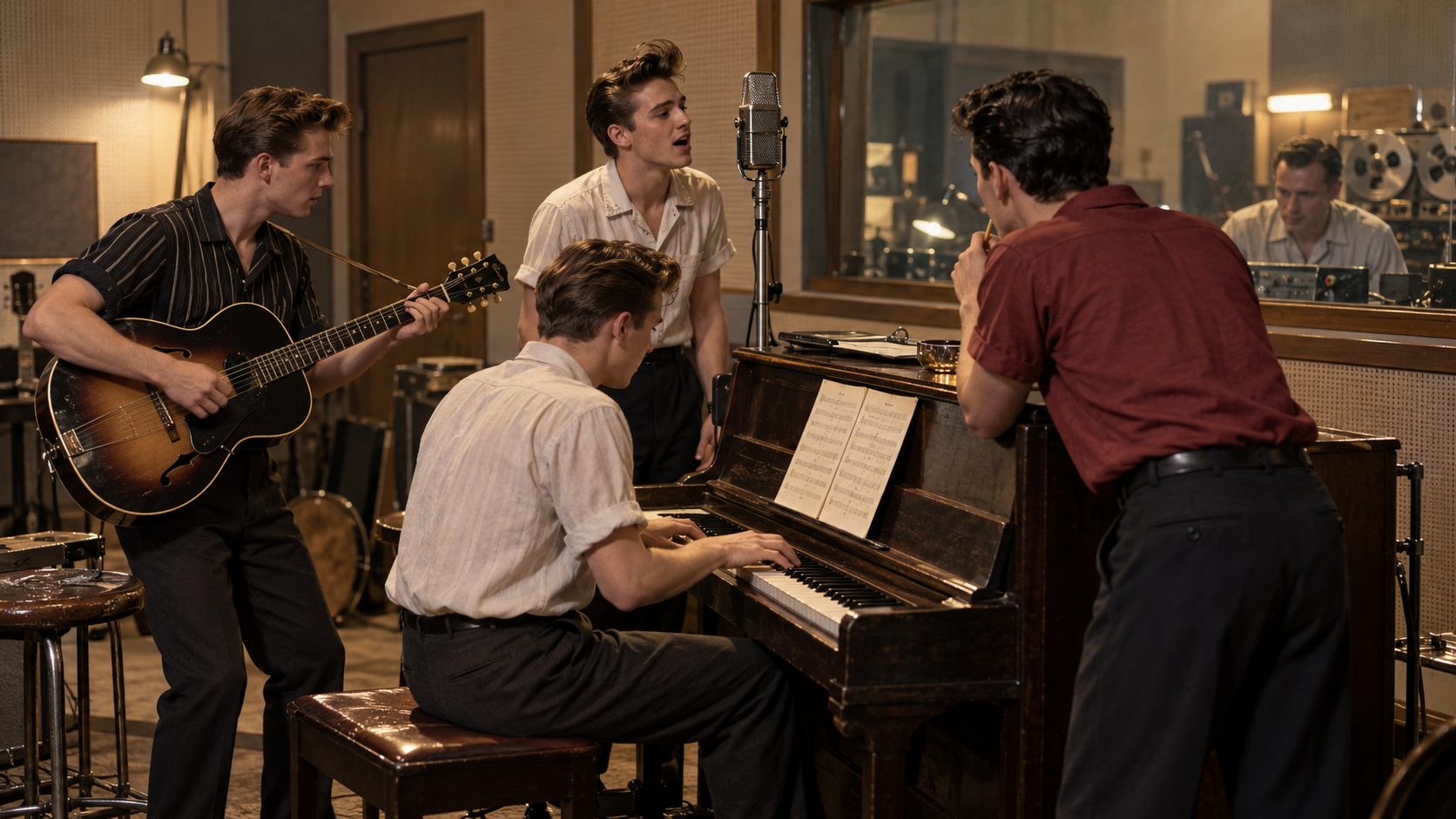
On December 4, 1956, Elvis Presley, Jerry Lee Lewis, Carl Perkins, and Johnny Cash converged at Sun Studio for an impromptu jam session. The date matters in lifestyle history because an unplanned afternoon showed how friendship, memory, technology, and place can make private music culturally durable. It was not merely a headline for institutions or specialists; it touched the settings, objects, expectations, and shared rituals through which people organized ordinary days. Four young musicians gathered loosely around a studio piano as an engineer watched analog tape turn behind the control-room glass Seen at human scale, the episode shows how a public milestone becomes meaningful through repeated personal choices, conversations, and memories.
Perkins had booked the Memphis studio with his band, and the still-emerging Lewis was brought in to play piano. Presley stopped by his former label, while Cash also visited. Producer Sam Phillips recognized the unusual gathering, engineer Jack Clement kept the tape running, and a newspaper photographer documented the musicians around the piano. The setting is essential to understanding why the event attracted attention. New ideas rarely arrive in isolation: they meet existing technology, commerce, custom, law, and desire. Contemporary newspapers, public spaces, shops, schools, workplaces, or homes carried the story outward, giving people practical ways to interpret it. Some welcomed the change, others doubted it, and many first encountered it indirectly. That mixture of novelty and familiarity helped the moment travel from a single date into a broader change in behavior.
The informal performances mixed gospel, country, rhythm and blues, and popular songs, revealing shared roots beneath the artists’ distinct public images. The session was not planned as a commercial supergroup, yet the surviving tapes and photograph gave listeners a rare sense of musicians relaxing, remembering songs, and testing ideas together. In daily life, the consequences appeared through altered routines, new expectations, and different ways of spending time or money. Later releases turned the gathering into music history under the Million Dollar Quartet name. Museums, recordings, books, and a stage musical continue to interpret the event, while Sun Studio remains a destination for travelers interested in the small rooms where postwar popular music crossed boundaries. The benefits were never the whole story; major changes also exposed questions about access, responsibility, fairness, cost, and who had power to define progress. Those tensions deserve a place beside the celebration because they show how culture actually develops. The event mattered not because everyone experienced it in the same way, but because it opened a durable argument about how people wanted to live.
Today, the legacy remains visible: fans seek studio tours, session recordings, oral histories, and collaborative performances that reveal creativity beyond polished releases. Familiarity can make that inheritance easy to overlook, yet the practices surrounding it were built through years of experimentation, adaptation, criticism, and use. Looking back does more than celebrate an anniversary. It reveals the chain between public decisions and private habits, between ambitious ideas and the small acts that make them ordinary. On this day, one historical moment became part of the texture of modern life. Remembering the full setting lets the milestone feel less like a frozen fact and more like a living part of experience.
On December 4, 1956, Elvis Presley, Jerry Lee Lewis, Carl Perkins, and Johnny Cash converged at Sun Studio for an impromptu jam session.
Perkins had booked the Memphis studio with his band, and the still-emerging Lewis was brought in to play piano. Presley stopped by his former label, while Cash also visited. Producer Sam Phillips recognized the unusual gathering, engineer Jack Clement kept the tape running, and a newspaper photographer documented the musicians around the piano.
The informal performances mixed gospel, country, rhythm and blues, and popular songs, revealing shared roots beneath the artists' distinct public images. The session was not planned as a commercial supergroup, yet the surviving tapes and photograph gave listeners a rare sense of musicians relaxing, remembering songs, and testing ideas together.
The event matters in lifestyle history because an unplanned afternoon showed how friendship, memory, technology, and place can make private music culturally durable.
Later releases turned the gathering into music history under the Million Dollar Quartet name. Museums, recordings, books, and a stage musical continue to interpret the event, while Sun Studio remains a destination for travelers interested in the small rooms where postwar popular music crossed boundaries.
The legacy remains visible today: fans seek studio tours, session recordings, oral histories, and collaborative performances that reveal creativity beyond polished releases.
Explore more of “This Day in Lifestyles”
Discover more moments in everyday life, design, education, travel, food, fashion, and culture. Each story connects a calendar date with an event that changed how people lived.