

On This Day in Lifestyles: December 19, 1843
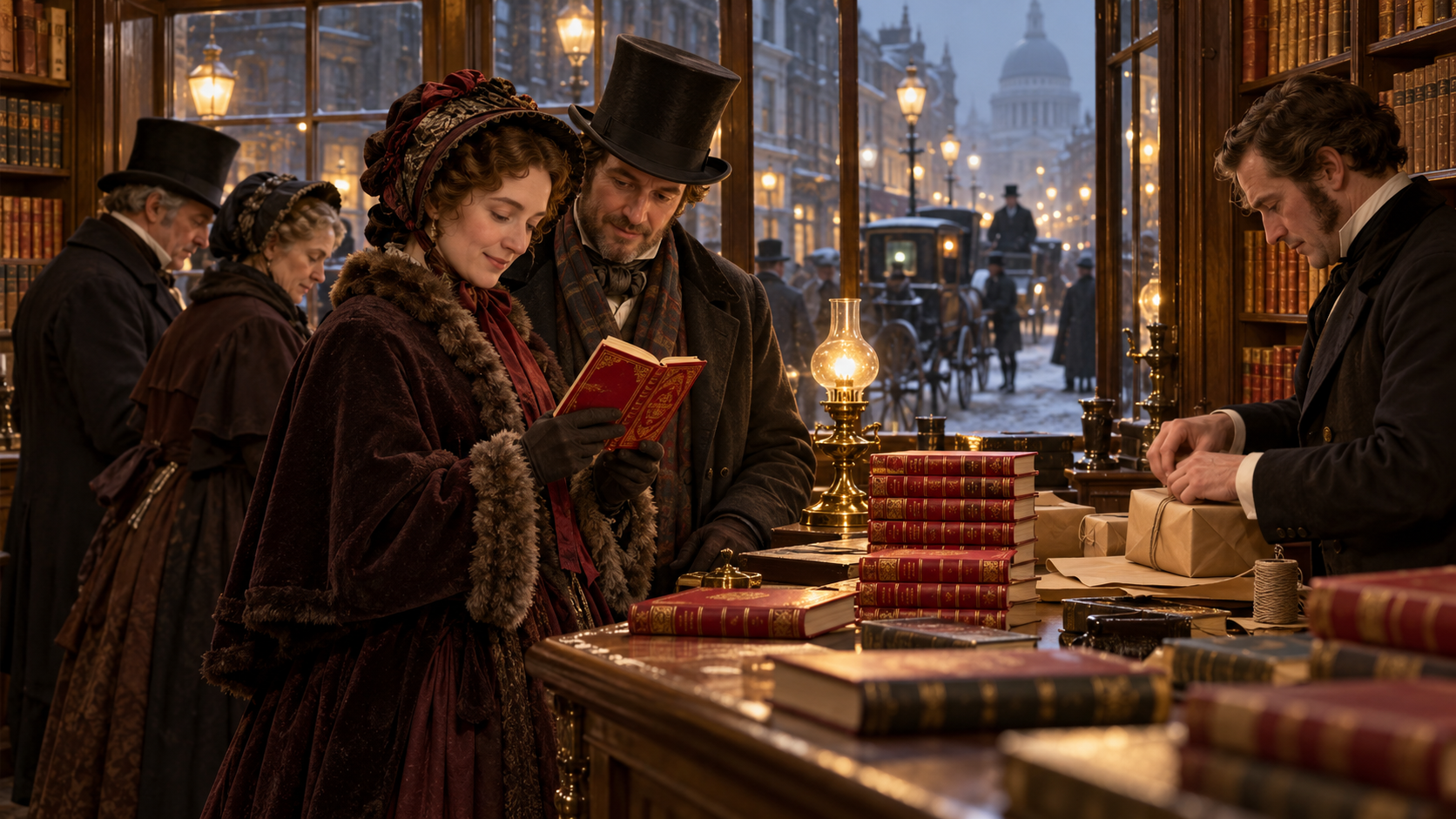
On December 19, 1843, Charles Dickens published A Christmas Carol in a handsome illustrated volume shortly before Christmas. The date matters in lifestyle history because a small gift book helped make reading, reflection, generosity, and family gathering part of the modern Christmas season. It was not merely a headline for institutions or specialists; it touched the settings, objects, expectations, and shared rituals through which people organized ordinary days. In a London bookshop, shoppers examined a newly bound illustrated volume while clerks wrapped holiday purchases and street lamps glowed outside Seen at human scale, the episode shows how a public milestone becomes meaningful through repeated personal choices, conversations, and memories.
Dickens wrote the novella rapidly after reflecting on poverty, child labor, education, and the condition of working people. Chapman and Hall issued the book with illustrations by John Leech, colored plates, decorative endpapers, and a bright binding. High production costs limited Dickens’s immediate profits despite strong sales. The setting is essential to understanding why the event attracted attention. New ideas rarely arrive in isolation: they meet existing technology, commerce, custom, law, and desire. Contemporary newspapers, public spaces, shops, schools, workplaces, or homes carried the story outward, giving people practical ways to interpret it. Some welcomed the change, others doubted it, and many first encountered it indirectly. That mixture of novelty and familiarity helped the moment travel from a single date into a broader change in behavior.
Readers encountered Ebenezer Scrooge’s transformation through memory, fear, generosity, and renewed social connection. The story reinforced emerging Victorian holiday customs centered on family meals, charitable giving, games, music, and seasonal feeling. Public readings and theatrical adaptations quickly carried it beyond private reading. In daily life, the consequences appeared through altered routines, new expectations, and different ways of spending time or money. The novella has never gone out of print and has inspired countless stage, film, radio, television, and illustrated versions. Its language and characters became cultural shorthand, though scholars also ask whether individual charity can substitute for structural reform. The story still invites households to connect celebration with responsibility. The benefits were never the whole story; major changes also exposed questions about access, responsibility, fairness, cost, and who had power to define progress. Those tensions deserve a place beside the celebration because they show how culture actually develops. The event mattered not because everyone experienced it in the same way, but because it opened a durable argument about how people wanted to live.
Today, the legacy remains visible: families, schools, theaters, charities, and media revisit the tale to define generosity and social obligation during the holidays. Familiarity can make that inheritance easy to overlook, yet the practices surrounding it were built through years of experimentation, adaptation, criticism, and use. Looking back does more than celebrate an anniversary. It reveals the chain between public decisions and private habits, between ambitious ideas and the small acts that make them ordinary. On this day, one historical moment became part of the texture of modern life. Remembering the full setting lets the milestone feel less like a frozen fact and more like a living part of experience.
On December 19, 1843, Charles Dickens published A Christmas Carol in a handsome illustrated volume shortly before Christmas.
Dickens wrote the novella rapidly after reflecting on poverty, child labor, education, and the condition of working people. Chapman and Hall issued the book with illustrations by John Leech, colored plates, decorative endpapers, and a bright binding. High production costs limited Dickens's immediate profits despite strong sales.
Readers encountered Ebenezer Scrooge's transformation through memory, fear, generosity, and renewed social connection. The story reinforced emerging Victorian holiday customs centered on family meals, charitable giving, games, music, and seasonal feeling. Public readings and theatrical adaptations quickly carried it beyond private reading.
The event matters in lifestyle history because a small gift book helped make reading, reflection, generosity, and family gathering part of the modern Christmas season.
The novella has never gone out of print and has inspired countless stage, film, radio, television, and illustrated versions. Its language and characters became cultural shorthand, though scholars also ask whether individual charity can substitute for structural reform. The story still invites households to connect celebration with responsibility.
The legacy remains visible today: families, schools, theaters, charities, and media revisit the tale to define generosity and social obligation during the holidays.
Explore more of “This Day in Lifestyles”
Discover more moments in everyday life, design, education, travel, food, fashion, and culture. Each story connects a calendar date with an event that changed how people lived.