

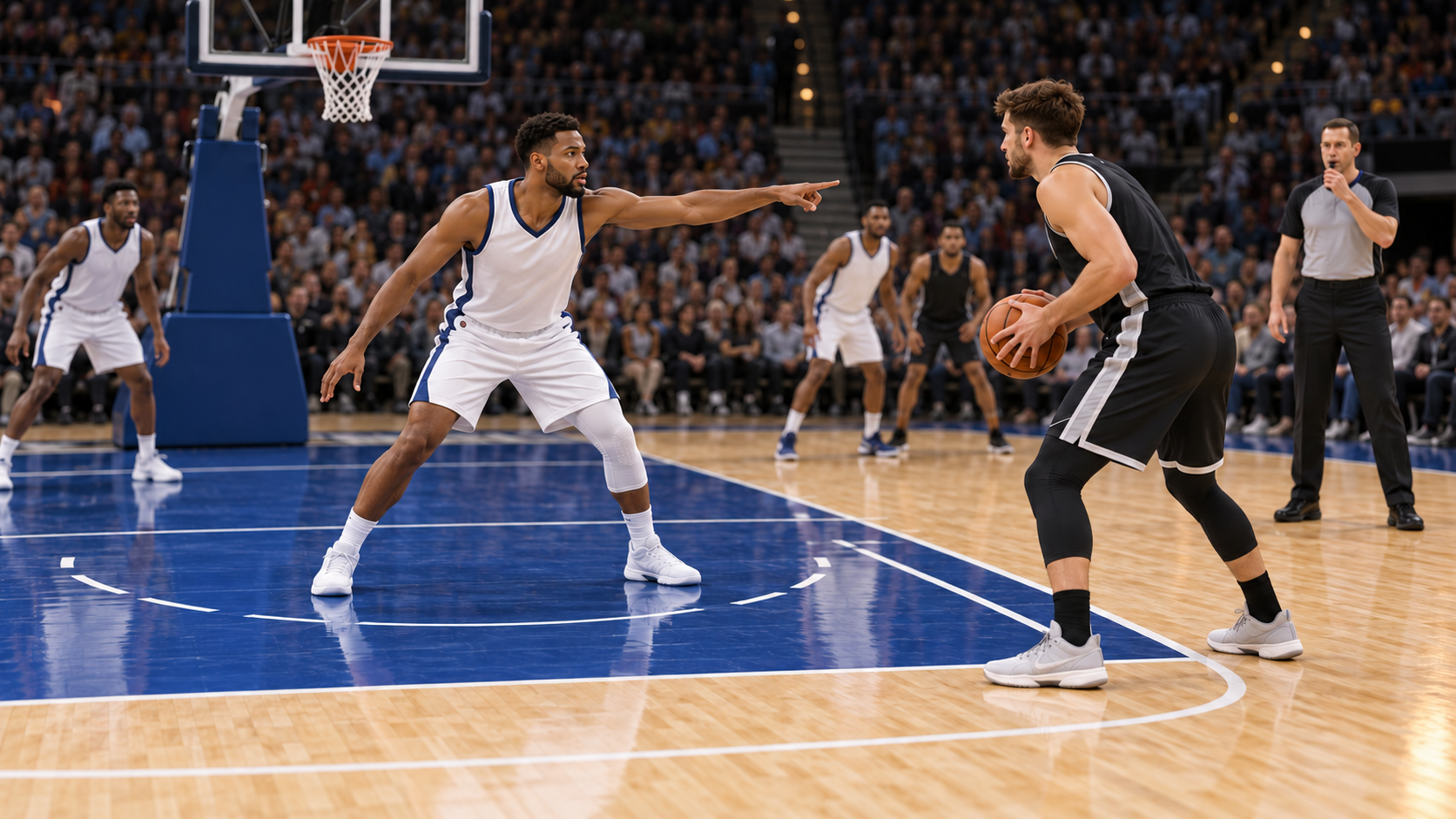
How Basketball’s Defensive Three-Second Rule Works Explainer
The NBA’s defensive three-second rule prevents a defender from camping in the lane when that player is not actively guarding an opponent. Once the offensive team has control in the frontcourt, a defender generally cannot remain in the paint for three consecutive seconds without meeting an exception.
A defender is considered actively guarding when positioned near an offensive player and in a defensive stance. The count also resets when the defender completely leaves the lane, when a shot is in flight, or in several other situations defined by the rule. Simply reaching toward a distant player does not automatically qualify.
The penalty is a technical foul. The offense receives one free throw and keeps possession, which makes the violation different from a typical turnover-producing lane call. The shot clock remains where it was unless league rules require it to be raised to the applicable minimum.
The rule shapes modern spacing. Rim protectors must repeatedly step out of the paint or establish a legal guarding position, while offenses try to pull them away from the basket. Watch the big defender’s feet: a quick step outside the lane often exists only to restart the count.
It applies when the offense controls the ball in the frontcourt and a defender remains in the lane without actively guarding.
The simplest reset is to get both feet completely out of the lane before returning.
The offense receives one technical free throw and retains possession of the ball.
Explore more "Explainers"
Discover additional explainers across politics, science, business, technology, and other fields. Each explainer breaks down a complex idea into clear, everyday language—helping you better understand how major concepts, systems, and debates shape the world around us.