

How Hockey Offside Works Explainer
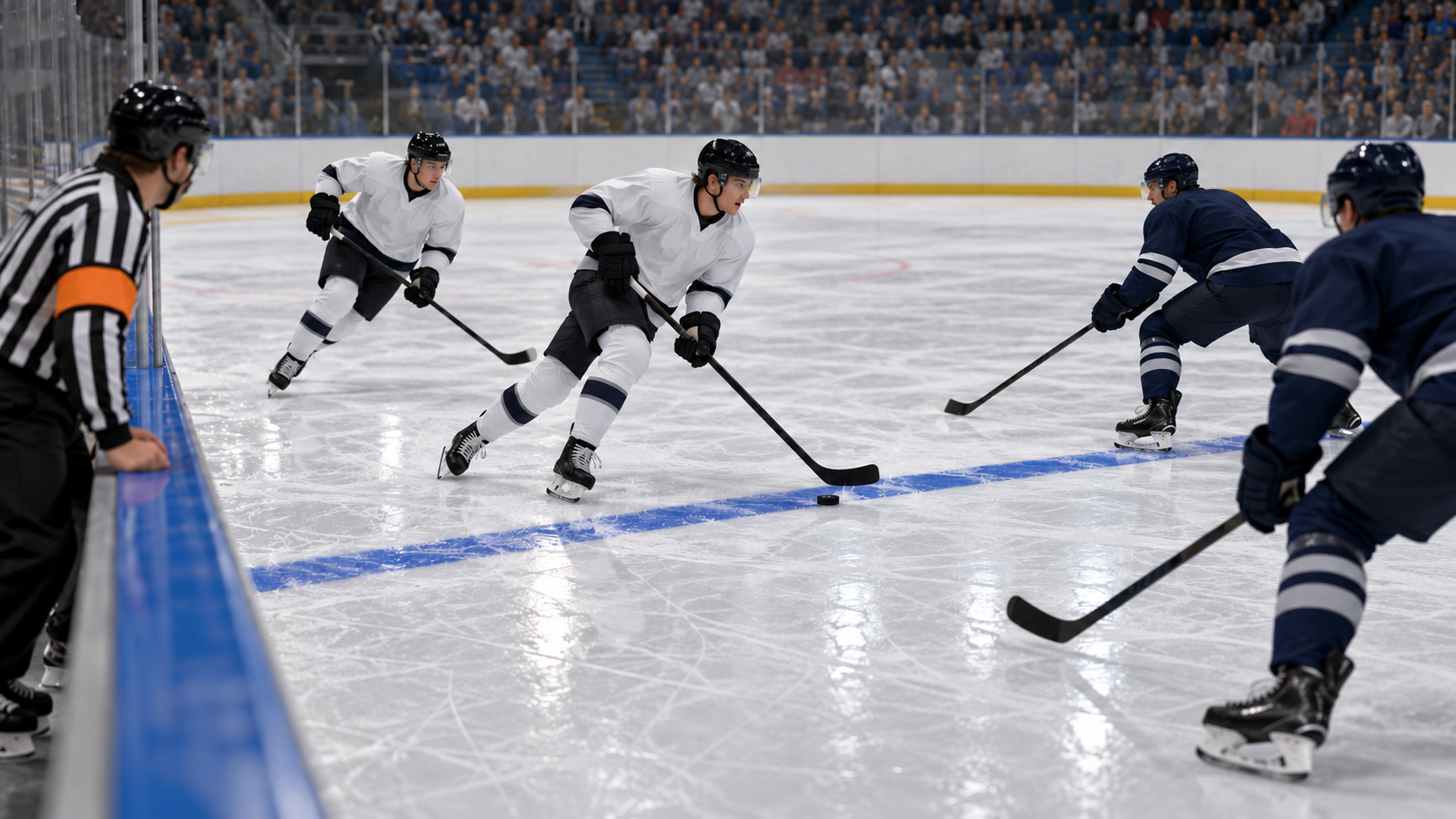
Hockey offside controls how an attacking team enters the offensive zone. The puck must completely cross the attacking blue line before any attacking skater is fully across it. The linesperson judges the puck and the players at the instant the puck reaches the leading edge of the line.
Skate position is crucial. An attacker is onside if at least one skate is touching the blue line or remains on the neutral-zone side of its vertical plane when the puck crosses. A player carrying the puck can legally cross ahead of it if possession and control were established before the skates entered.
If attackers enter early without immediately playing the puck, officials can signal a delayed offside. The team can clear the zone by getting every attacking player back to the neutral side of the line. Once the zone is cleared, play continues without a faceoff.
Zone entries therefore demand timing. A winger may drag a skate along the line, a puck carrier may delay, and teammates may tag up together. Watch the blue line rather than the goal: offside is decided before the attack develops, often by inches and fractions of a second.
The skates determine whether the attacker is across the blue line; the stick does not.
It allows attackers who entered early to leave the zone and tag up before they touch the puck or pressure the defense.
Yes, when the player had possession and control before crossing the blue line.
Explore more "Explainers"
Discover additional explainers across politics, science, business, technology, and other fields. Each explainer breaks down a complex idea into clear, everyday language—helping you better understand how major concepts, systems, and debates shape the world around us.