

On This Day in AI: January 5, 2021
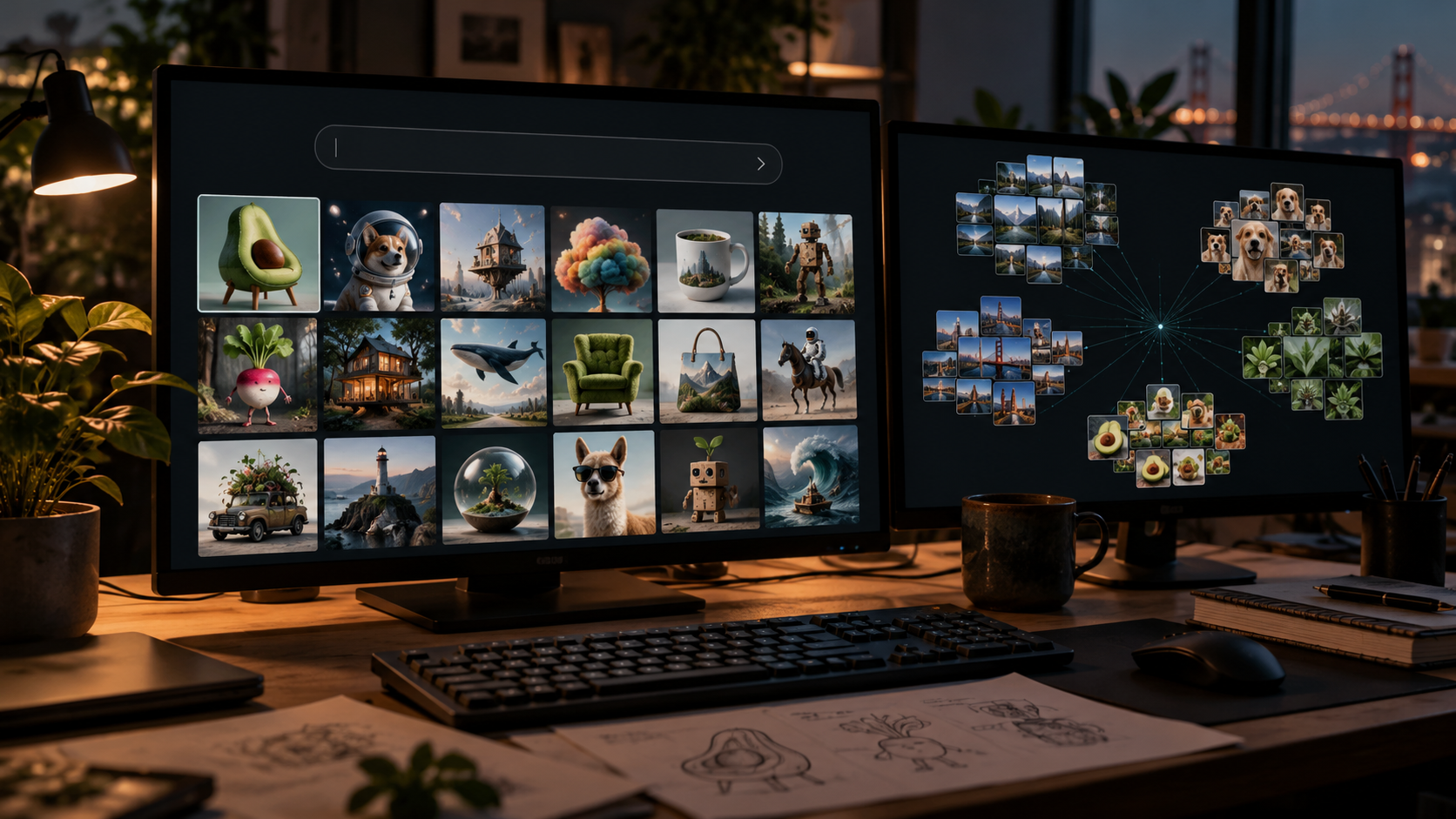
On January 5, 2021, OpenAI in San Francisco introduced two research systems that linked language and vision in complementary ways: DALL-E, which generated images from written descriptions, and CLIP, which learned to associate images with natural-language concepts. DALL-E’s name combined the artist Salvador Dalí with Pixar’s WALL-E, while CLIP stood for Contrastive Language-Image Pre-training. Presented together, they showed how the transformer methods driving rapid progress in language models could move beyond text and begin to organize, interpret and create visual material through ordinary written instructions.
DALL-E was described as a 12-billion-parameter version of GPT-3 trained on text-image pairs. It processed words and image tokens in one sequence and produced pictures for prompts that combined attributes, objects, viewpoints and styles. OpenAI’s examples included an armchair shaped like an avocado and a baby daikon radish in a tutu walking a dog. The system could sometimes place multiple objects, suggest three-dimensional views and blend unrelated ideas into a coherent design. Its limits were equally instructive: performance could be brittle when a prompt was rephrased, and accuracy declined when many colors, objects or spatial relationships had to be controlled at once.
CLIP approached the connection from the other direction. Rather than generating an image, it learned which captions matched which pictures after training on 400 million image-text pairs gathered from the internet. That broad supervision allowed the model to perform “zero-shot” classification by comparing an image with new category names instead of requiring a separately labeled training set for every task. OpenAI used CLIP to rank DALL-E outputs for relevance, selecting images that best matched a caption. The researchers also emphasized limitations, including uneven performance, sensitivity to data choices and serious risks in applications involving people, surveillance or demographic categories.
The January 5 release helped establish a pattern that became central to generative AI: a single model could translate between language and visual concepts without being built for only one narrow benchmark. Later systems would produce sharper images and more flexible multimodal interactions, but DALL-E and CLIP made the direction unmistakable. Creative tools could be controlled through sentences, while visual recognition could draw on concepts expressed in everyday language. Their debut also brought unresolved questions into clearer view—whose images trained the models, how biases would appear in outputs, what work might be displaced, and how synthetic media should be identified. The achievement was therefore both technical and cultural, opening a new interface for machine creativity while exposing responsibilities that the field is still working to define.
DALL-E generated images from natural-language captions, while CLIP learned to score how closely an image matched a written description.
OpenAI used CLIP to rerank large batches of DALL-E samples, promoting outputs that aligned most closely with the requested concept.
DALL-E could combine unusual concepts, alter viewpoint and style, and visualize product ideas, but complex prompts often confused object, color and position relationships.
CLIP transferred broadly to new labels without task-specific training, yet its internet-scale data also carried biases and created risks for surveillance-related uses.
The paired releases showed that language could become a practical interface for both creating and organizing visual information.
They foreshadowed later multimodal systems while bringing questions about training data, attribution, bias, labor and synthetic-media disclosure into public debate.
Explore more of "On This Day ..."
Discover more events from the same date across news, politics, technology, sports, and other fields. Each link highlights significant moments that shaped history on different fronts.