

Music Sampling Explainer
Music sampling is the practice of taking part of an existing sound recording and incorporating it into a new recording. A producer might reuse a drum break, vocal phrase, bass note, or other recorded fragment, then loop, cut, pitch, filter, or rearrange it. Sampling can create a recognizable reference or transform a tiny sound into new musical material. It is different from merely being influenced by an older song because it uses audio from a particular recording. That distinction matters creatively and legally: a new performance that resembles an earlier musical passage may raise questions about the underlying composition, while a sample also involves the captured recording itself.
Most commercially released music involves at least two separate copyrighted works. The musical composition covers elements such as melody and lyrics and is commonly controlled by songwriters or music publishers. The sound recording covers a specific recorded performance and is commonly controlled by a recording artist, record label, or other owner. A sample may implicate both layers, so clearing it can require permission from more than one rights holder. The licenses may specify the portion used, the new track, territory, media, payment, royalty shares, and credit. Because ownership can change and collaborators may control fractions of a work, identifying everyone with authority to approve a use can be the hardest part.
There is no universal rule that a sample is automatically safe because it lasts fewer than a certain number of seconds. A very short but distinctive sound can still be recognizable, and legal outcomes depend on the rights involved, the amount and purpose of the use, market effects, jurisdiction, and other facts. In the United States, fair use can permit some unlicensed uses, but it is a case-specific legal defense rather than a simple production shortcut. Producers therefore often seek clearance before release, replace the sample, or create a new recording. A new performance of a passage is usually called an interpolation; it avoids copying the original master recording but may still require permission for the composition.
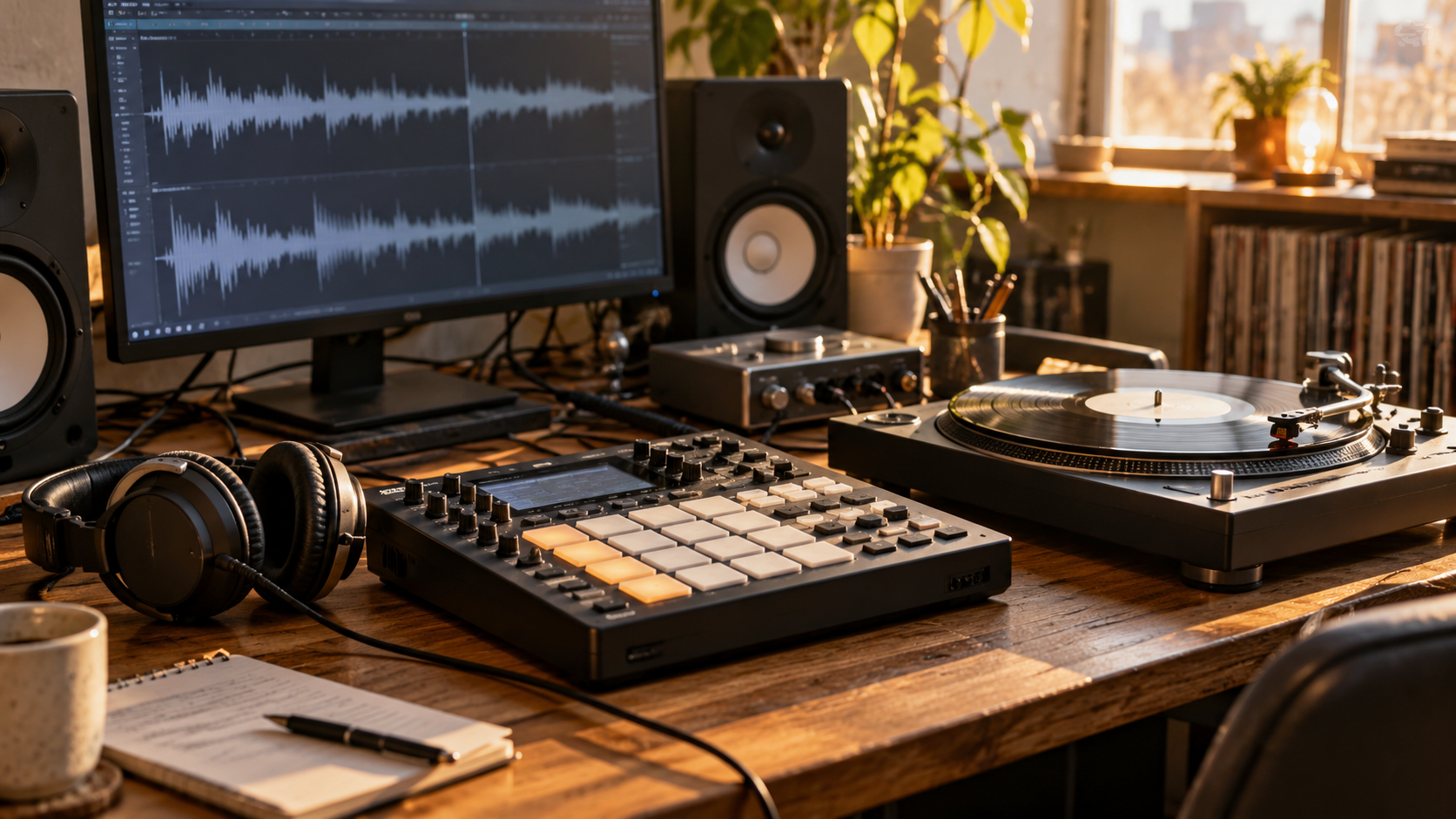
Modern production tools make sampling technically easy. A creator can isolate a beat, map slices across pads, change tempo without changing pitch, or build an entire rhythm from microscopic pieces of audio. Distribution is just as easy, which increases the risk of releasing a track before rights are settled. Sample libraries and beat stores may offer pre-cleared material, but their licenses vary. Some permit broad commercial use, some require attribution, and some restrict resale, synchronization, or high-volume distribution. A receipt or download does not necessarily grant every right a later label, advertiser, game studio, or film producer will need. Sampling matters because it is both a creative language and a rights-management process. Hip-hop, electronic music, pop, and experimental genres have used recorded fragments to build dialogue with earlier music, recover overlooked sounds, and create textures that could not be produced in the same way from notation alone. At the same time, disputes over attribution, consent, payment, and control reveal how culture and property overlap. The practical lesson is not that sampling is forbidden or automatically fair, but that the source, rights, license, and intended release all matter. For a real project, creators should keep records and seek qualified guidance when ownership or permission is uncertain. Credits and royalty splits can also become part of the new work's history, showing how a few seconds of audio may connect performers, songwriters, publishers, labels, and later listeners across generations. That network is one reason the cultural meaning of a sample can be richer than its duration suggests. Clearance is therefore both legal preparation and production planning, especially when a release has deadlines or several commercial partners.
A sample copies audio from a specific recording; an interpolation newly performs musical material without lifting that original recorded audio.
Producers may reshape a sample through looping, slicing, pitching, filtering, time stretching, or layering while still using source audio.
A song's composition and its sound recording are separate copyrighted works that can have different owners and licensing terms.
There is no universal safe number of seconds, and fair use depends on the facts rather than functioning as an automatic exemption.
Pre-cleared libraries and beat stores can simplify licensing, but creators must still read limits on attribution, distribution, resale, and synchronization.
Good clearance practice documents the source, identifies all relevant owners, and settles permissions before a track's release or commercial placement.
Explore more "Explainers"
Discover additional explainers across politics, science, business, technology, and other fields. Each explainer breaks down a complex idea into clear, everyday language—helping you better understand how major concepts, systems, and debates shape the world around us.