

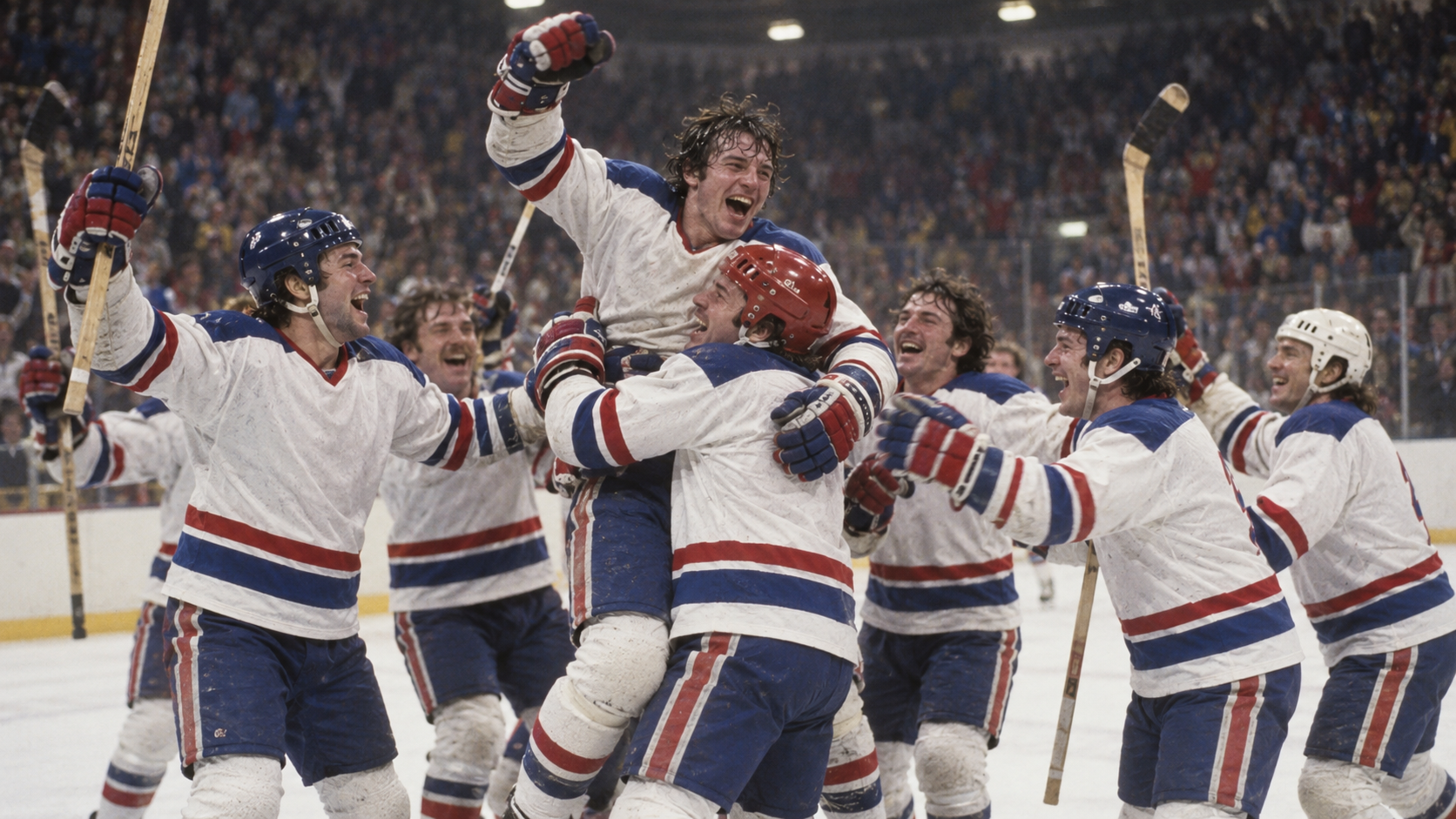
On This Day in Sports: February 22, 1980
On February 22, 1980, the United States defeated the Soviet Union 4–3 in the Olympic men’s hockey medal round at Lake Placid. The Soviet team had won four consecutive Olympic gold medals and featured experienced international stars, while the American roster was built largely from college players. Thirteen days before the Games, the Soviets had beaten the United States 10–3 in an exhibition, reinforcing expectations that the Olympic meeting would be one-sided.
The Soviets controlled long stretches of possession and outshot the Americans, but goaltender Jim Craig kept the score close. Mark Johnson scored with one second remaining in the first period to make it 2–2, taking advantage of a rebound that the Soviet defense expected to carry into intermission. The Soviet Union regained the lead in the second, and the United States entered the final period trailing 3–2.
A power-play goal by Johnson tied the game midway through the third. Moments later, captain Mike Eruzione took a pass in the high slot and scored the go-ahead goal. The remaining ten minutes became an exercise in discipline and survival. Craig stopped every final Soviet attempt, and the crowd counted down the last seconds before broadcaster Al Michaels delivered the question that named the moment: “Do you believe in miracles?”
The victory did not itself award the gold medal; the United States still needed to beat Finland two days later. That distinction makes the upset even more impressive because the players had to move from national celebration back to competition. The Miracle on Ice became one of the most famous events in American sports, remembered for its scale, its Cold War setting and the way a carefully prepared young team defeated a dominant champion.
The Soviet Union had won the previous four Olympic men’s hockey gold medals.
The Soviets beat the United States 10–3 in an exhibition shortly before the Games.
Johnson scored twice, including the third-period goal that tied the game.
Eruzione’s goal gave the United States a 4–3 lead with ten minutes remaining.
Craig made 36 saves against the more experienced Soviet attack.
The Americans still had to defeat Finland before they could claim the gold medal.
Explore more "On This Day in Sports"
Discover more landmark games, records, championships, and turning points from sports history. Each day revisits the athletes, teams, and moments that shaped competition and culture.