

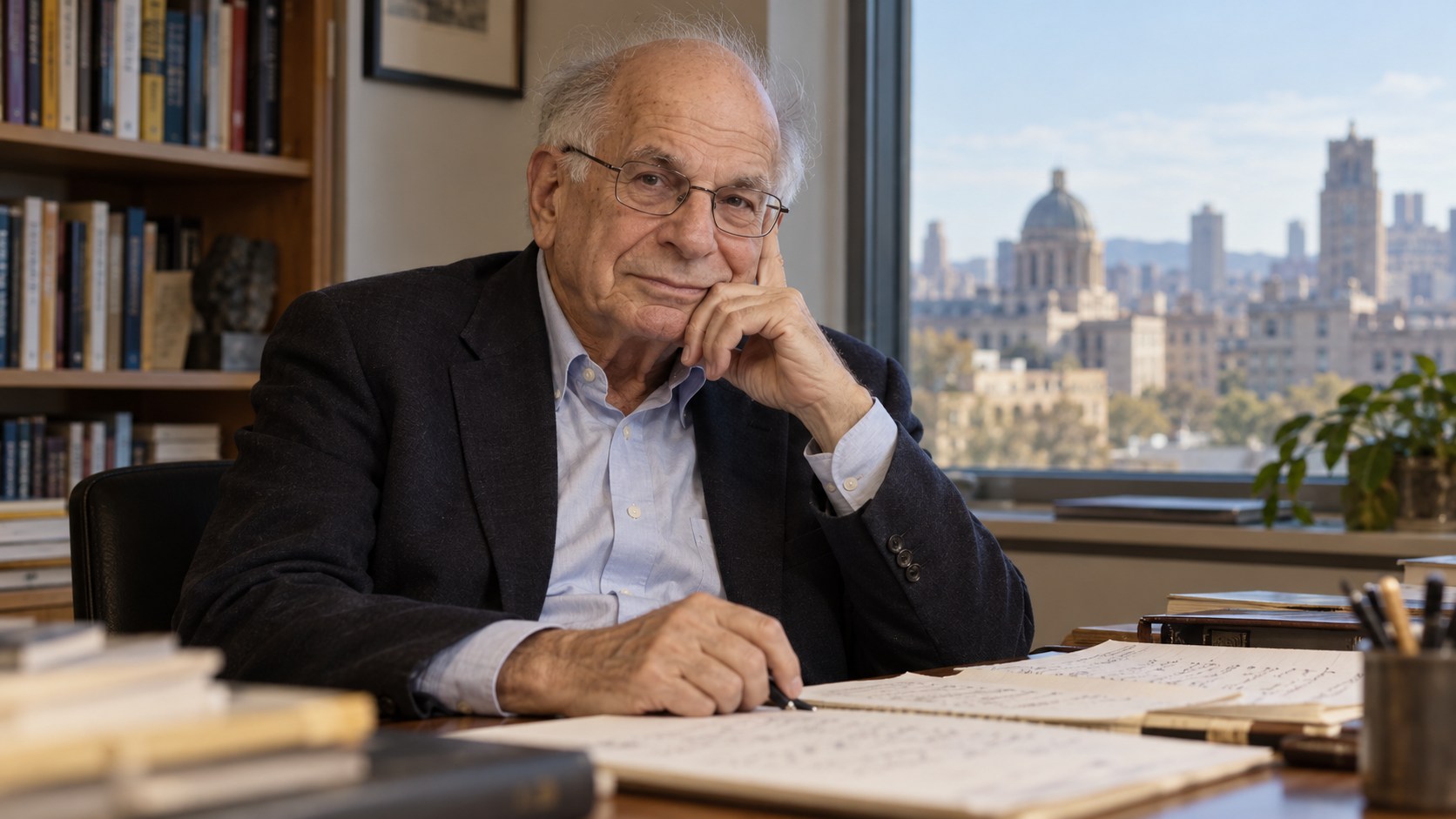
“The remembering self is a storyteller.”
July 19 uses The Riddle of Experience Versus Memory (2010) as Daniel Kahneman's documented setting. Kahneman contrasts the self living through moments with the self that later selects, organizes, and evaluates those moments as a story. Kahneman separates the experiencing self, which lives moments, from the remembering self, which later evaluates and narrates them. His examples show that duration, peaks, and endings do not enter memory evenly. The storyteller metaphor identifies an organizing process, not a dishonest character inside the mind. July 19 is NewsStreets placement for Daniel Kahneman; 2010 is Daniel Kahneman's date for The Riddle of Experience Versus Memory.
Memory does not preserve experience evenly; endings, peaks, and narrative structure can dominate how an event is judged afterward. The featured wording—“The remembering self is a storyteller.”—compresses that distinction for Daniel Kahneman. Stories compress. They select a few moments, arrange causes, and give an episode an ending that can dominate later judgment. That compression helps people decide and communicate, yet it can also make a long stretch of ordinary experience disappear behind one climax or final impression.
The distinction is an analytical tool, not proof that memory is worthless or that immediate feeling should always outweigh later reflection. For Daniel Kahneman, the boundary guards The Riddle of Experience Versus Memory from overreach. The distinction does not tell us to distrust every recollection or privilege immediate feeling in every decision. Memory supports identity, learning, and planning. The useful move is to ask which self a policy, vacation, treatment, or relationship is serving and what evidence the other self would add.
Photos, ratings, and shareable highlights can encourage people to optimize the remembered story of an experience while barely inhabiting it. Photos and ratings intensify the storyteller's influence by making selected moments easier to revisit and display. After one event, record a few in-the-moment observations before writing the summary you expect to remember. The difference between those records can reveal what a polished narrative has edited out. The two selves may prefer different things. The experiencing self can value ease across many moments, while the remembering self favors a dramatic peak and satisfying ending. Decisions improve when that conflict is explicit. Designing an experience, treatment, or public service then becomes a question of whose welfare is counted and over what span of time. For Daniel Kahneman, a practical July 19 trial is this: After one event, record both how it felt moment by moment and how you summarize it later, then notice what the story omitted. On July 19, readers can test The Riddle of Experience Versus Memory through Daniel Kahneman's guidance.
Daniel Kahneman used the line in The Riddle of Experience Versus Memory, associated with 2010. Kahneman contrasts the self living through moments with the self that later selects, organizes, and evaluates those moments as a story.
The source year identifies the documented work; July 19 is only this Quote of the Day series position, not the date when the words were first spoken or published.
Memory does not preserve experience evenly; endings, peaks, and narrative structure can dominate how an event is judged afterward.
The distinction is an analytical tool, not proof that memory is worthless or that immediate feeling should always outweigh later reflection.
Photos, ratings, and shareable highlights can encourage people to optimize the remembered story of an experience while barely inhabiting it.
After one event, record both how it felt moment by moment and how you summarize it later, then notice what the story omitted.
Explore more "Quotes of The Day"
Continue exploring how writers, thinkers, artists, and advocates have described the choices that shape an everyday life.